Short answer: solar plus storage for factories pays when a plant has ugly demand charges, repeatable peaks, weak export rates, or real downtime costs. It disappoints when the tariff is simple, the battery is oversized for blackout fantasies, or the controls are treated as an afterthought.
I run a small shop, but our day job sits deep in commercial and industrial energy storage. We spend our time around large-scale high-voltage LiFePO4 ESS projects, the kind built from modular metal battery cabinets and technical battery-module assemblies with blue cells, silver-white enclosures, navy engineering typography, and blue-green energy accents. Not garage batteries. Not home backup packs. Factory hardware.
And I’ll say the quiet part out loud.
A lot of solar plus storage for factories proposals are padded with savings that won’t survive first contact with a real utility bill.
I learned that the expensive way on an early project review in 2021. The site manager was convinced a battery would cut his bill by 28%. His consultant had modeled perfect dispatch every month. We pulled 15-minute interval data and found the site’s top peaks came from random sanitation restart events after weekend shutdowns. Hard to predict. Harder to shave. The battery still made sense, but the modeled annual savings dropped from $184,000 to $109,000 once we used actual plant behavior.
That’s the whole game here. Solar plus storage for factories is not a brochure category. It’s a load-shape category.
Solar plus storage for factories works best when the battery has one clear job
The money is rarely in the battery by itself. The value usually comes from a stack of smaller wins:
– clipping monthly demand peaks
– shifting some kWh out of expensive periods
– storing excess solar instead of exporting it for pennies
– covering short outages or controlled shutdowns
– reducing generator starts on sites that already have backup generation
But this only works if the system has a defined mission.
Peak shaving. Time shifting. Short backup. Generator coordination.
Pick one first.
Then size the hardware.
That sequence gets ignored all the time in solar plus storage for factories. People buy cabinet count before they define the dispatch rule. Backward.
For industrial sites, that usually means starting with interval meter data, at least 12 months, then mapping the battery’s job against tariff penalties and process behavior. The U.S. Department of Energy breaks commercial battery value into demand charge reduction, energy arbitrage, resilience, and renewable integration, and that’s useful because each use case pushes sizing in a different direction (DOE Energy Storage).
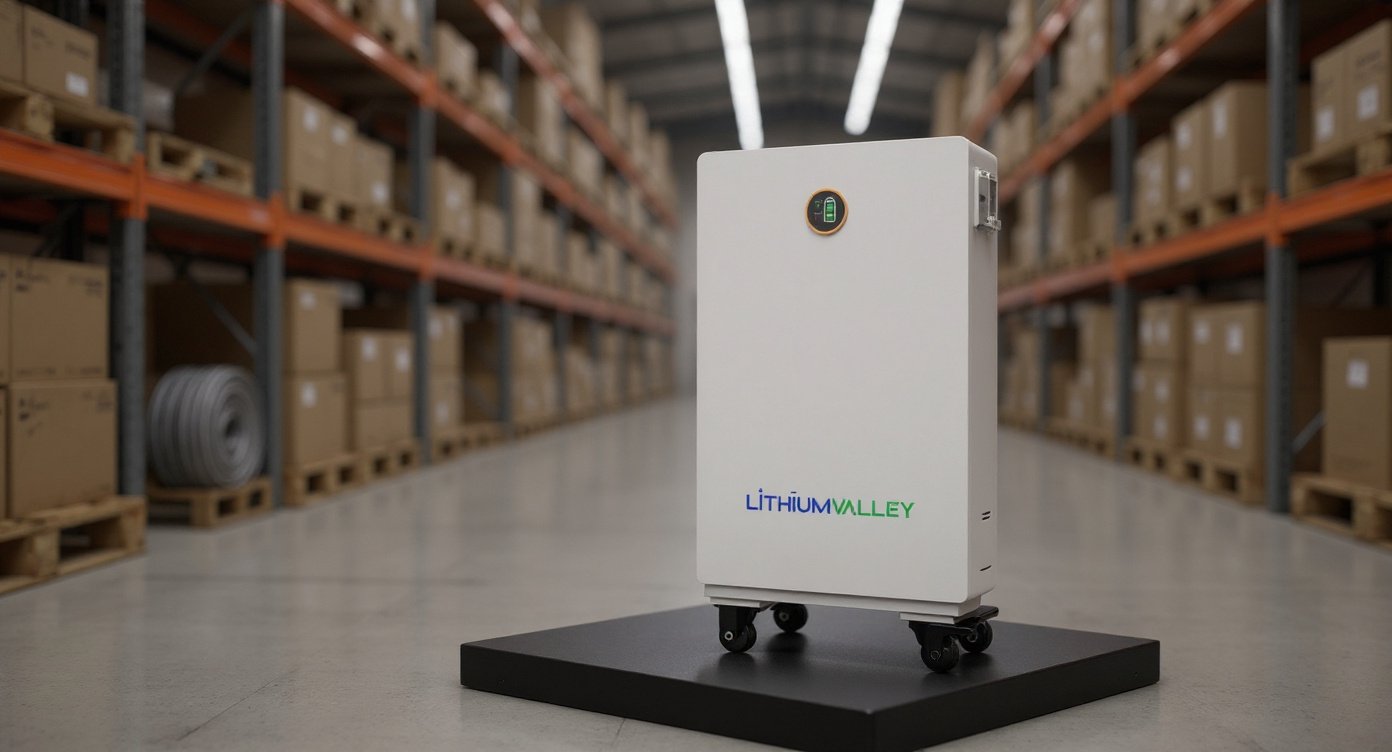
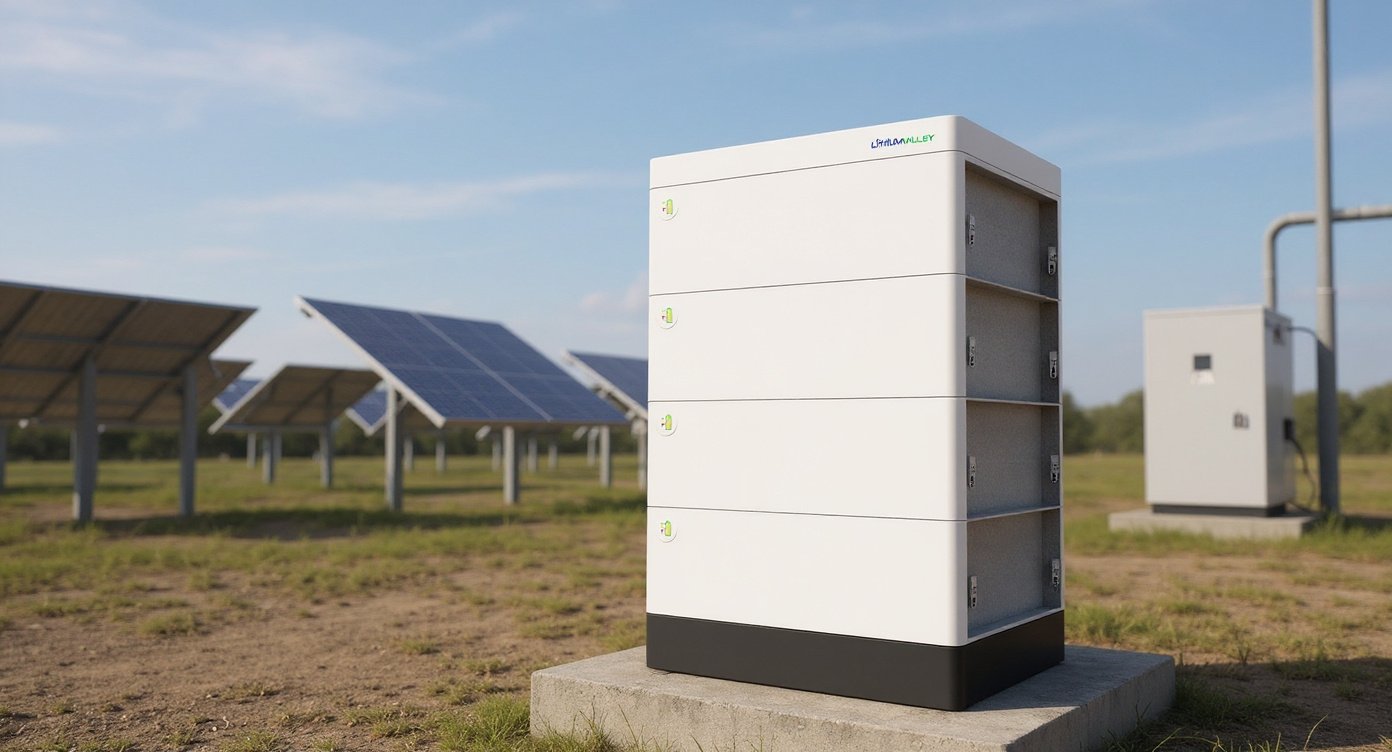
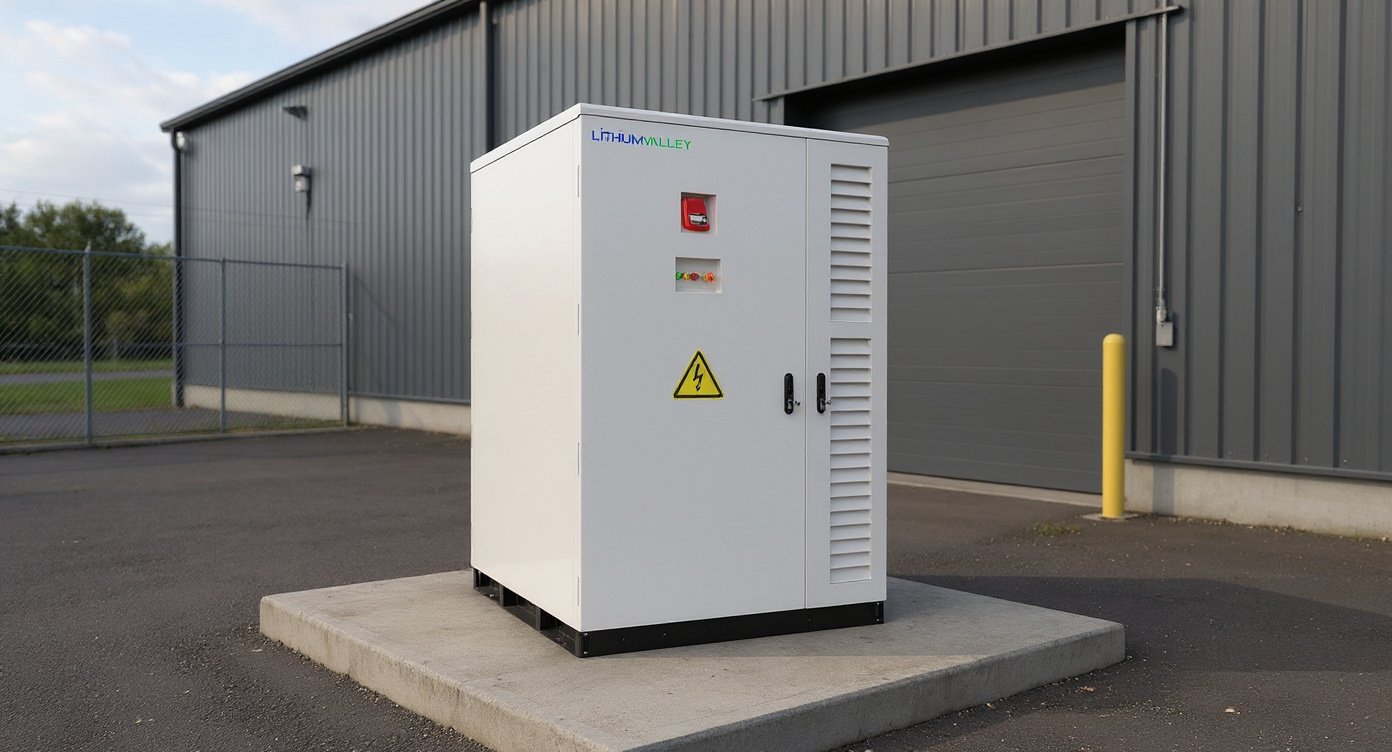
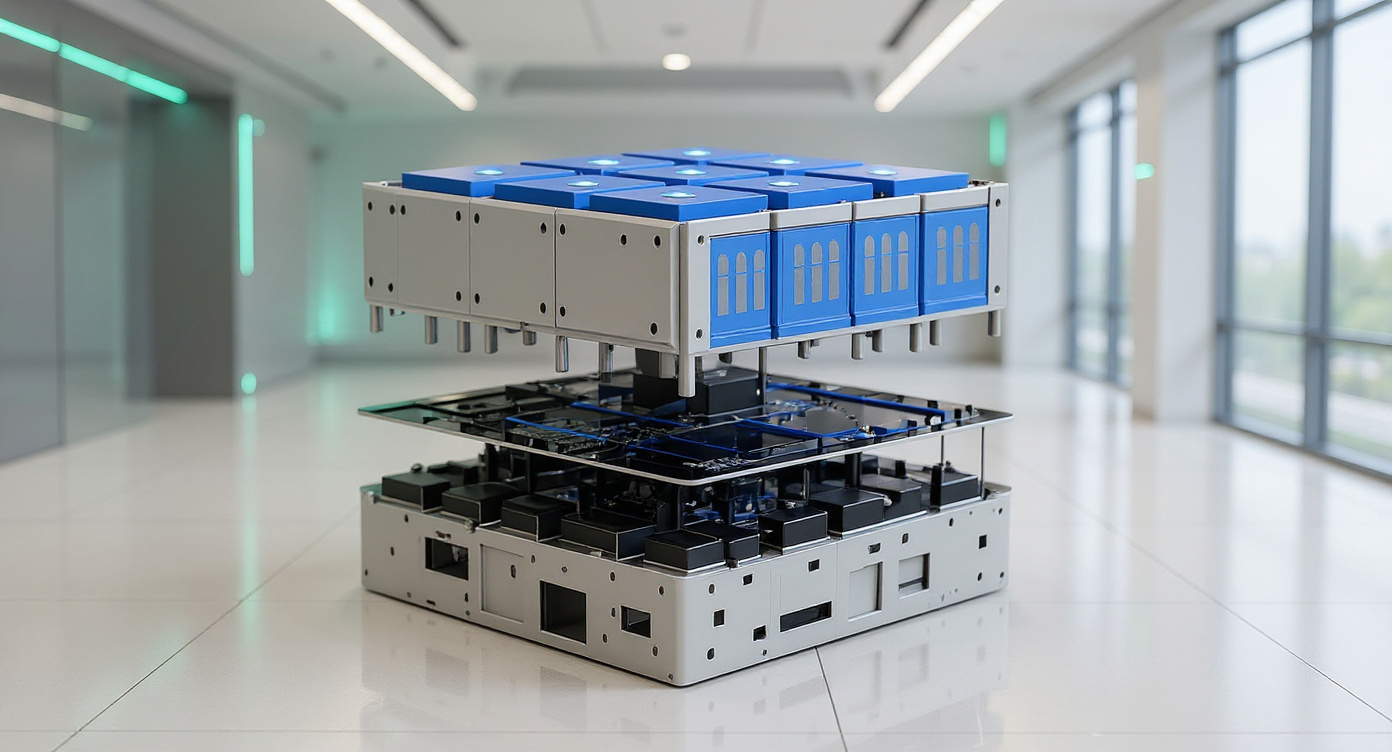
If your project needs a modular cabinet architecture instead of a stitched-together pile of smaller units, the LITHIUMVALLEY FLEX16 High Voltage C&I Energy Storage System is the kind of platform I’d put in the serious-evaluation bucket. The product page lists 96 kWh nominal per cabinet, LiFePO4 chemistry, active cell balancing, BMS plus EMS, grid-tied and off-grid modes, peak shaving and emergency backup, CAN/RS485/Ethernet communication, remote monitoring, IP54 indoor protection, forced-air cooling, and at least 6,000 cycles at 80% depth of discharge.
Quote-only pricing is normal here. No surprise.
Why tariff design matters more than panel count in solar plus storage for factories
People love talking about panel count because it feels tangible. Forty rows. Two megawatts. Nice renderings.
The tariff decides more.
If the site pays a flat energy rate with no meaningful demand charge and almost no spread between off-peak and on-peak energy, solar plus storage for factories gets harder to justify on savings alone. You may still want resilience. That’s valid. But the payback case weakens.
If the tariff has a 15-minute billing peak and demand charges of $19 per kW, now we’re talking.
Here’s a simple example. A plant hits one monthly peak at 2,140 kW. A battery clips 260 kW off that interval, taking billed demand to 1,880 kW. At $19 per kW, that’s $4,940 saved in one month. Miss that peak by ten minutes and you save far less. Controls matter that much.
NREL has been making this point for years. Customer-sited storage value depends heavily on local rate design and dispatch success, not just installed capacity (NREL energy storage analysis).
The same logic applies to export rates. If the utility credits excess solar at $0.03 per kWh and your avoided retail purchase is $0.14 per kWh, storing surplus can make sense. If export is credited at $0.11 per kWh, battery charging from excess PV becomes a tougher sell.
This won’t work if the tariff is too simple. Or if the utility peak is set by a random event the battery can’t see coming.
A comparison table I wish more sales reps showed
Here is the blunt version.
| Factory situation | Solar only | Solar plus storage for factories | What usually decides the outcome |
|---|---|---|---|
| High daytime load, low demand charges | Often good | Sometimes unnecessary | Self-consumption rate |
| 15-minute demand charges above $16/kW | Helps some | Often much better | Peak predictability and controls |
| Export credit below $0.04/kWh | Surplus loses value | Battery can recover value | Afternoon load and charge window |
| Frequent outages under 10 minutes | Little help | Strong case for ride-through | Critical load segmentation |
| Flat tariff, energy-only billing | Usually fine | Often weak ROI | No demand value to capture |
| Existing diesel generator on site | Good for energy | Useful if paired well | Start reduction and transition logic |
| 24/7 process load with evening demand | Good | Good if solar can be shifted | Battery duration, 1 to 3 hours often enough |
The load profile is the truth in solar plus storage for factories
Two plants can each use 4.2 GWh per year and have completely different battery economics.
One has a steady 480 kW base load and tops out at 730 kW. Boring load. Nice for utility planning. Not exciting for battery savings.
The other runs a 510 kW base load but spikes to 1,420 kW for 20 minutes when compressors, ovens, and chilled water equipment overlap. That’s a battery site.
Annual kWh totals don’t tell you that.
We reviewed a food facility in Ohio that looked average on annual use, but every weekday between 3:15 and 4:00 p.m. the refrigeration and packaging lines stacked up. Same ugly hill, five days a week. A 500 kW / 1,000 kWh high-voltage LiFePO4 ESS penciled out well there because the peak was repeatable and the utility punished it. That’s what bankable solar plus storage for factories looks like. Repetition.
What you want from the data:
1. The top 20 peaks over 12 months
2. How long those peaks lasted, 5 minutes, 15 minutes, 45 minutes
3. Whether they overlap with solar production
4. Whether they repeat on a pattern the EMS can catch
5. Which loads are operationally critical if outage support is part of the plan
For a factory-scale build, this is where modular metal battery cabinets earn their keep. You can add capacity in steps instead of betting the whole project on one oversized enclosure. The better systems also expose proper industrial communications so the battery, inverter, PV, meter, and plant controls can all talk without custom hacks. That’s not glamorous. It saves projects.
The product architecture matters, and not every battery belongs in a factory
I’ll be blunt here.
A lot of products marketed as commercial storage are just residential ideas stretched upward.
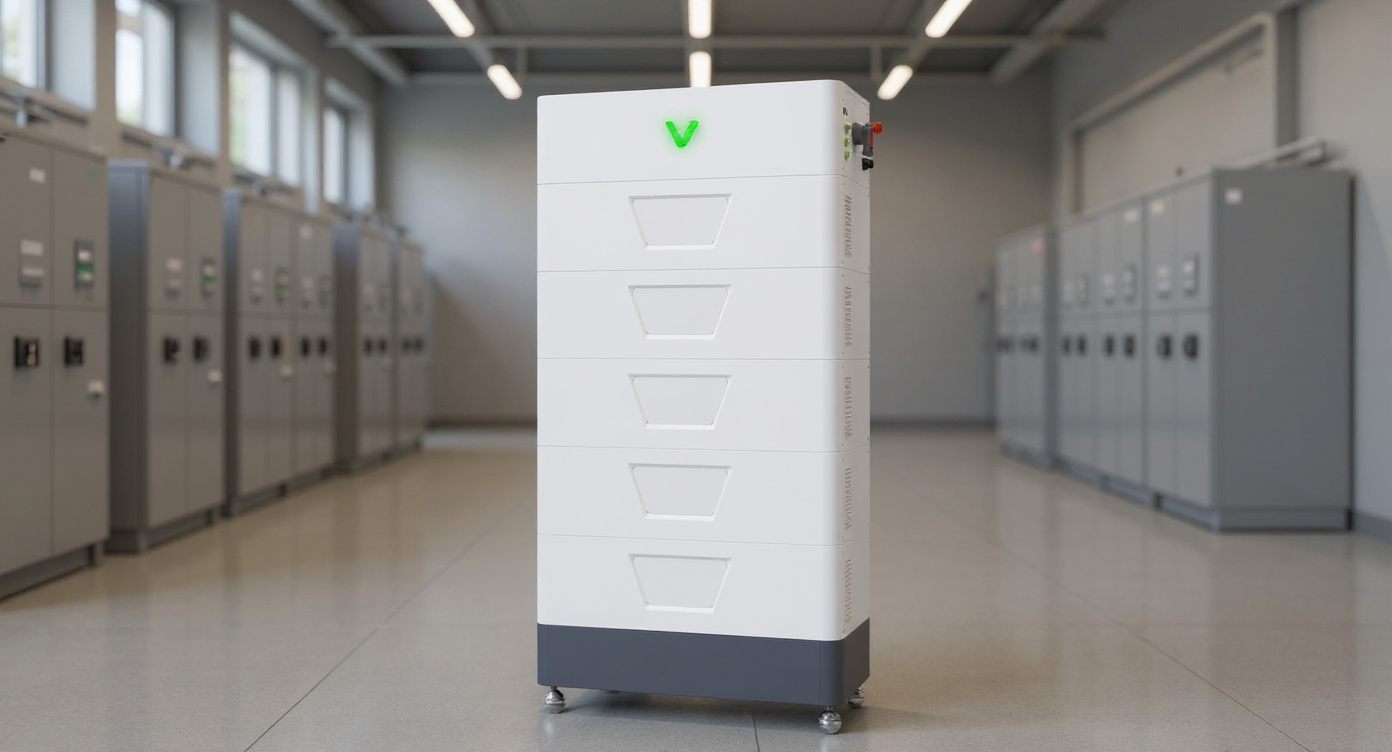
If you’re evaluating solar plus storage for factories, you want hardware that looks and behaves like industrial equipment: high-voltage LiFePO4 ESS, scalable technical battery-module assemblies, cabinetized installation, standard communications, real BMS logic, service access, and environmental specs that match electrical rooms that run hot and collect dust.
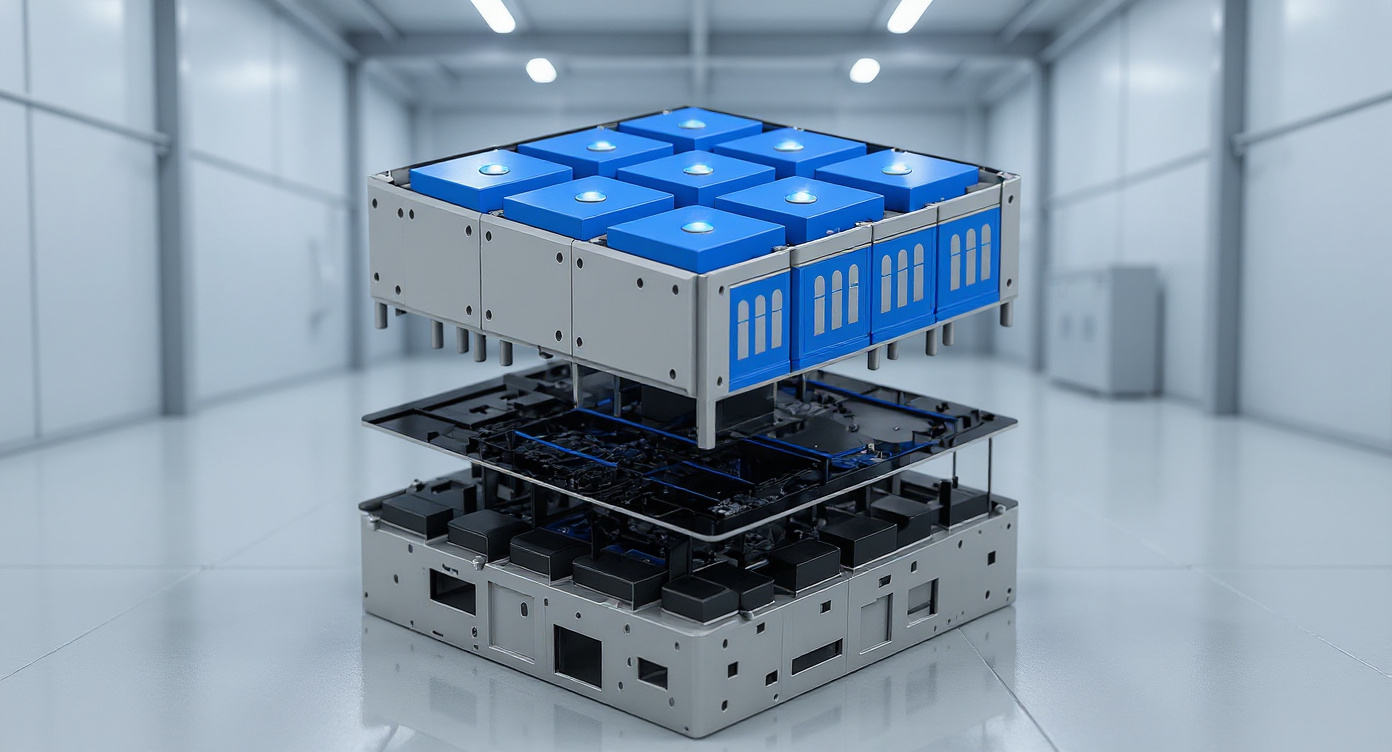
The product identity we build around is exactly that. Large-scale commercial and industrial high-voltage LiFePO4 ESS, presented as modular metal battery cabinets and technical battery-module assemblies with blue cells, silver-white enclosures, navy engineering typography, and blue-green energy accents. That’s the right visual and physical language for factory projects because it reflects what buyers are actually procuring: engineered plant equipment.
For internal research, I’d also compare this class against bigger known names. Fluence and Tesla Megapack tend to enter the conversation at larger utility and grid-support scales, often above what a single factory site needs. Sungrow, BYD, CATL, and Huawei show up often in C&I and utility-adjacent bids. On the smaller commercial side, Powin, AlphaESS, and Canadian Solar’s EP Cube channels get mentioned, though some of those sit closer to commercial than heavy industrial.
Price transparency is still bad in this sector, but broad market ranges are not mysterious. In 2024 and early 2025, fully installed C&I battery projects in North America often landed somewhere between $410 and $690 per usable kWh, depending on duration, PCS, fire suppression scope, switchgear, and labor. A 1 MWh factory system is not a neat “$200,000 battery” story after you include integration. More like $410,000 to $690,000, and sometimes over $800,000 if the electrical work gets ugly.
That’s why honest sizing matters.
Backup power is where solar plus storage for factories gets oversold
This is where budgets go sideways.
Many plants say they want backup. Fair enough. What they often mean is one of three different things:
– ride-through for 30 seconds to 5 minutes
– enough time for controlled shutdown, 10 to 45 minutes
– whole-facility operation during an outage, for hours
Those are not the same project.
A battery is excellent at the first two. It can also help with the third, but once you start talking about keeping an entire factory online for four hours, capital costs jump hard. Switchgear gets more complex. Islanding logic gets more serious. Protected-load segmentation becomes mandatory. Generator coordination may become the cheaper answer.
The EPA’s work on resilience and microgrids makes the same point from a public-sector angle: match the power quality and runtime to the loads that truly matter (EPA resilience and microgrids).
Honestly, if your real goal is “run the whole plant through every outage,” skip a battery-only concept unless the downtime cost is massive and documented. Pair the battery with a generator, or rethink the resilience target.
Most articles won’t say that because the bigger battery quote looks nicer in the sales funnel.
The uncomfortable catch in solar plus storage for factories
Batteries are real. The value can be real too.
The catch is modeling.
Proposal math often assumes:
– the battery catches the monthly peak every time
– the plant load behaves the same way every month
– commissioning is smooth
– controls integrate on schedule
– interconnection approval doesn’t drag
– battery wear has little effect on dispatch strategy
That’s not how real projects behave.
One more thing worth flagging. The FLEX16 product page lists 96 kWh per cabinet, maximum 12 cabinets, and up to 3.08 MWh. Those numbers don’t reconcile in a simple 96 x 12 calculation. That doesn’t make the product bad. It does mean the buyer should pin down the exact project architecture before using any top-line capacity figure in ROI work.
Ask the awkward questions early. Save pain later.
Solar plus storage for factories: what good controls look like
People fixate on cells. I get it. Blue cells in a clean technical battery-module assembly are tangible. You can photograph them.
Controls make or break the savings.
A usable factory ESS should at minimum see:
– utility meter data in real time
– PV output in real time
– state of charge and power limits in real time
– operating mode commands from the EMS
– protected load status if backup mode exists
For a high-voltage LiFePO4 ESS in a modular cabinet format, I want to see industrial communication options, event logs, remote monitoring, and control logic that can prioritize demand shaving over pure solar capture when the tariff says that’s the better move.
Because if the battery discharges at 1:30 p.m. to soak up a minor spike, then sits half-empty when the true plant peak hits at 4:10 p.m., the hardware didn’t fail. The strategy failed.
Big difference.
Brand-neutral questions to ask before you quote solar plus storage for factories
Ask for these in writing:
1. A model based on your actual tariff and 12 months of interval data
2. Savings split by source: demand reduction, arbitrage, solar self-consumption, outage mitigation
3. A bad-month case, not just the best-month case
4. Battery cycling assumptions and expected annual throughput
5. Protected load list for backup mode
6. Interconnection scope, protection studies, and estimated approval timeline
7. Exact usable kWh, not just nominal kWh
8. Expansion path if you add more cabinets later
If the answers stay vague, walk.
Solar plus storage for factories and product fit: where FLEX16-type systems make sense
A system in the FLEX16 class makes sense when the project needs cabinet-based expansion, industrial communications, LiFePO4 chemistry, indoor installation, and a real EMS/BMS stack.
Again, the reference product here is a large-scale commercial and industrial high-voltage LiFePO4 ESS, built as modular metal battery cabinets and technical battery-module assemblies. Blue cells. Silver-white cabinet shells. Navy engineering typography. Blue-green energy accents. It sounds aesthetic on paper, but in practice it signals a category: engineered industrial storage, not repackaged consumer gear.
That matters if you’re presenting this inside a procurement process where the electrical team, operations team, and finance team all have to sign off.
For related system research beyond the main product page, buyers usually want to compare architecture, scalability, and communication options across adjacent categories too. Keep these product references on your list:
– LITHIUMVALLEY FLEX16 High Voltage C&I Energy Storage System
– high voltage energy storage system commercial industrial ESS
– commercial and industrial battery storage
– modular cabinet energy storage system
Yes, those paths should ideally point to distinct internal pages. If your site architecture doesn’t have them yet, build them. One URL carrying all intent is leaving SEO on the table.
FAQ: solar plus storage for factories
Is solar plus storage for factories worth it?
Yes, if the factory has strong demand charges, weak export compensation, short repeatable peaks, or costly downtime. No, if the tariff is mostly flat energy billing and the battery is being justified with vague backup claims instead of actual load data.
Why are companies pushing solar plus storage for factories so hard?
Because the category is real and margins can be good. The catch is that some proposals stack three or four value streams into one optimistic model, then present the best-case number as if it’s normal.
Can solar plus storage for factories run a whole plant during a blackout?
Sometimes, but not by default. Most systems are better suited to ride-through, controlled shutdown, or support for priority loads unless you buy enough storage, switchgear, and controls for a true microgrid setup.
How do you size solar plus storage for factories for demand charge savings?
Start with 15-minute or 5-minute interval data. Identify the top monthly peaks, their duration, and whether they’re repeatable. Then size battery power in kW to shave the peak height and battery energy in kWh to cover the peak duration.
What battery chemistry is most common for solar plus storage for factories?
LiFePO4 is the current favorite for many C&I projects because it balances cycle life, safety, and cost. In this category, high-voltage LiFePO4 ESS in modular cabinet form is a common fit.
How long does a factory battery last?
It depends on heat, cycle depth, throughput, controls, and maintenance. A published benchmark like 6,000 cycles at 80% DOD is useful, but field life depends on how the system is dispatched, not just the cell datasheet.
What does a factory-scale battery cost?
For North American C&I projects, installed pricing often lands between $410 and $690 per usable kWh. A 2 MWh project might cost $820,000 to $1.38 million, and heavy electrical upgrades can push it higher.
Is solar plus storage for factories still useful if the site already has a diesel generator?
Yes. A battery can reduce generator starts, bridge the first minutes of an outage, smooth transitions, and improve solar utilization. In many factories, generator plus battery is better than trying to force the battery to do everything.
What if the factory has solar already?
Then the battery question becomes simpler. Look at when excess PV is exported, what export credit you receive, and whether battery charging can move that energy into expensive evening periods or help avoid demand peaks.
How much backup time do factories usually buy?
Many C&I projects target 15 minutes to 2 hours for selected loads, not all-day whole-site backup. That’s enough for ride-through, process continuity, or controlled shutdown in a lot of plants.
What data should I gather before requesting quotes for solar plus storage for factories?
Bring 12 months of interval usage data, utility bills with tariff sheets, one-line diagrams if available, generator details, solar production data if you already have PV, and a list of critical loads. Without that, most proposals are educated guesses.
What is the biggest mistake in solar plus storage for factories?
Oversizing for a backup story that the plant won’t actually fund or use. Second place goes to buying capacity before defining dispatch rules.