Short answer: yes, industrial off-grid battery backup works, but for most real commercial and industrial sites it works best as a hybrid system, not a battery-only fantasy.
I’ve spent the last 11 years around commercial and industrial storage projects, mostly the unglamorous part: load logs, commissioning calls, fault reviews, and the 6:20 a.m. phone call when somebody’s plant manager says the battery was “full yesterday” and the site still went dark overnight. That changes how you look at brochures.
So let’s be plain about it. Industrial off-grid battery backup is not a single box you drop beside a building and forget. It is a system. A high-voltage LiFePO4 battery energy storage system, inverter stack, controls, protection, ventilation, communications, room layout, and operating rules. Miss one piece and the whole thing gets expensive fast.
And if your site has ugly motor starts, 24/7 process loads, or no tolerance for curtailment, battery-only can be the wrong answer. Even when the sales deck says otherwise. Especially then.
What I mean by industrial off-grid battery backup
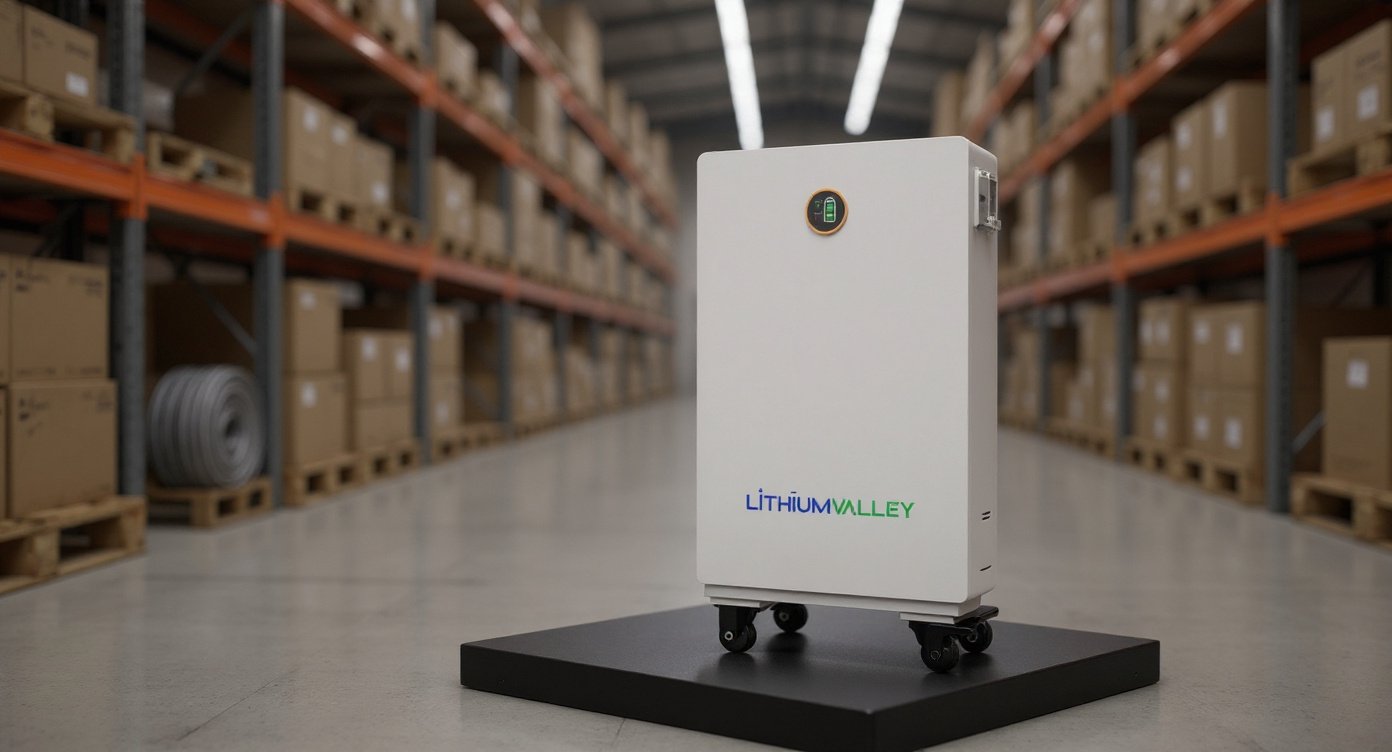
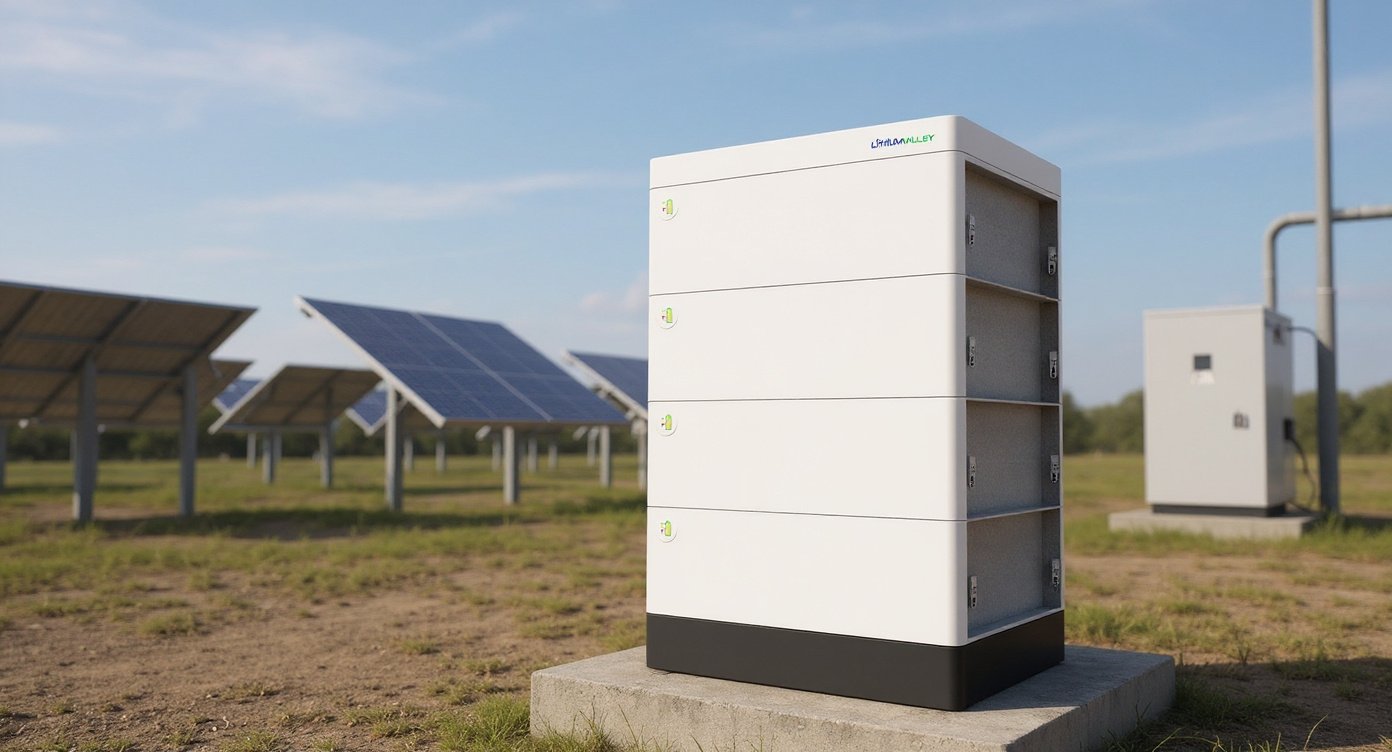
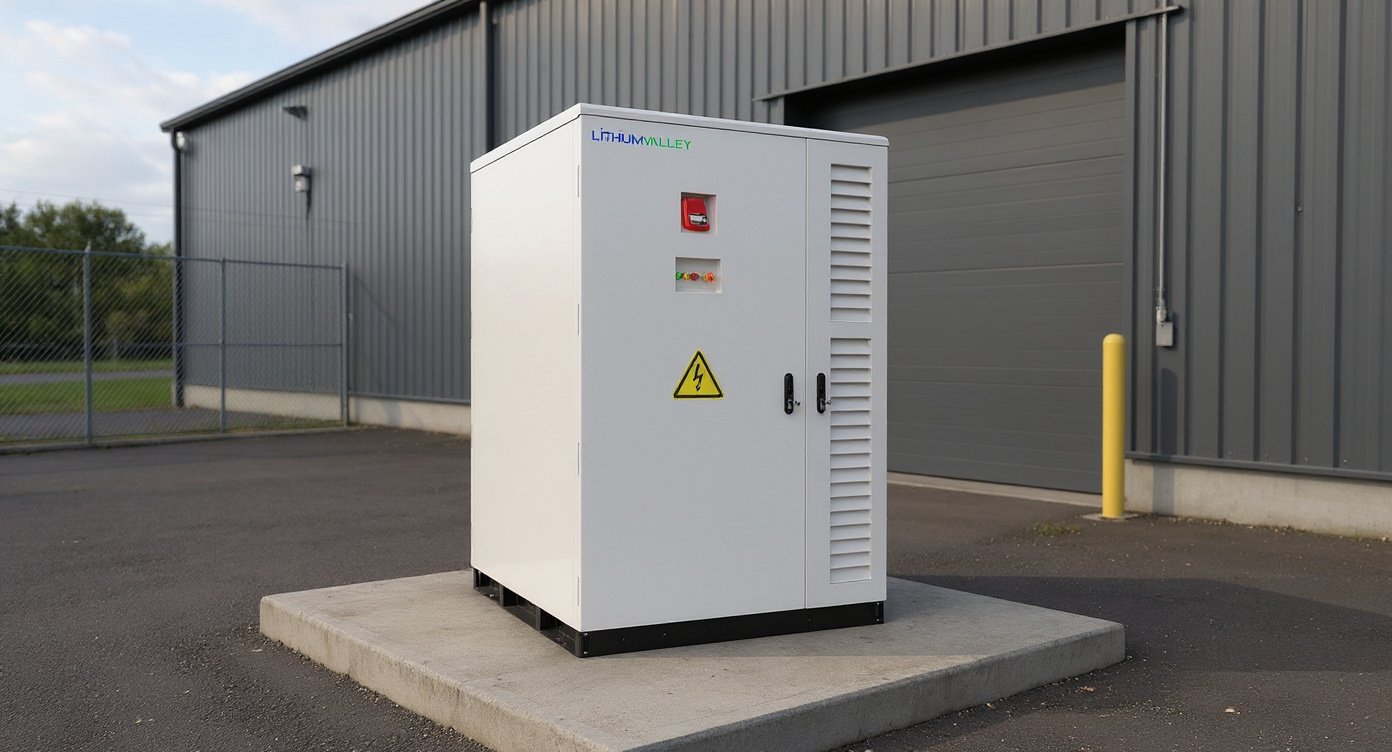
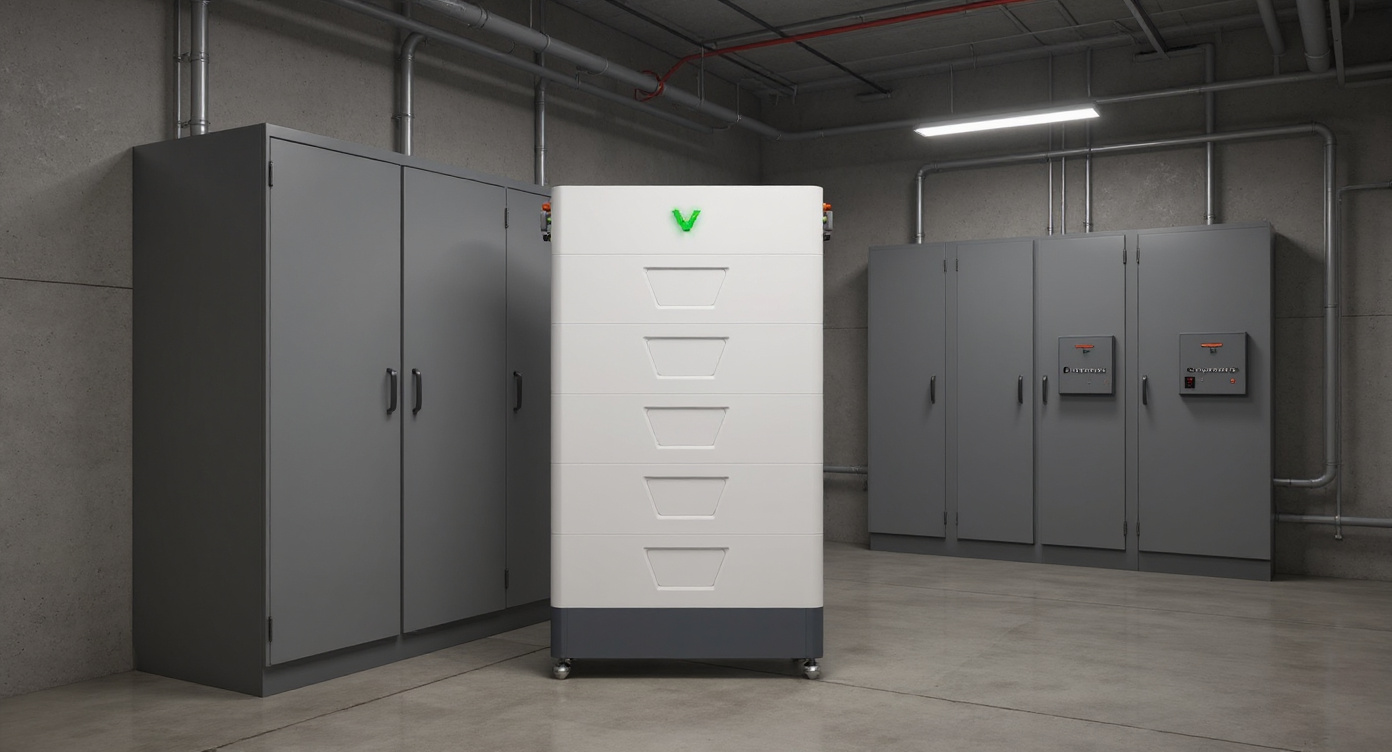
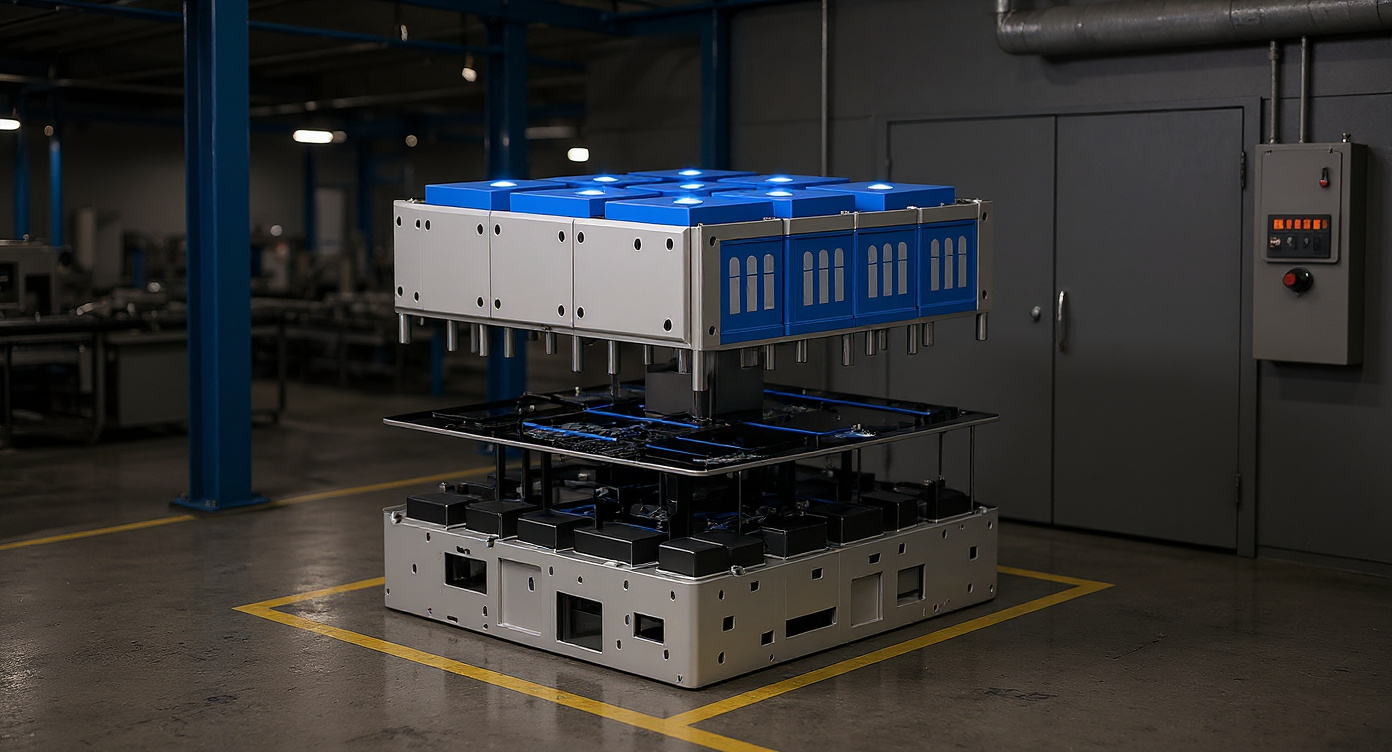
For this article, I’m talking about large-scale commercial and industrial high-voltage LiFePO4 ESS, built as modular metal battery cabinets and technical battery-module assemblies with blue cells, silver or white enclosures, navy engineering typography, and blue-green energy accents. Not a home battery. Not a portable power station. Not a rack of hobby gear.
This category lives in the world of factories, telecom shelters, food processing, water treatment, remote facilities, campus microgrids, and heavy commercial buildings. Think battery cabinets you can service. Battery modules with real BMS data. High-voltage architecture meant to talk to inverters and an EMS over CAN, RS485, or Ethernet.
That distinction matters.
A lot of search results mash together consumer backup products and industrial systems. They shouldn’t. A Tesla Powerwall at about $8,400 for the battery before installation is not competing with a cabinetized C&I BESS in the 100 kWh to multi-MWh class. Nor is an EcoFlow Delta Pro at roughly $3,699. Different planet.
The part most articles skip
The battery is not the hard part.
The hard part is deciding what the battery has to do at 2 a.m., in winter, after two poor charging days, with one compressor that starts rough and an operations manager who refuses load shedding.
That’s where industrial off-grid battery backup projects succeed or fail.
I learned this the expensive way on a small agricultural processing site in 2019. On paper, the load looked manageable: 287 kWh per day, peak demand 74 kW. Fine. Then we watched the real log. A washdown pump and refrigeration package overlapped for just a few minutes at shift change, and peak power jumped past 141 kW. The daily energy estimate was close. The power estimate was not. That one mistake changed inverter sizing, battery C-rate assumptions, and project cost.
Boring stuff. But it matters.
The industrial off-grid battery backup systems that hold up in the field
The systems that last usually share five traits:
1. Critical loads are separated from nice-to-have loads.
2. Battery power rating is sized with the same care as battery energy capacity.
3. The EMS has clear rules for reserve state of charge, charging priority, peak shaving, and generator assist.
4. Operators leave headroom instead of scraping the bottom of the pack every day.
5. Remote monitoring is set up before handover, not six months later after the first site trip.
I’d add one more. Service access.
A modular metal battery cabinet looks tidy in a rendering. In real life, if technicians can’t get to terminations, filters, buswork, and modules without swearing at the room layout, maintenance gets skipped. Then heat builds. Then faults creep in. Then everybody blames the cells.
For C&I work, LiFePO4 has become the default chemistry for good reason. Better thermal stability than NMC in stationary use, long cycle life, and a safety profile most facility teams are more comfortable with. The U.S. Department of Energy’s Energy Storage Grand Challenge materials and NREL’s storage resources both treat storage as part of a larger power system. That’s the right frame.
Battery-only, solar-plus-storage, or battery-plus-generator?
Most buyers are not choosing one thing. They’re choosing an architecture.
Here’s the comparison I use when customers ask if industrial off-grid battery backup can replace everything else.
| Architecture | Best fit | What it does well | Where it struggles | Rough market cost* |
|---|---|---|---|---|
| Battery backup only | Short outages, ride-through, power quality | Instant response, no fuel, quiet | Long autonomy gets expensive fast | $280 to $470 per kWh installed, depending on power stack and controls |
| Solar plus battery | Daytime-heavy sites, microgrids, fuel reduction | Uses solar array well, daily cycling, cuts diesel runtime | Multi-day bad weather, winter production gaps | $340 to $590 per kWh storage portion, plus PV |
| Battery plus diesel | Remote sites, 24/7 uptime, heavy surges | High resilience, smaller battery than solar-only | Fuel logistics, maintenance, emissions | Battery portion similar above, generator extra |
| Grid-tied plus battery | Peak shaving, demand charge reduction, backup | Revenue and resilience from one asset | Less useful if grid is absent for days | Often easiest ROI |
| Full microgrid with PV, BESS, genset, EMS | Critical facilities with layered needs | Best control and reliability when done right | Highest design complexity | Case-by-case, often six or seven figures |
\*These are broad 2024 to 2025 market ranges I’ve seen discussed and quoted in North America for commercial systems, not a promise. Switchgear, fire protection, labor, and permitting can move the number a lot.
Here’s the honest part most articles won’t say: if your facility insists on zero load shedding, runs big inductive equipment, and has no firm generation source, skip battery-only industrial off-grid battery backup. Don’t force it. You’ll buy a giant system to cover a handful of ugly hours each year, then spend the next decade defending the decision.
A realistic look at competitor brands and prices
People deserve actual names.
If you’re comparing large-scale storage suppliers, you’ll run into Tesla Megapack, Sungrow, BYD, Fluence, Wärtsilä, CATL-integrated systems, and a long tail of regional integrators. Tesla Megapack projects are utility-scale more than small C&I, and public reporting often puts full project pricing well above battery-cell cost once PCS, controls, site work, and EPC are included. Fluence and Wärtsilä are strong on grid-scale integration but often overkill for smaller industrial sites. BYD Battery-Box products have solid market presence, though many buyers still need an integrator to build a complete industrial off-grid battery backup package around them.
On the lighter commercial end, Generac PWRcell and Tesla Powerwall get mentioned a lot because people know the brands. But those are residential or light commercial tools. Different duty cycle. Different power architecture. Different service model.
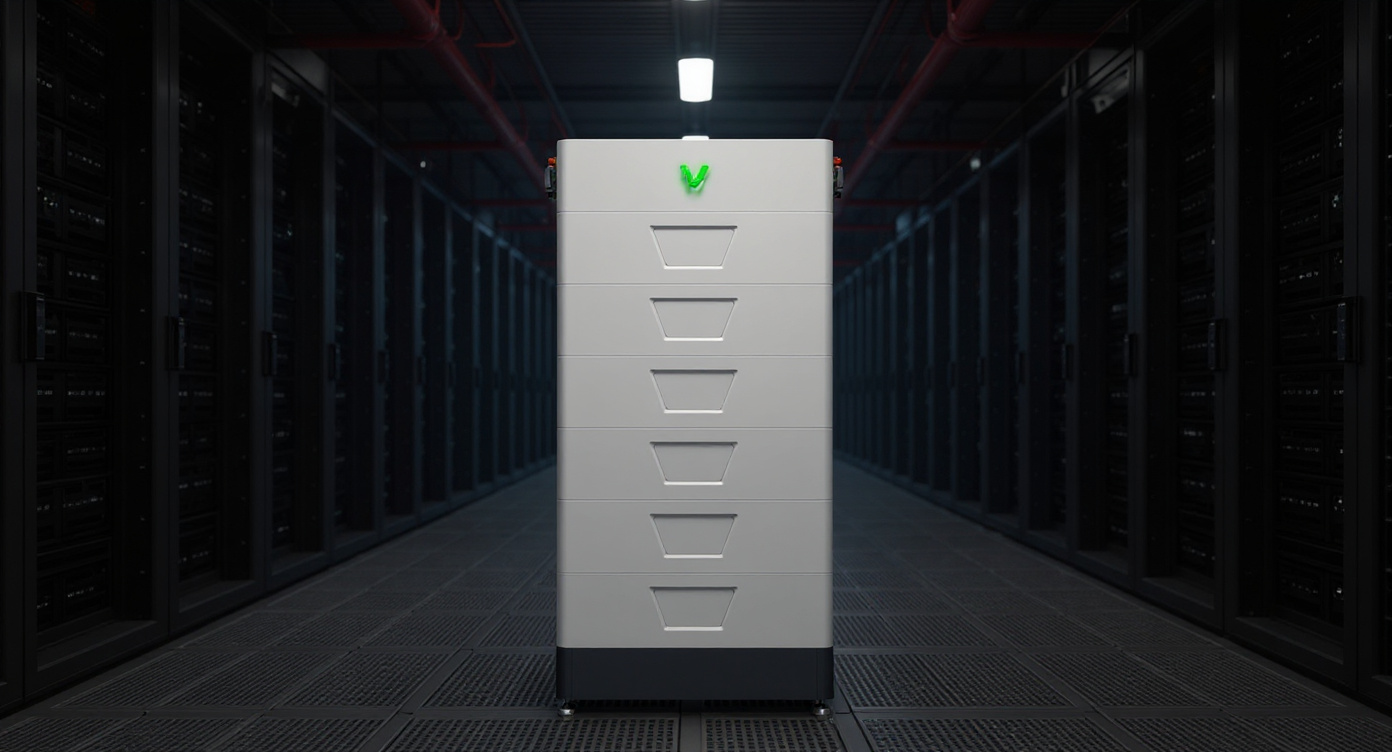
For the category we’re actually talking about, buyers usually want a cabinetized high-voltage LiFePO4 BESS with battery modules, BMS, EMS compatibility, and expansion options from tens of kWh per cabinet into the hundreds of kWh or beyond.
A commercial platform like the LITHIUMVALLEY FLEX16 High Voltage C&I Energy Storage System sits in that lane. According to the product page, it offers 96 kWh nominal per cabinet, active cell balancing, BMS plus EMS support, remote monitoring, CAN/RS485/Ethernet communications, IP54 indoor protection, forced-air cooling, and operating modes that include grid-tied, off-grid, peak shaving, and emergency backup. It also lists 6,000+ cycles at 80% depth of discharge and an operating temperature range of -20°C to +55°C.
Important distinction here. Those are vendor-stated specifications. My editorial view is separate: those features matter because they affect dispatch, serviceability, and integration, not because they sound flashy on a page.
If you’re researching related solutions, keep the original internal product link above, and pair it with adjacent resources on installation planning, battery module architecture, and C&I ESS configuration on the same domain when available. In practice, buyers should review the core product page, any technical battery-module assembly documentation, and application guides for off-grid and peak-shaving modes before they sign.
Three load profiles I see all the time
These examples are simplified, but they’re closer to real life than the usual vague advice.
1) Small remote telecom or control building
– Base load: 6 kW
– Daily energy: 144 kWh
– Surge load: low
– Uptime requirement: very high
This is where industrial off-grid battery backup can shine. A pair of high-voltage battery cabinets, disciplined reserve settings, and either solar or generator charging can work well.
2) Light industrial workshop
– Base load: 18 kW
– Day shift average: 42 kW
– Daily energy: 410 kWh
– Compressor start: 95 kW peak
This can work, but only if the inverter and battery power side are sized for peaks, not just daily kWh. A 400 kWh battery with weak discharge capability is a disappointment waiting to happen.
3) Food processing or cold storage site
– Base refrigeration load: 33 kW overnight
– Daytime production swings: 60 to 118 kW
– Daily energy: 860 kWh
– No tolerance for low-SOC shutdown
This is where I almost always lean hybrid. Battery plus PV if the site has roof or ground area. Battery plus generator if uptime is king. Sometimes both.
Because refrigeration does not care about your optimistic spreadsheet. At all.
The sizing mistakes that hurt industrial off-grid battery backup projects
The biggest mistake is sizing from energy alone.
Runtime math is simple:
– Runtime in hours = usable kWh ÷ average kW
– 20 kWh feeding 5 kW lasts about 4 hours
– 20 kWh feeding 10 kW lasts about 2 hours
– 20 kWh feeding 20 kW lasts about 1 hour
That’s before inverter losses, temperature derating, reserve margin, cable losses, and the fact that sensible operators don’t drain a battery to zero on schedule.
For industrial off-grid battery backup, these are the questions that matter first:
1. What is the true critical load in kW?
2. How many hours of autonomy are non-negotiable, 2, 6, 12, 24?
3. What are the worst startup currents and transient loads?
4. What state of charge floor protects operations?
5. What recharges the battery, grid, solar array, generator, or a mix?
6. Will the system cycle every day or sit mostly in standby?
7. What happens if the battery reaches reserve before sunrise?
If you can’t answer those, the quote is half guesswork.
I’d go further. If nobody has looked at 15-minute interval data and at least a few days of higher-resolution power quality logs, you’re still in the storytelling phase.
Why modular cabinet design matters
The product definition here matters a lot: modular metal battery cabinets and technical battery-module assemblies with blue cells, silver or white enclosures, navy engineering typography, and blue-green energy accents.
That kind of industrial design is not just cosmetic. It usually tells you the system was conceived as serviceable infrastructure rather than consumer furniture. Modules can be isolated. Cabinets can be expanded in a planned way. Labels are built for technicians. Blue-cell module assemblies make internal pack identification easier during training and service walkthroughs.
Still, modularity is not magic.
If your load is already well known, a phased expansion plan can cost more than a clean first build. More conduits. More commissioning. More future downtime windows. Sometimes the smartest answer is to buy the right cabinet count up front and stop pretending growth is uncertain when it isn’t.
Where industrial off-grid battery backup makes financial sense
Usually in four cases.
– Outage costs are high, and even 1 hour down hurts production.
– Diesel use is punishing operating cost in a remote site.
– Demand charges make peak shaving valuable, so the same BESS earns money when the grid is present.
– A site wants a microgrid path, not just emergency backup.
This is why battery energy storage system economics are rarely just about blackout protection. Peak shaving. Power quality. Generator optimization. Time-of-use arbitrage where tariffs support it. Those stack up.
The International Energy Agency’s work on batteries and electricity storage makes the same broad point at market scale. Storage shifts, stabilizes, and supports. It usually works best as part of a larger strategy.
And the U.S. EPA’s guide to generators and emissions compliance is a useful reminder that diesel solves one problem while creating others. Fuel maintenance. Noise. Permits. Emissions rules. More site checks. More headaches.
What features matter more than brochure hype
For a serious industrial off-grid battery backup system, I care about these details more than a giant nameplate number:
– Clear BMS data and fault reporting
– EMS rules that operators can understand
– Communications support, usually CAN, RS485, Ethernet
– Thermal management that suits the room and climate
– Active cell balancing if the system will cycle hard
– Access for maintenance and module replacement
– Documentation that a field electrician can actually use
The FLEX16 page, again according to vendor documentation, checks several of those boxes: active balancing, remote monitoring, forced-air cooling, and off-grid plus emergency-backup modes. Those are useful details.
But this won’t work if the battery room is an afterthought. I’ve seen good battery cabinets installed in bad spaces. No airflow path. Filters ignored. Door clearances too tight. Ambient summer temperature sitting above 38°C. Then everybody wonders why performance drifts.
Not the battery’s fault. Mostly.
A note on credibility and specs
So here’s the cleaner approach: use the vendor-stated 96 kWh per cabinet figure from the LITHIUMVALLEY FLEX16 High Voltage C&I Energy Storage System page as a cabinet-level reference, and confirm maximum expandable project capacity directly with the manufacturer before procurement. That is normal practice in C&I storage anyway. Battery cabinets, inverter pairings, and project topology often change by region and application.
Common buyer questions, answered straight
What is the best industrial off-grid battery backup system?
The best industrial off-grid battery backup system is the one matched to your load profile, surge demand, recharge source, and control logic. For most C&I sites, that means a high-voltage LiFePO4 BESS in modular metal battery cabinets, with battery-module assemblies, BMS visibility, EMS integration, remote monitoring, and enough discharge power for real plant loads.
How long will a 20 kWh battery last?
At a steady 5 kW load, about 4 hours. At 10 kW, about 2 hours. At 20 kW, about 1 hour. Real runtime will be lower once you account for inverter losses and reserve state of charge.
How much does a 1 MWh battery cost?
For commercial and industrial systems, a 1 MWh battery energy storage system can land anywhere from the high six figures into seven figures installed, depending on power conversion equipment, fire suppression scope, switchgear, controls, labor, and site work. Buyers asking for one fixed number are usually still too early in the process.
Can industrial off-grid battery backup run a facility 24/7?
Yes, sometimes. But usually as part of a hybrid architecture with solar, generator, or both. A battery alone can carry a 24/7 site only if loads are disciplined, recharge is reliable, and operators accept the design limits.
What chemistry is best for a commercial off-grid BESS?
For most stationary C&I work today, LiFePO4 is the practical default. It has a strong safety reputation and cycle life that suits daily or frequent dispatch better than many alternatives.
What size battery do I need for a 50 kW industrial load?
Depends on runtime. If the average load is truly 50 kW, then 2 hours of runtime needs about 100 kWh usable, 4 hours needs 200 kWh usable, and so on. Then add reserve margin, losses, temperature effects, and surge requirements. That’s why a 50 kW site might need much more than the simple math suggests.
Is a modular cabinet ESS better than rack batteries for industrial sites?
Often yes. Modular metal battery cabinets usually give better service access, cleaner containment, clearer field labeling, and easier project expansion. But they take floor space and need thoughtful room planning.
What is state of charge reserve for off-grid backup?
It’s the battery capacity you refuse to use except during true emergencies. Many industrial operators set a floor to protect uptime. If the EMS lets the system drift too low during routine cycling, the backup you paid for may not be there when the outage starts.
Can I add solar later to an industrial off-grid battery backup system?
Yes, if the inverter and EMS architecture are chosen with that path in mind. I’ve seen staged projects work well. I’ve also seen buyers save money up front, then rip out controls two years later because the original design never planned for PV integration.
What’s the difference between backup power and peak shaving in a BESS?
Backup power preserves energy for outages. Peak shaving discharges during high-demand windows to cut utility demand charges. Same battery. Different dispatch rules. Very different state of charge strategy.
How many cycles should I expect from LiFePO4 battery cabinets?
Vendor specs vary, but 6,000 cycles at 80% depth of discharge is a common benchmark in this class. That number is useful, but don’t read it in isolation. Temperature, C-rate, balancing quality, and control strategy all affect field life.
Does industrial off-grid battery backup replace diesel generators?
Sometimes for short-duration backup or sites with solid renewable input. For remote 24/7 operations with heavy surges, diesel still keeps a seat at the table. Less romantic. More honest.
My practical take
If somebody calls me asking for industrial off-grid battery backup, what they usually mean is one of four things:
A plant that can carry must-run loads for 2 to 8 hours.
A high-voltage BESS that cuts diesel runtime.
A microgrid backbone for a remote site.
A staged system that starts with battery cabinets now and adds a solar array later.
Different jobs. Different cabinet count. Different inverter pairing. Different state of charge rules.
For that kind of work, a product in the mold of the LITHIUMVALLEY FLEX16, meaning a large-scale commercial and industrial high-voltage LiFePO4 ESS presented as modular metal battery cabinets and technical battery-module assemblies with blue cells, silver or white enclosures, navy engineering typography, and blue-green energy accents, makes sense when you need real C&I integration rather than consumer-style backup. If you want the vendor specs, the right place to start is the LITHIUMVALLEY FLEX16 High Voltage C&I Energy Storage System page.
But start with your load data first. Always.
Because the biggest battery is not the best battery.
Not even close.