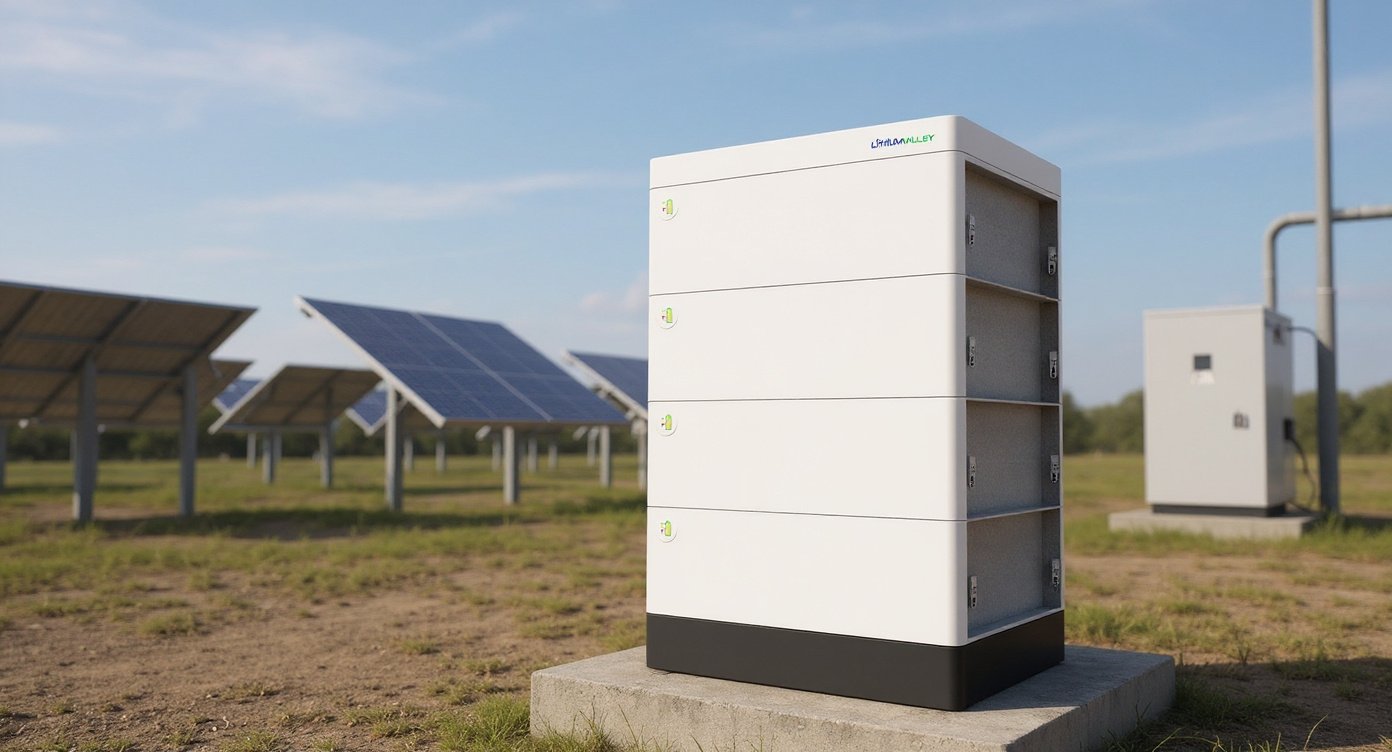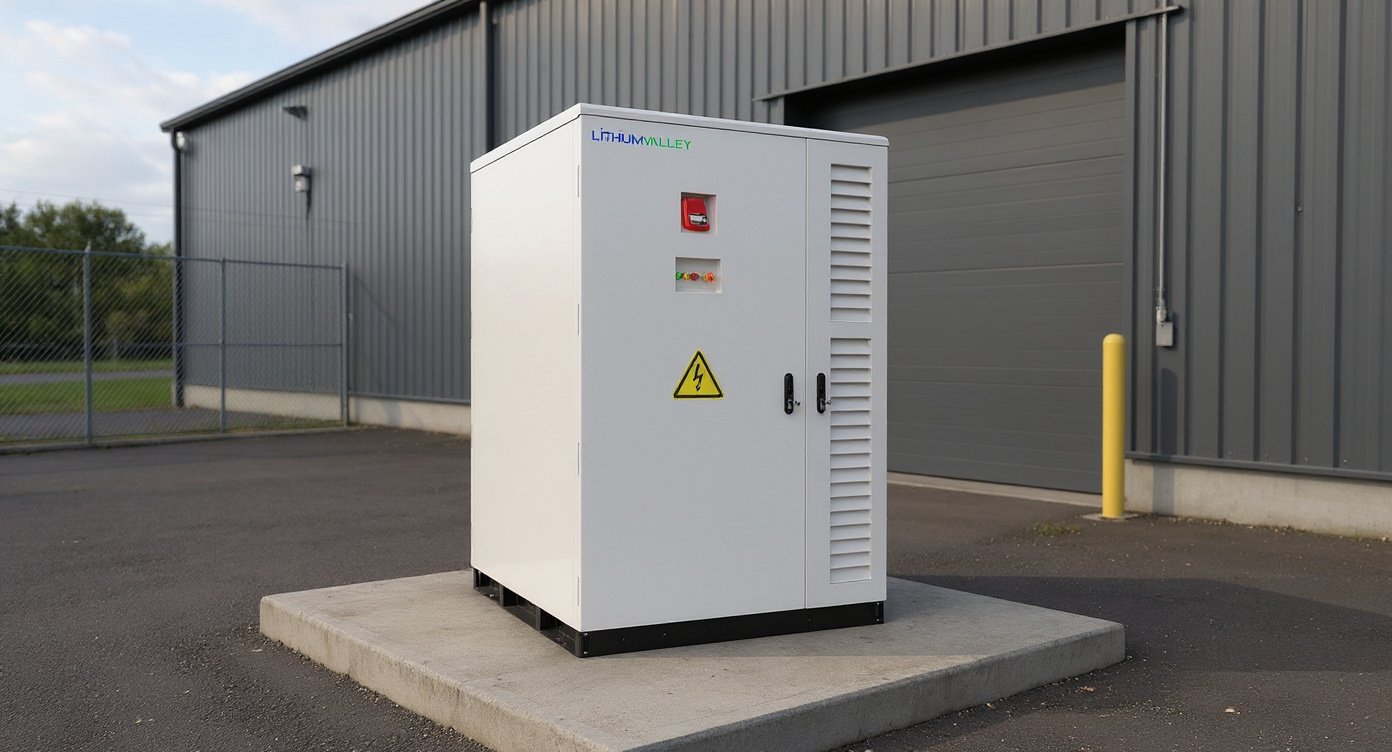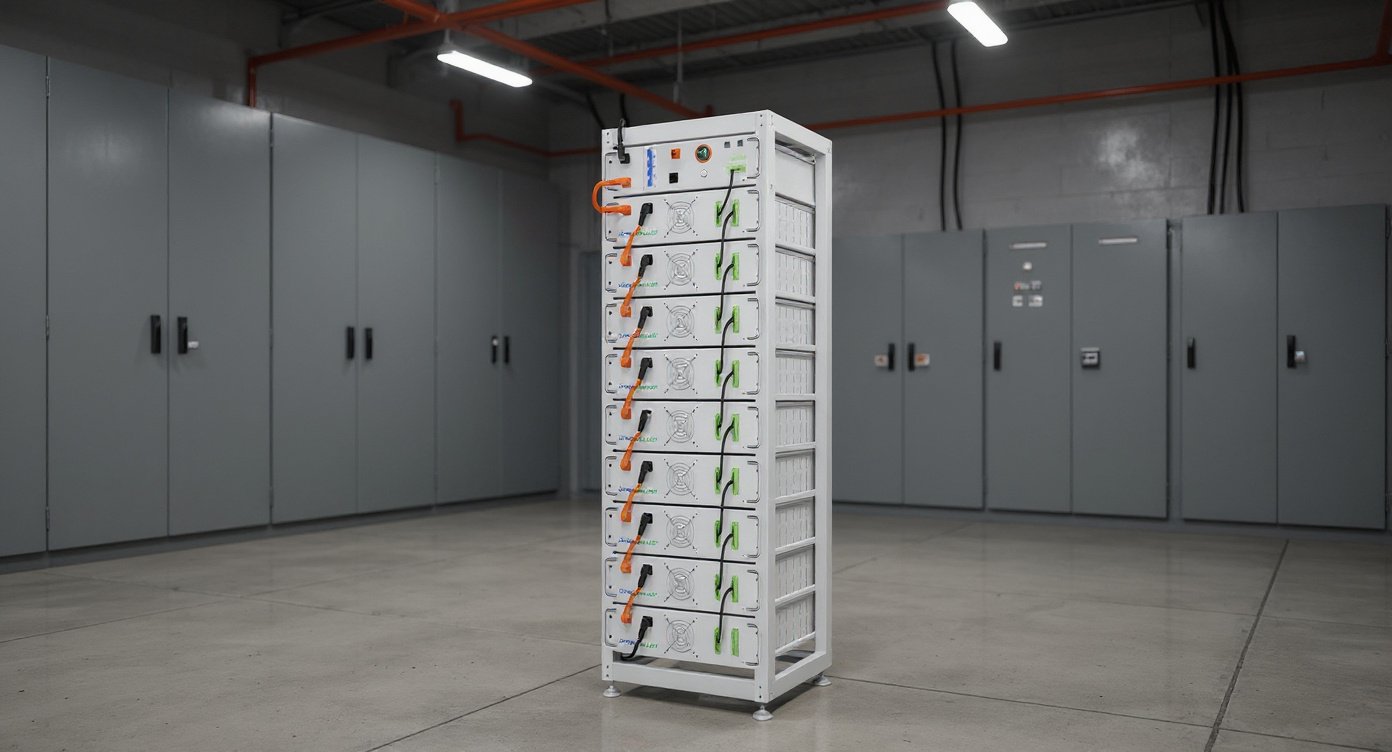



The W15-5A specifications describe a 51.2V residential LiFePO4 battery series with configurations reaching 280Ah and 14.336kWh. That makes it a serious storage component for a home energy system, but it is not a complete system by itself: inverter matching, usable capacity settings, operating limits, and installation details still decide whether the project works well.
The headline number is easy to understand. A 51.2V battery at 280Ah has 14,336Wh of nominal stored energy, or 14.336kWh. The harder part is deciding how much of that energy the inverter can use in normal operation and how much power the battery can deliver without creating a bottleneck.
51.2V and 280Ah add up to 14.336kWh
The largest listed W15-5A configuration combines 51.2V nominal voltage with 280Ah capacity. The basic calculation is straightforward:
`51.2V x 280Ah = 14,336Wh`
That equals 14.336kWh of nominal energy. It is the stored-energy figure, not a promise that every installation will deliver 14.336kWh to household loads. Battery systems usually retain a reserve at the top, bottom, or both ends of the charge range to protect the cells and support service life. The actual usable energy depends on the selected depth-of-discharge setting, the BMS limits, inverter settings, temperature, cable losses, and how the system is commissioned.
A buyer comparing batteries should keep nominal energy and usable energy separate. A battery may be physically capable of storing 14.336kWh while a project intentionally uses less per cycle. That is not automatically a problem. It can be a sensible design choice when the priority is longer-term cycling rather than extracting the maximum possible energy every day.
The voltage matters, too. A 51.2V battery belongs in a low-voltage battery ecosystem. It needs an inverter designed for the battery voltage range and able to communicate with the battery management system where communication is required. It should not be treated as interchangeable with a high-voltage residential battery just because both are described in kilowatt-hours.
Here is the capacity math beside a few planning questions that often get mixed together:
| Item | W15-5A listed maximum | What it tells you | What it does not tell you |
|---|---|---|---|
| Nominal battery voltage | 51.2V | The battery class the inverter must support | Exact operating voltage at every state of charge |
| Maximum listed capacity | 280Ah | The largest listed charge-storage rating | How much capacity is enabled in a particular build |
| Nominal stored energy | 14.336kWh | Energy calculated from 51.2V x 280Ah | Guaranteed usable AC energy at the home’s outlets |
| Chemistry | LiFePO4 | The battery chemistry used by the series | Required inverter protocol or approved installation environment |
| Price | $ | A price field is shown | A complete installed project price |
The price field should not be used to estimate an installed storage budget. Battery hardware, inverter, protection devices, cabling, labor, permitting, mounting hardware, and site-specific electrical work can all sit outside the battery line item. A quote that names the exact capacity configuration is far more useful than a generic system estimate.
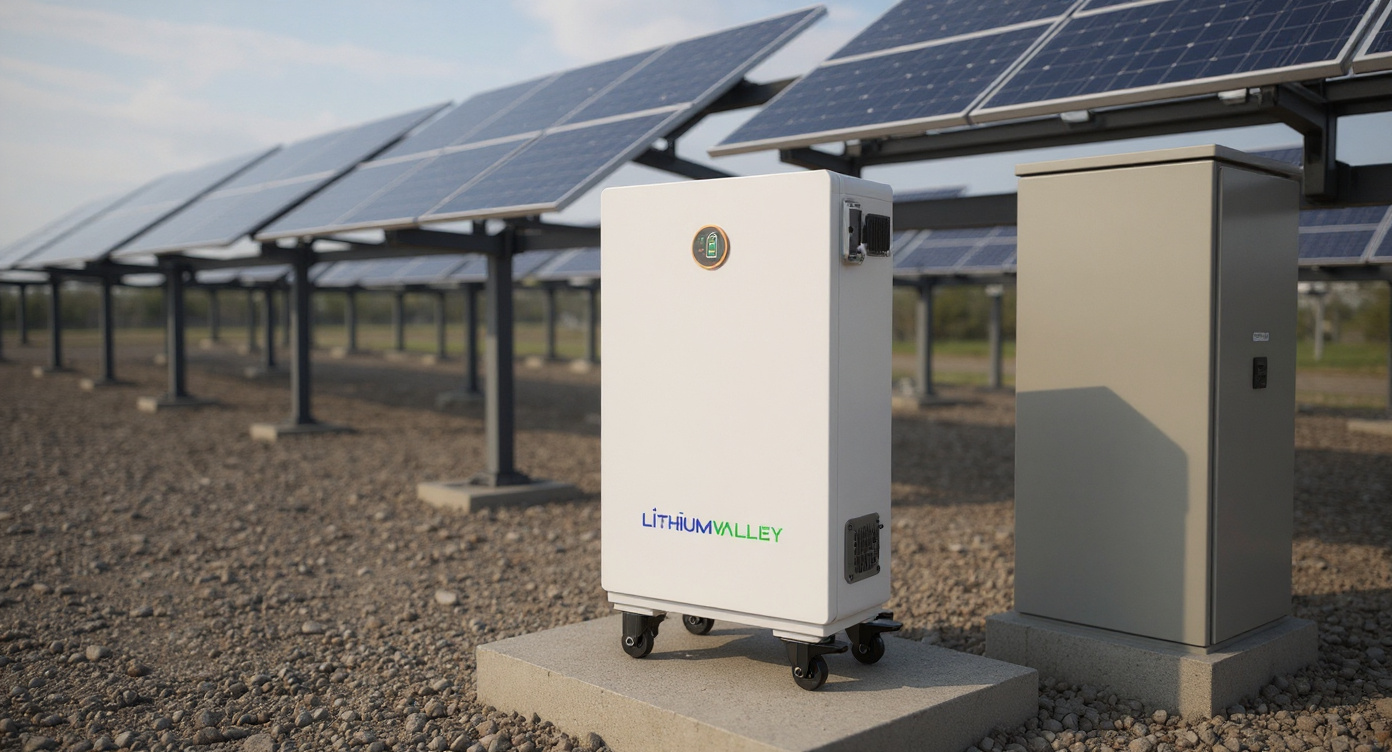
The BMS matters as much as the kWh number
A battery management system is the layer that watches battery conditions and applies limits intended to keep operation inside the permitted window. The W15-5A series lists BMS monitoring, which is significant because a residential battery is expected to coordinate with charging equipment, inverter behavior, and protective settings rather than act like an unmonitored energy container.
For a project based on the W15-5A Residential LFP Battery Series, ask what data and control functions are available for the exact configuration. A BMS commonly monitors individual battery conditions such as voltage, current, temperature, and state of charge, but the specific monitored values, protection thresholds, communication protocol, and supported inverter profiles must be confirmed from current project documentation.
BMS communication can affect everyday behavior. Without approved communication between battery and inverter, an installer may need to use voltage-based settings. With approved communication, the battery and inverter may be able to coordinate charge and discharge commands through the specified interface. Neither arrangement should be assumed. The correct choice depends on the inverter’s documentation and the approved battery configuration.
This is also where many 15kWh assumptions go wrong. A 14.336kWh nominal battery does not automatically mean 14.336kWh will be dispatched to loads, and it does not mean the system can run every appliance at once. Energy capacity tells you roughly how long a given load might run. Power limits tell you what loads can run together. Those are separate checks.
For example, a 1kW average load would use nominal 14.336kWh over roughly 14.3 hours in a simplified calculation. A 5kW average load would use that same nominal energy in roughly 2.9 hours. Real results will differ because usable capacity, inverter efficiency, reserve settings, and load changes all matter.
Independent safety evaluation is another topic to bring into the equipment review. UL’s residential energy-storage safety testing information explains that residential ESS evaluation can address battery systems, controls, and related safety considerations. The relevant question is not whether a battery category sounds familiar. It is which certifications, listings, and project approvals apply to the exact battery, inverter, and installation location being proposed.
Inverter compatibility is a written confirmation, not a guess
The W15-5A may work in a project using an Afore inverter only if the selected inverter model and battery configuration are confirmed compatible by the applicable documentation. Afore is not a single inverter specification. Voltage class, communications protocol, firmware, battery profile, current limits, and regional model variation can all change the answer.
Do not accept “51.2V” as the entire compatibility test. It is necessary for a low-voltage battery setup, but it is not enough. An inverter can have a nominal battery-voltage range that looks suitable while still lacking an approved BMS communication profile, sufficient charge-current settings, or support for the expected battery operating window.
A compatibility check should establish these items before equipment is ordered:
1. Confirm the exact inverter model number, regional version, and firmware requirements.
2. Verify that the inverter accepts a 51.2V LiFePO4 battery within its published battery-voltage range.
3. Check the approved communication method and the required cable, port, and battery profile.
4. Compare inverter charge and discharge settings with the battery’s current and operating-limit documentation.
5. Confirm whether parallel batteries are supported, and whether a specific configuration sequence is required.
6. Have the installer verify protective devices, conductor sizing, grounding, disconnect requirements, and local electrical rules.
The wording matters here. “Can connect” is weaker than “is approved for this battery model and software version.” A system may power up with a generic profile and still have poor state-of-charge reporting, unexpected shutdown behavior, restricted output, or charging limits that do not match the battery guidance.
Ask for the compatibility statement in writing as part of the project record. It makes troubleshooting more practical later, especially if an inverter update, replacement component, or system expansion is involved.
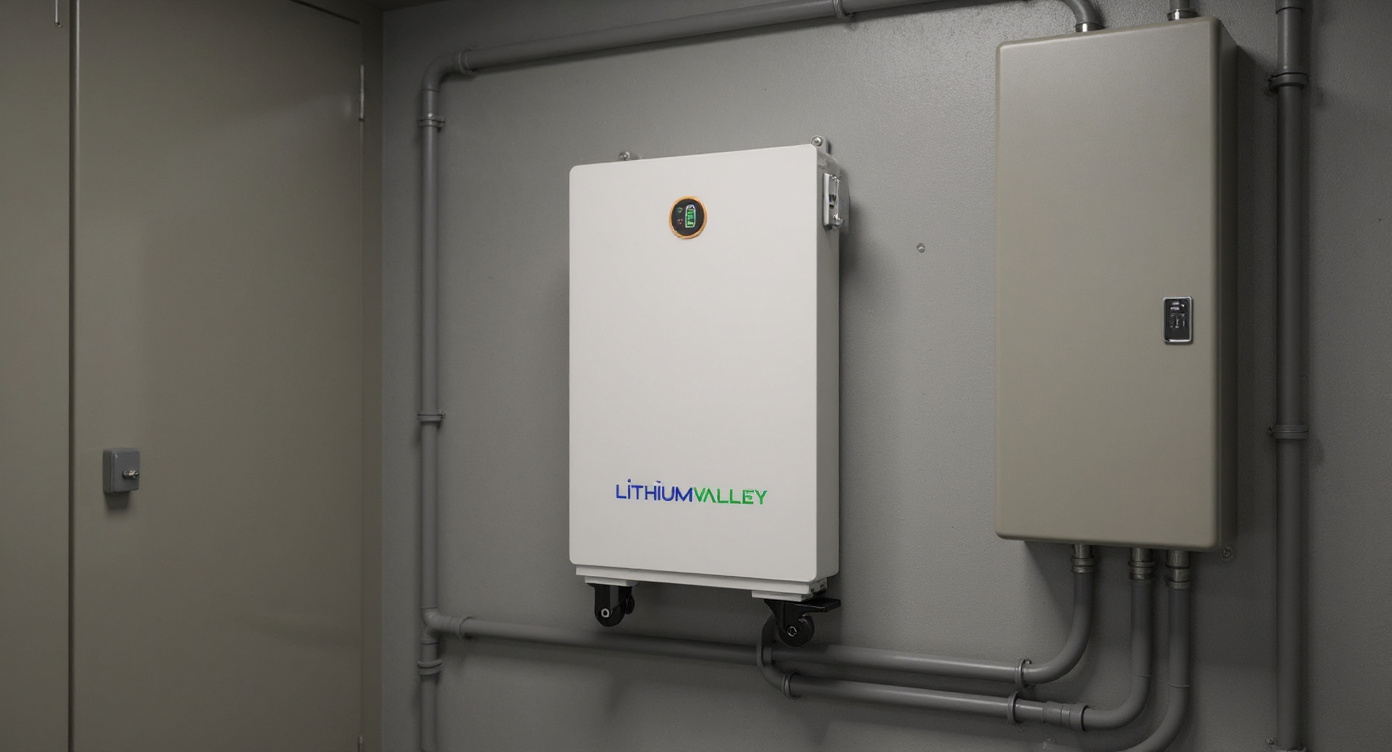
Mounting options need a site-specific check
The product information lists multiple installation options. That gives a project more flexibility than a battery limited to one orientation or one placement style, but “multiple options” is not an instruction to choose any position that happens to fit.
The approved mounting position, clearance requirements, support structure, access to controls and connections, cable routing, environmental limits, and service access need to be confirmed for the selected unit. There is no dimensions figure supplied here, so the available wall, floor, or equipment-room space should not be planned from an assumed footprint.
A battery location also needs to work as part of the entire electrical system. The inverter should be close enough to avoid impractical cable runs, while the installation must still comply with the product instructions and local requirements. A cramped location may look efficient on a drawing and become difficult to inspect, isolate, or service once disconnects, conduits, and required working space are included.
Home energy upgrades involve more than choosing a battery capacity. The U.S. Department of Energy’s home-upgrade guidance is a useful reminder that household energy use and efficiency improvements affect system sizing. Reducing recurring loads can change the required storage capacity more meaningfully than selecting a slightly larger battery.
For backup planning, separate loads into groups:
| Load group | Typical planning question | Battery-design effect |
|---|---|---|
| Essential loads | What must keep running during an outage? | Establishes the minimum backup circuit and energy target |
| High-starting loads | Does a pump, compressor, or motor create a surge? | May determine inverter power and surge capability |
| Heating and cooling | Which equipment will be backed up, if any? | Can consume stored energy quickly and change runtime expectations |
| EV charging and electric cooking | Will these run from backup power? | Often require a deliberate decision because demand can be substantial |
A battery designed for ordinary evening load shifting may not be sized for whole-home outage coverage. Those are different use cases. The first is often about storing solar production or shifting grid consumption. The second is about a defined load panel, outage duration, seasonal weather, and the household’s tolerance for limiting large appliances.
Questions to settle before an installer prices the job
Start with the actual energy need. Look at interval data if it is available, then identify the hours that matter. A 14.336kWh nominal battery can be a strong fit for some homes and undersized for others. A household with a steady 600W overnight essential load has a very different requirement from one that expects multiple high-demand appliances to run during an outage.
Next, decide how deeply the battery should cycle. The best setting is not automatically the most aggressive one. The expected cycling strategy, reserve requirement, available solar production, and backup goals should guide the usable-capacity target.
Ask these project questions before accepting a quote:
1. Which W15-5A capacity configuration is being supplied, rather than only the series name?
2. What nominal and usable energy figures will the installer configure for the system?
3. What continuous charge and discharge current limits apply to that configuration?
4. Which inverter model, communication protocol, and firmware version are approved?
5. Which mounting position is approved, and what clearances are required?
6. What ambient temperature and humidity limits apply to installation and operation?
7. Which warranty document covers the battery, and what conditions apply to the project?
8. What happens during utility outage, low state of charge, BMS protection, or inverter communication loss?
The answers should be concrete. “Covered by warranty” is not enough. Request the warranty term, eligible operating conditions, installation requirements, capacity-retention terms where applicable, claim process, and exclusions. Warranties are product-specific documents, and an installer should not fill unknown gaps with a general statement about LiFePO4 batteries.
Safety marks should also be read carefully. UL’s explanation of QAI marking for residential energy-storage systems shows why it is useful to identify what an evaluation mark applies to. Confirm the applicable documentation for the actual equipment and the authority having jurisdiction, rather than assuming that a mark on one component approves every possible system combination.
W15-5A buyer questions answered
What are the W15-5A battery specifications?
The stated series information is 51.2V residential LiFePO4 storage, with configurations up to 280Ah and 14.336kWh. It also lists BMS monitoring and multiple installation options. Confirm the exact capacity, operating limits, dimensions, current ratings, warranty, and approved inverter pairing for the selected configuration.
How much energy does a 51.2V 280Ah W15-5A battery store?
It stores 14.336kWh of nominal energy, calculated as 51.2V multiplied by 280Ah. Usable energy delivered to loads will vary with the configured discharge window, battery and inverter limits, conversion losses, temperature, and reserve settings.
Is the W15-5A a 15kWh home energy storage system?
It is a battery series with a maximum listed nominal energy of 14.336kWh, which is close to the common 15kWh shorthand. A complete home energy storage system also needs compatible conversion equipment, electrical protection, installation work, and controls. Calling the battery alone a complete 15kWh system can hide those requirements.
Does the W15-5A work with an Afore inverter?
Compatibility must be confirmed for the exact Afore inverter model and the chosen battery configuration. Check battery-voltage support, communication protocol, firmware requirements, battery profile, current limits, and the inverter manufacturer’s approved battery list or written technical confirmation.
What does the W15-5A BMS monitor?
The series lists BMS monitoring. The exact monitored data points, protections, thresholds, and communications behavior should be confirmed in the current technical documentation for the capacity configuration being purchased. Do not assume every BMS exposes the same data to an inverter or user interface.
Can the W15-5A be installed in different mounting positions?
The product information lists multiple installation options. The approved orientation, mounting hardware, structural support, service clearances, environmental conditions, and local code requirements should be verified before selecting a location.
How do I confirm W15-5A inverter compatibility before ordering?
Match the inverter’s documented low-voltage battery range to 51.2V operation, then verify the approved BMS communications method and battery profile. Get the exact inverter model, firmware requirements, cable specification, current limits, and supported battery configuration recorded in the proposal.
What warranty and operating limits should be confirmed for a W15-5A project?
Confirm the warranty duration and terms, approved installation conditions, temperature limits, charge and discharge limits, capacity configuration, depth-of-discharge guidance, required maintenance, and exclusions. Those details should come from the current product and warranty documents for the equipment being quoted.
The right fit depends on the system around it
A 51.2V, 280Ah battery with 14.336kWh nominal storage is more likely to pay off when the home’s essential-load target, expected cycling pattern, inverter current capability, and usable-capacity settings have been worked out first. It won’t solve an undersized inverter, an unplanned motor surge, an unsupported communication link, or a battery location that does not meet installation requirements.
For a project where those checks point to a 51.2V LiFePO4 battery, the W15-5A (Residential LFP Battery Series) is a natural option to evaluate. If the uncertain part is capacity, inverter pairing, warranty coverage, or mounting constraints, see W15-5A (Residential LFP Battery Series) and confirm the exact configuration before committing to the system design.