



# LITHIUMVALLEY

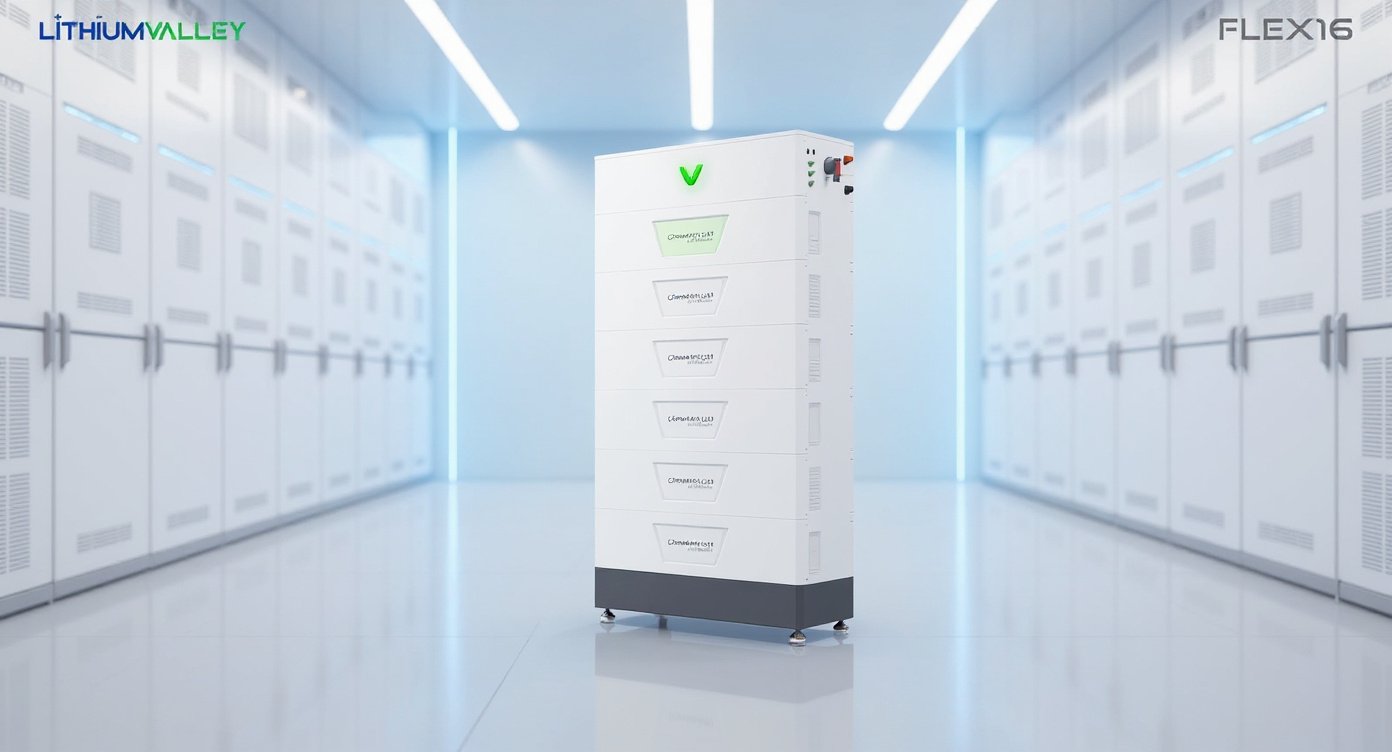
LITHIUMVALLEY FLEX16 – High Voltage Energy Storage System for Commercial & Industrial Applications

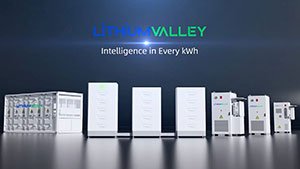
Scalable C&I ESS ranging from 96kWh to 3.08MWh | Active Balancing | AI Energy Management | Wireless Stacking

LITHIUMVALLEY FLEX16

Parameter Value
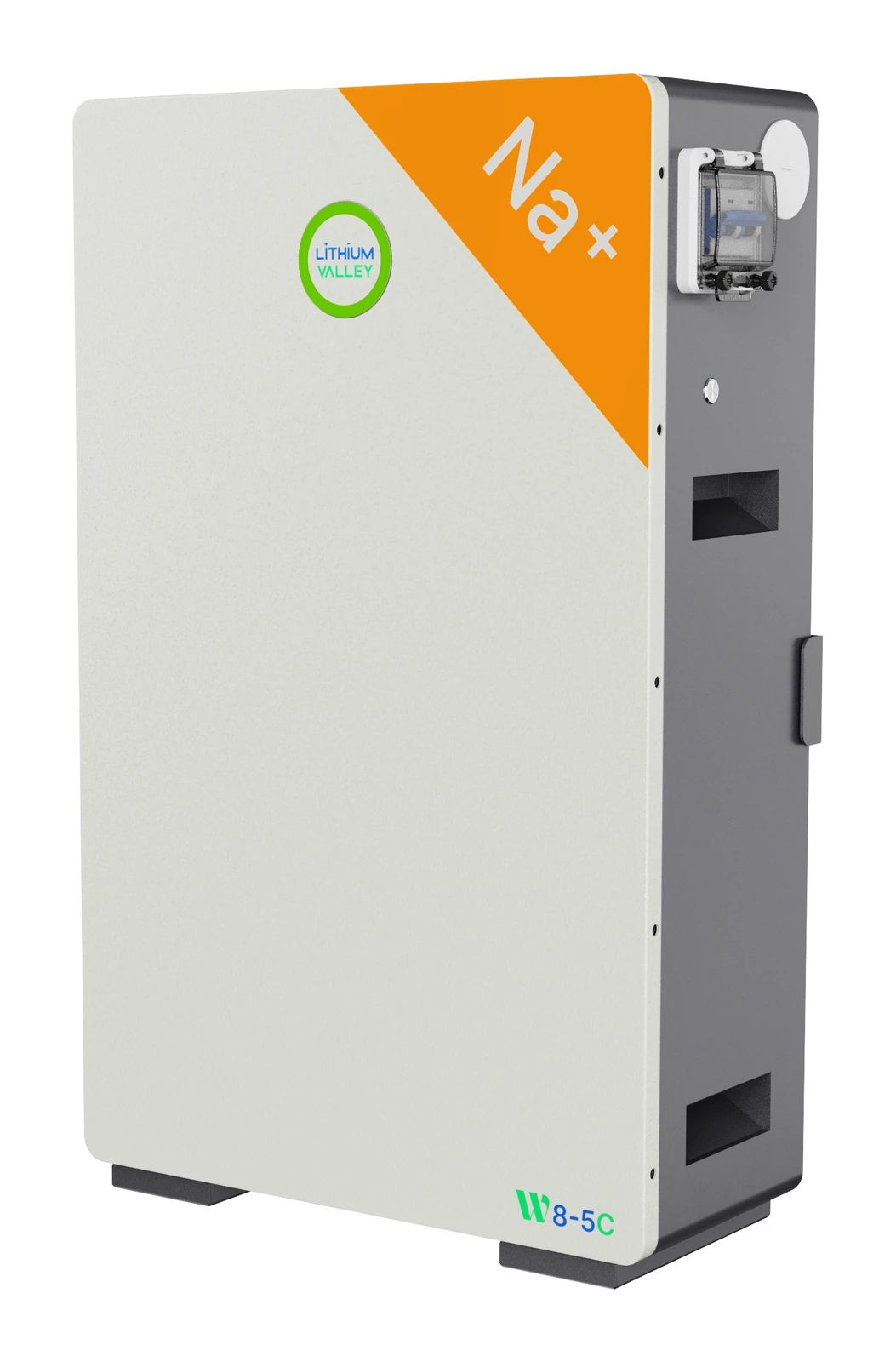
ModelW8-5C
Nominal Voltage48V
Rated Capacity160Ah
Energy7680Wh
Cell TechnologyNa-ion Battery
Cycle Life8,000 cycles @ 80%DOD, 25°C/0.5C
IP RatingIP 65
CertificationUN38.3, MSDS, Marine Report, UL1973

High Voltage Energy Storage for Commercial & Industrial Projects

FLEX16 is presented for commercial and industrial energy storage projects. System sizing, expansion, operating modes, and inverter compatibility must be confirmed against the approved technical documentation. Safe operation requires appropriate site design, qualified installation, and maintenance. Energy savings and backup performance depend on the project configuration and operating conditions.

Comprehensive Introduction to LithiumValley FLEX16 High Voltage C&I Energy Storage System

Product Positioning & Core Design Concept

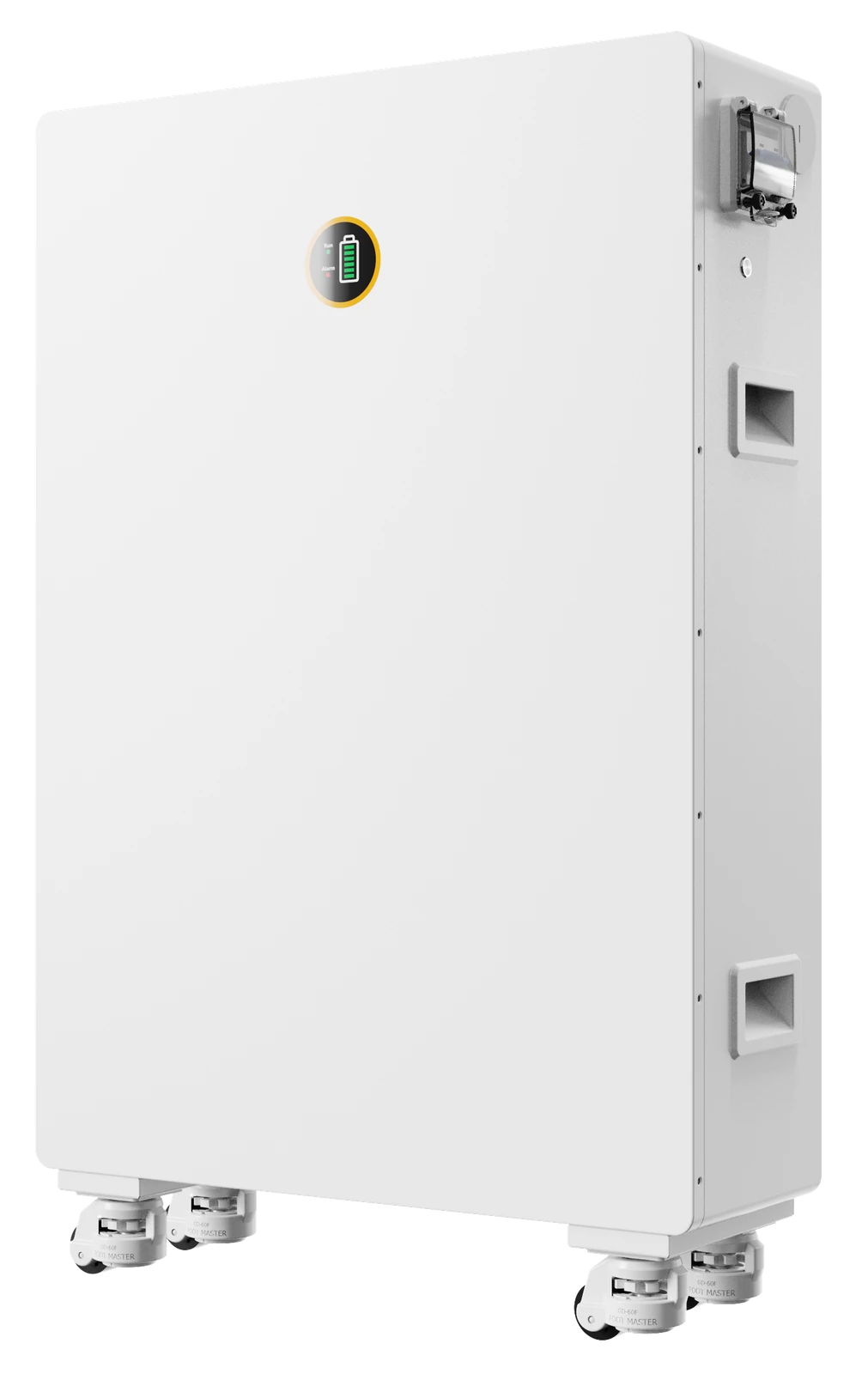
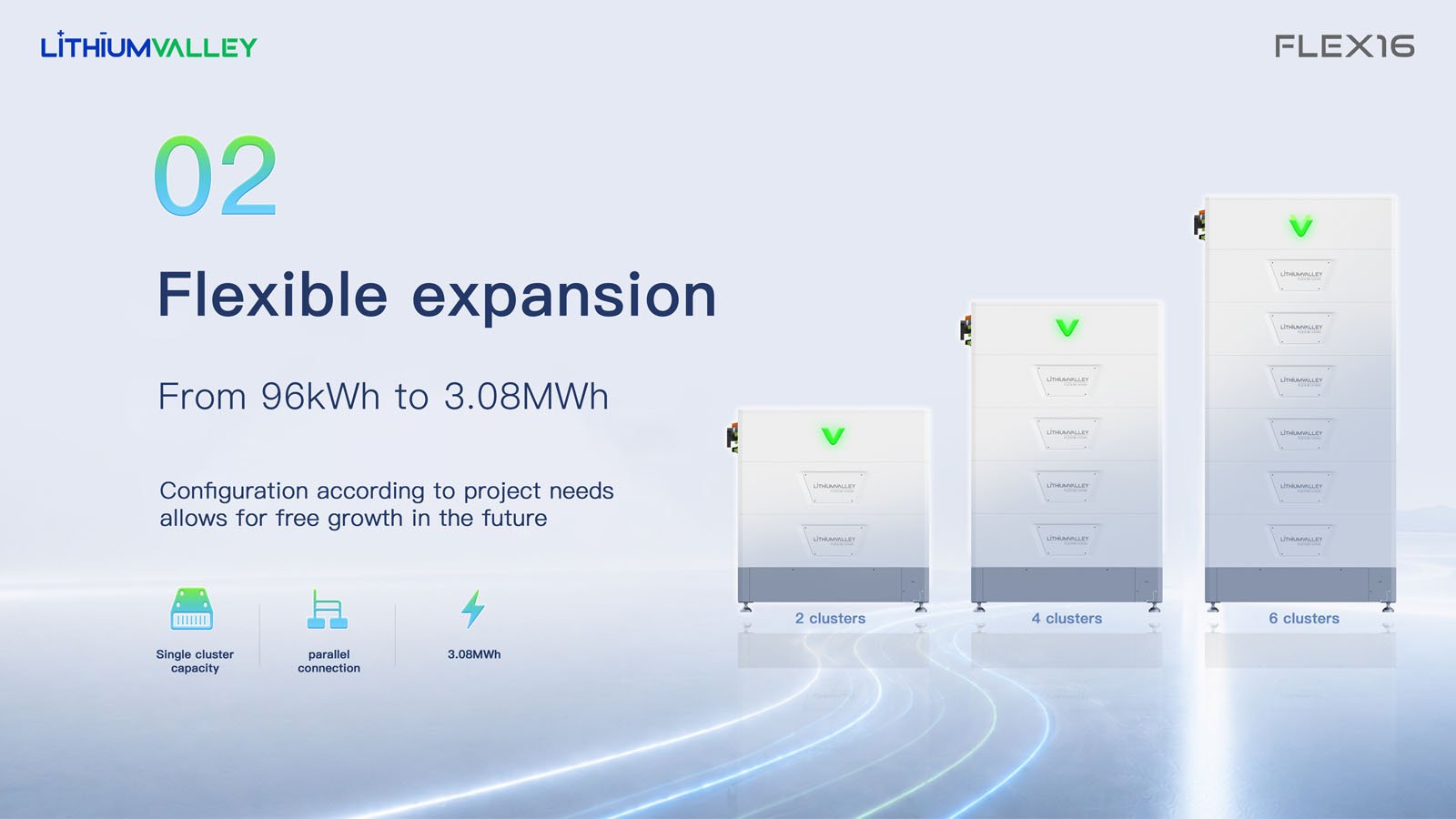
LithiumValley FLEX16 is a rack-mounted high-voltage lithium iron phosphate energy storage system independently developed for global commercial and industrial energy storage application scenarios, dedicated to solving enterprises’ high electricity cost, unstable grid power supply, insufficient photovoltaic power self-consumption and emergency power backup demands. Adopting advanced modular stacked design, the standard single cabinet basic capacity is 96kWh, and users can freely connect up to 12 cabinets in parallel for capacity expansion, with the maximum total usable capacity reaching 3.08MWh, which can flexibly meet the power storage needs of small, medium and large industrial and commercial projects of different scales.

Core Technical Highlights

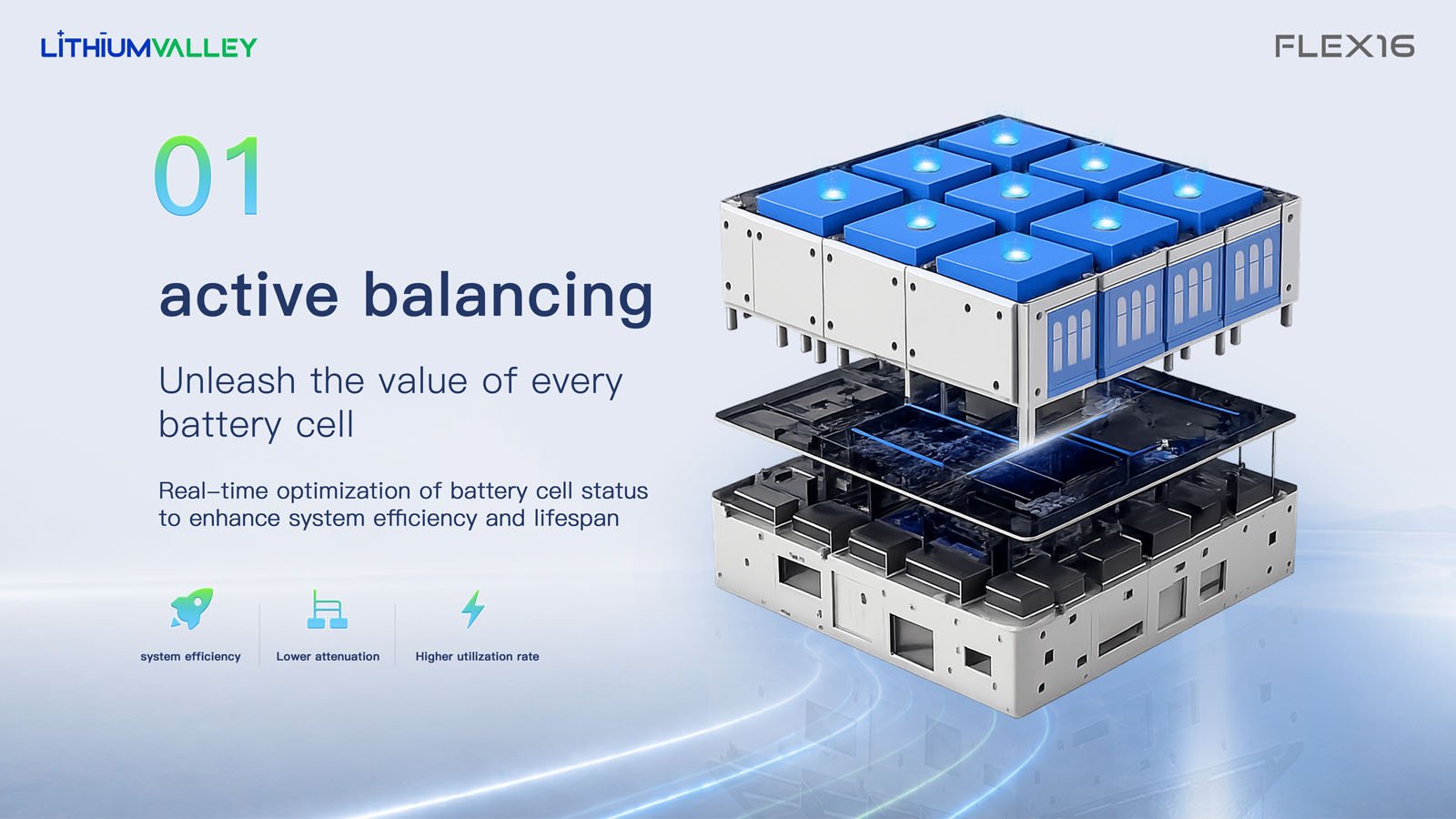
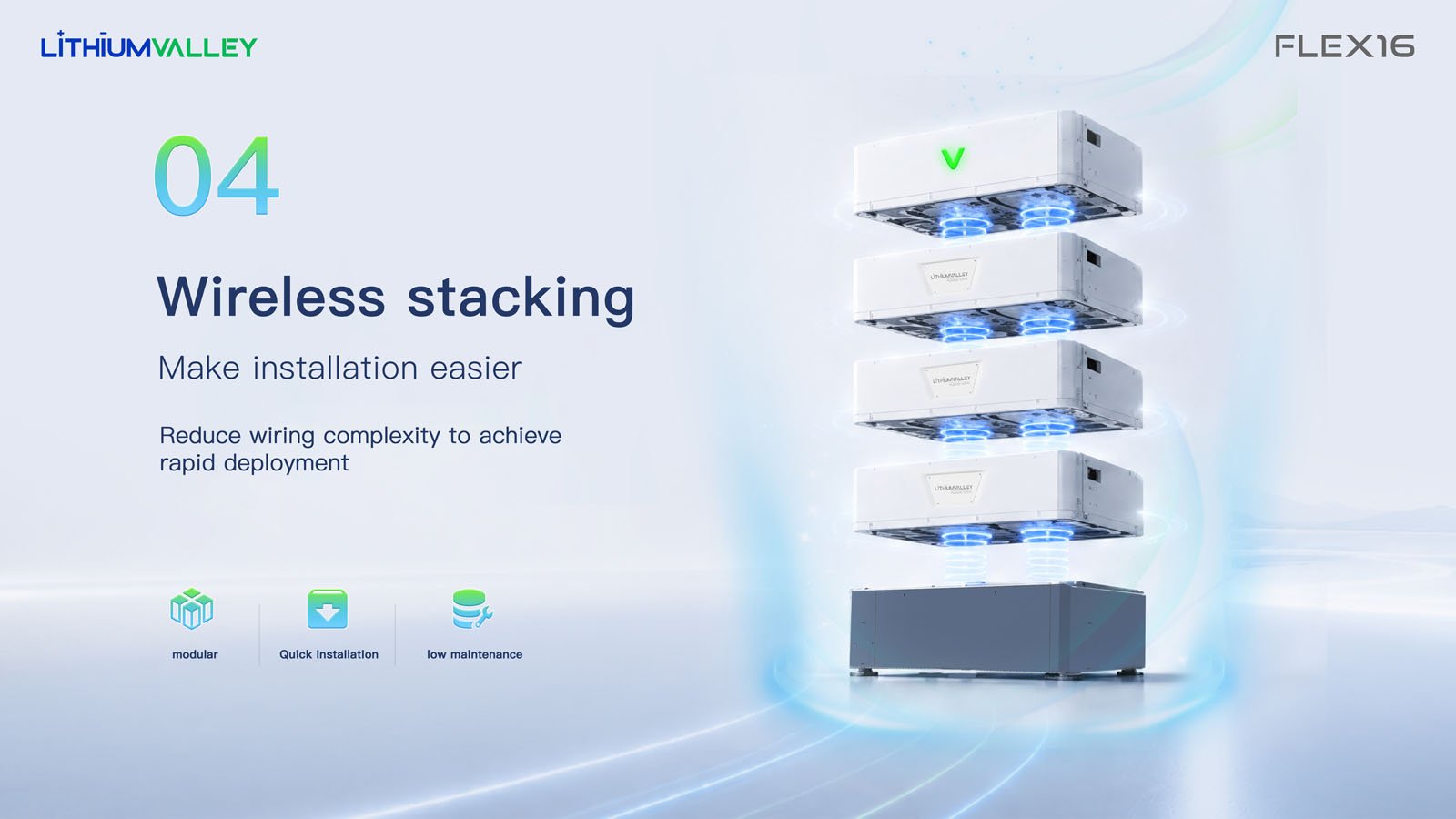
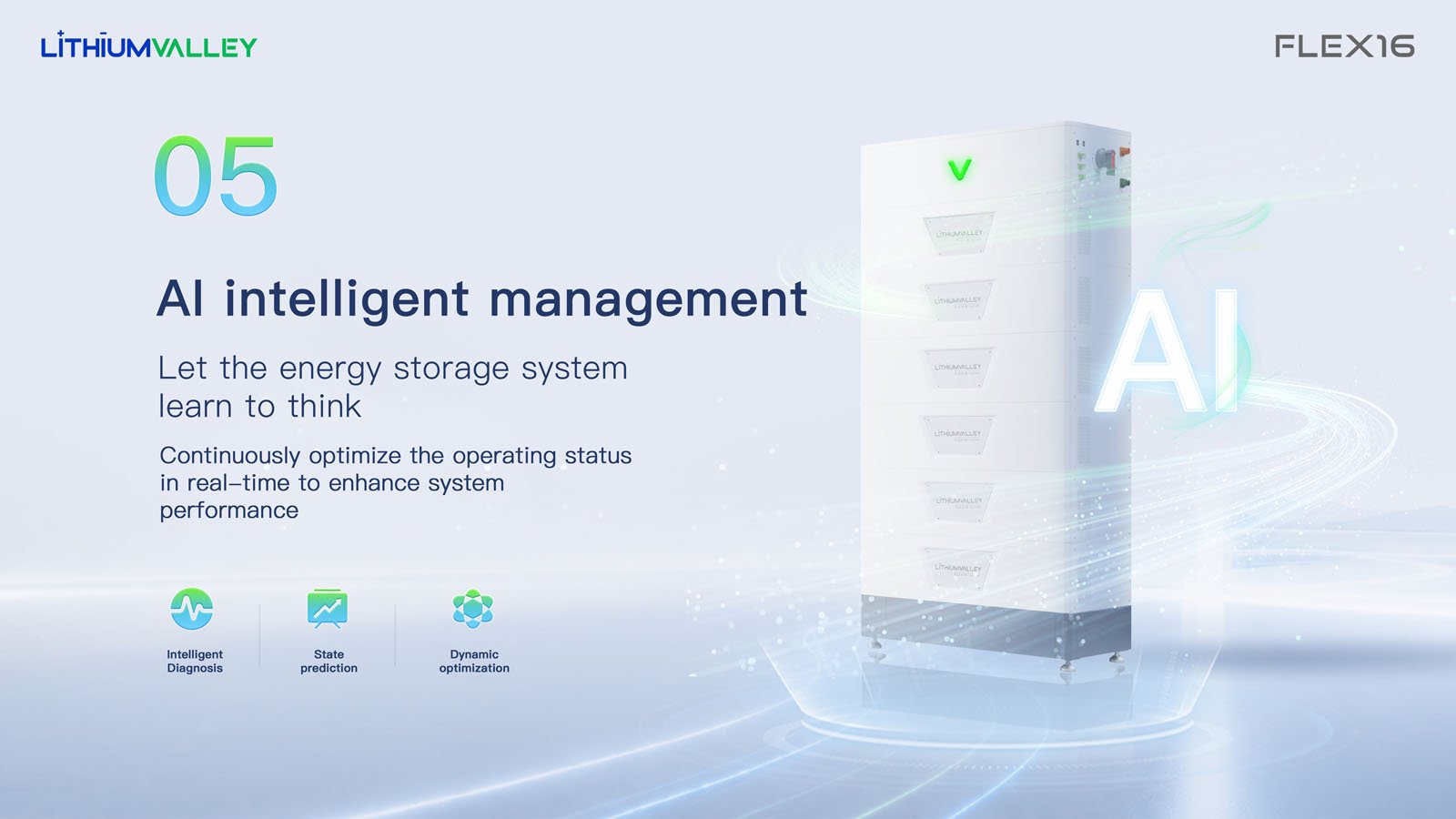
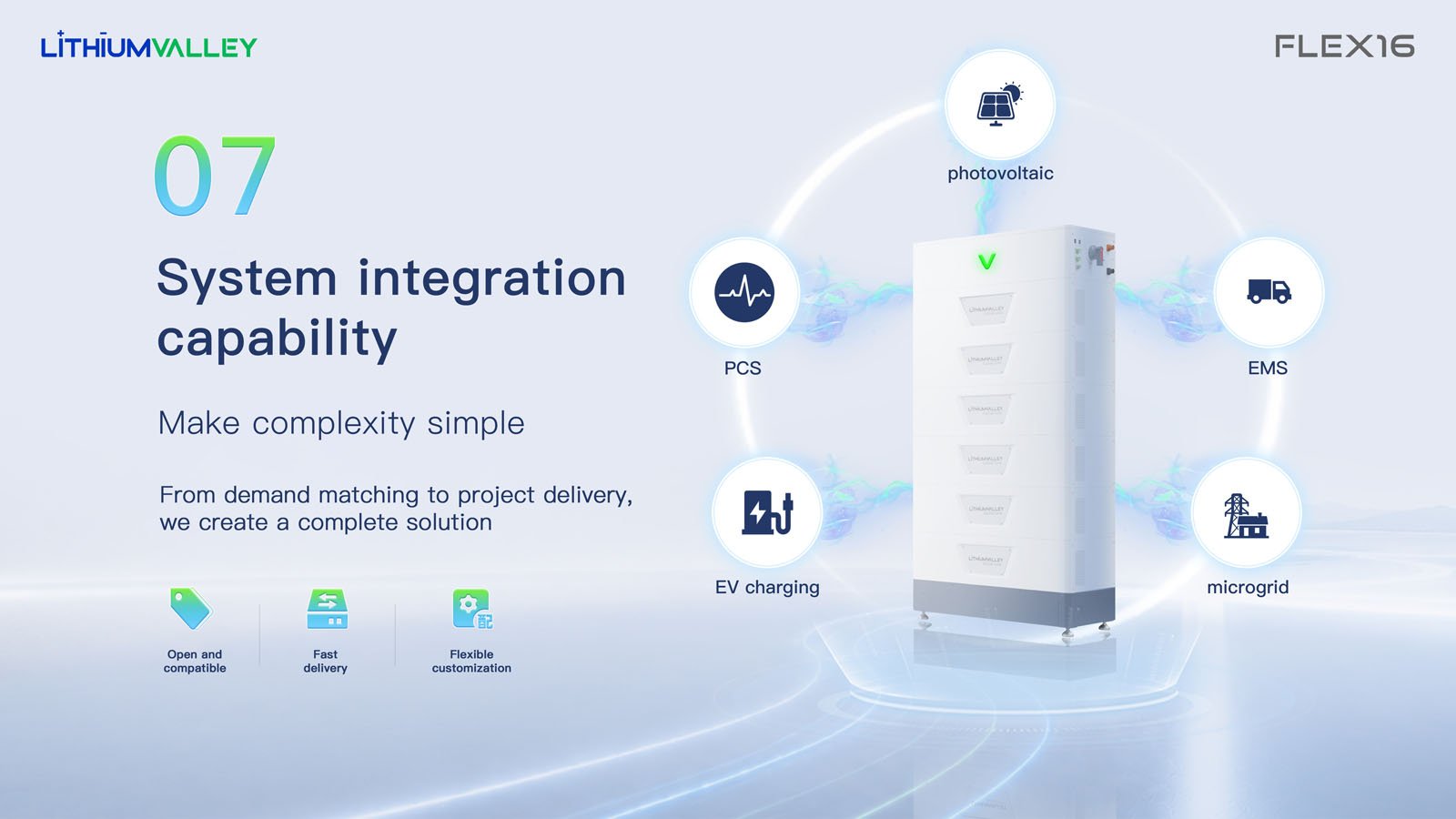
Different from traditional low-voltage energy storage equipment, FLEX16 innovatively applies wireless stacking connection technology, completely abandons cumbersome high-voltage cable wiring between cabinets, greatly simplifies on-site construction procedures, shortens the overall installation cycle by more than 40%, and effectively reduces hidden dangers such as wiring aging and circuit faults caused by complicated wiring in long-term operation. Equipped with built-in cell active balancing system and AI intelligent energy management system (EMS), the equipment can monitor the voltage, current and temperature of each single cell in real time 24 hours a day, automatically adjust the charging and discharging state of batteries to eliminate voltage inconsistency between cells, slow down battery capacity attenuation, maximize the overall utilization rate of the energy storage cluster, and effectively extend the cycle service life of the whole system.

Working Modes & Application Scenarios

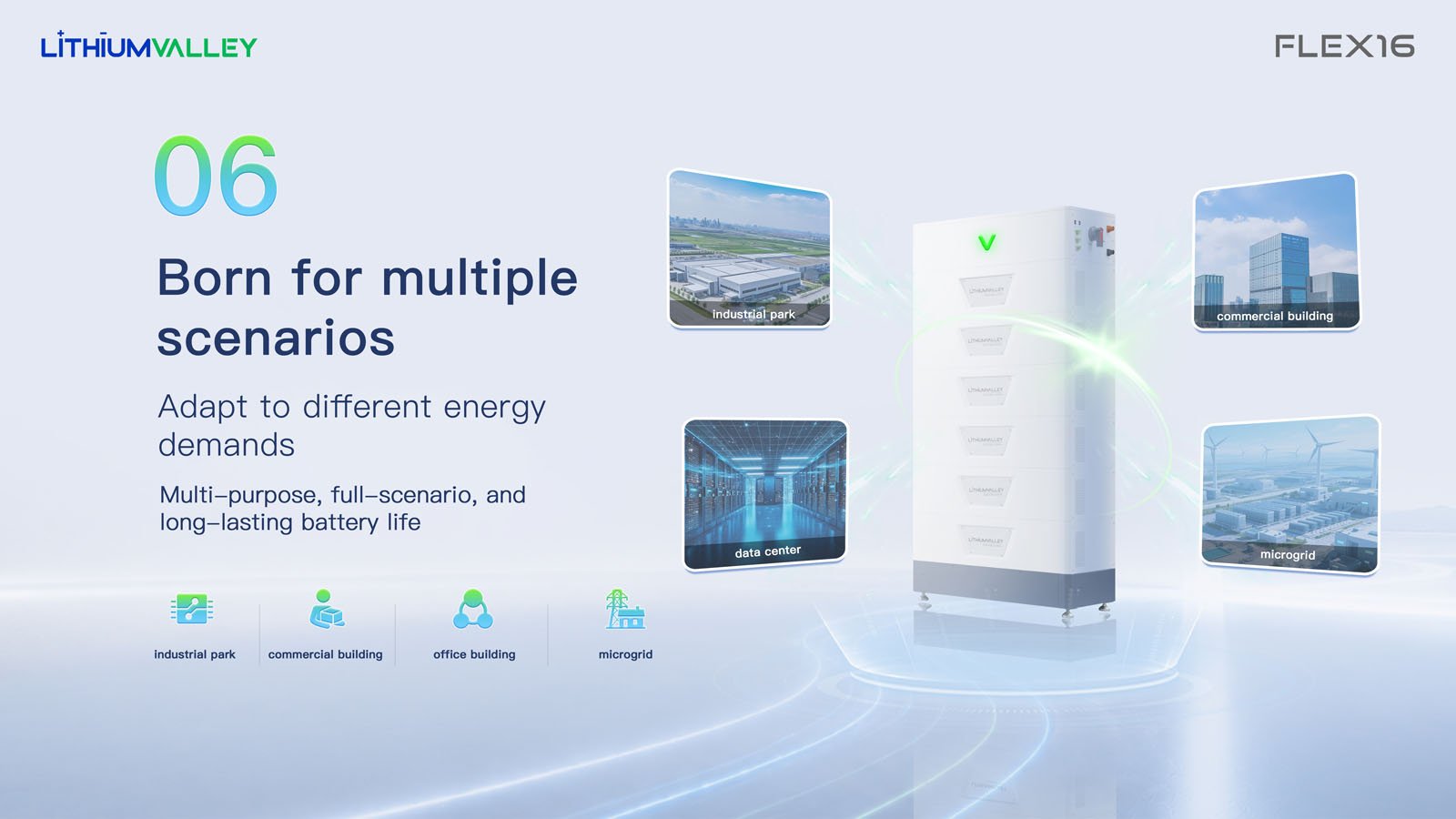
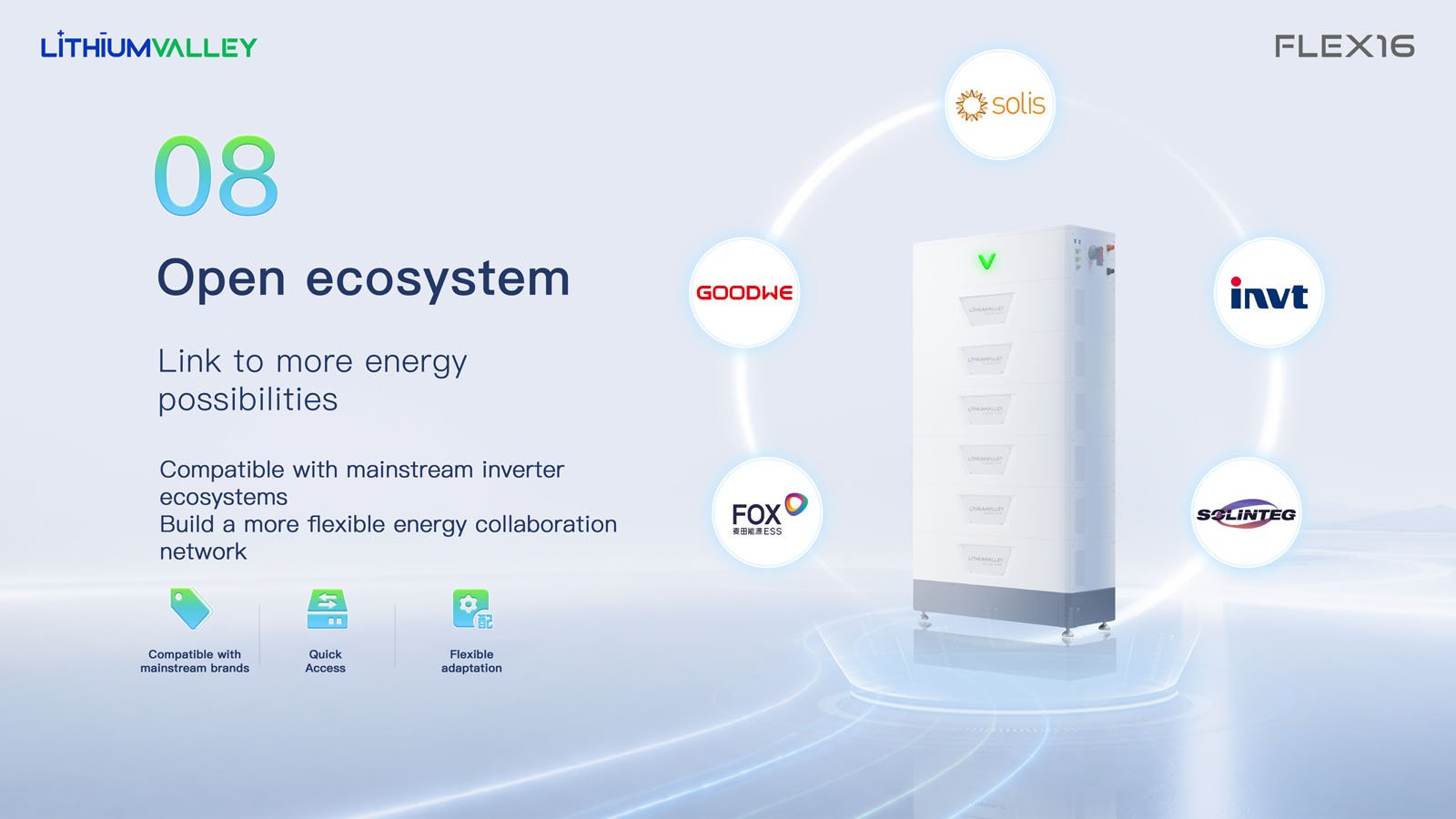
This energy storage system supports multiple working modes including grid-connected peak shaving and valley filling, off-grid independent power supply, photovoltaic coupled energy storage, and emergency backup power. It is widely applied to industrial parks, factory workshops, office buildings, shopping malls, data centers, remote mining areas, island microgrids and other scenarios worldwide. Meanwhile, FLEX16 builds an open inverter ecological system, which adopts universal communication protocols and can be seamlessly matched with mainstream hybrid inverters on the market such as Solis, Goodwe, FoxESS, INVT and Solinteg, bringing great convenience for system integrators to configure customized light storage integrated solutions for overseas customers.

Full Lifecycle One-stop Service

From preliminary scheme design, equipment delivery, on-site technical guidance to later remote operation maintenance and after-sales service, LithiumValley provides a full-cycle one-stop energy storage project service system to ensure stable, efficient and safe operation of customers’ energy storage stations for a long time.

Complete Technical Specification Parameters of FLEX16 Energy Storage System

Capacity & Battery Core Parameters

Nominal capacity per single cabinet: 96kWh
 
Maximum parallel quantity of cabinets: 12 sets
 
Total maximum expandable capacity: 3072kWh (3.08MWh)
 
Battery cell material: Lithium Iron Phosphate (LiFePO4)
 
Battery pack form: Rack-mounted modular battery cluster
 
Cycle life: ≥6000 cycles under 80% depth of discharge (DOD)
 
Nominal system voltage: High voltage series integrated system

Environmental Adaptation Parameters

Normal operating temperature range: -20℃ ~ +55℃
 
Storage standby temperature range: -30℃ ~ +60℃
 
Protection grade of cabinet body: IP54 indoor protection standard
 
Applicable altitude: ≤2000 meters above sea level
 
Heat dissipation mode: Intelligent forced air cooling, automatic temperature adjustment according to internal temperature

System Management & Communication Parameters

Dual-layer management architecture: BMS battery management system + EMS energy management system
 
Remote monitoring methods: Mobile APP terminal, PC web background management platform
 
Communication protocols supported: CAN, RS485, Ethernet
 
Available working modes: Grid-tied mode, off-grid mode, peak-valley arbitrage mode, emergency backup power mode
 
Balancing technology: Full-time active cell voltage balancing

Mechanical Structure & Application Matching Parameters

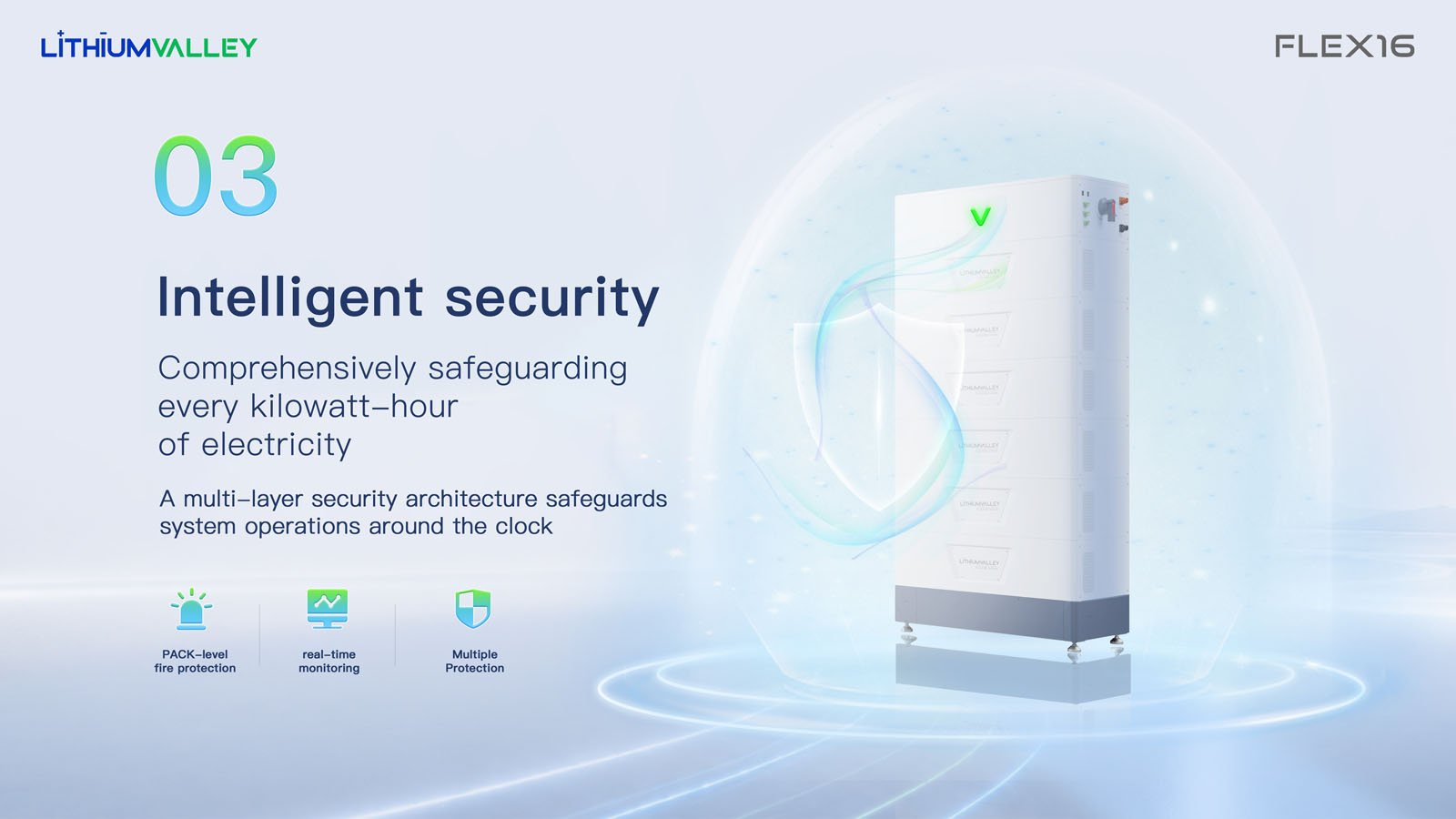
Cabinet overall structure: Integrated metal fireproof cabinet
 
Stacking mode: Wireless parallel stacking without high-voltage inter-cabinet cables
 
Applicable scenarios: Industrial peak shaving, commercial backup power, PV self-consumption, off-grid microgrid, data center UPS backup
 
Compatible inverter brands: Solis, Goodwe, FoxESS, INVT, Solinteg and other mainstream global inverters
 
Overall service life of the complete system: 10-15 years under standard operating conditions

Safety Considerations for Commercial & Industrial Energy Storage

Battery Safety

No battery energy storage system is risk-free. Puncture, crushing, overheating, electrical faults, or misuse can create serious hazards. Do not interpret battery chemistry or protective features as a guarantee against fire or other failures.

Installation and Operating Conditions

Use qualified personnel for installation and commissioning. Follow the approved product manual, operating limits, clearance requirements, and maintenance schedule. Do not bypass protective equipment or modify the system without authorization.

Fire Safety and Emergency Planning

Confirm the protective devices and fire-safety provisions included in the supplied configuration. Site design and emergency procedures must meet applicable local requirements. Protective systems reduce risk but do not eliminate it.

Project-Specific Verification

Confirm monitoring, shutdown, isolation, and alarm functions with the technical team for the exact system configuration. Certification scope and suitability for the installation location must be verified before deployment. Continuity of supply depends on the complete power-system design.

FLEX16 FAQ

Professional Services

Yes, you can add cabinets freely within the maximum 12 parallel units limit.

≥6000 cycles at 80% DOD, stable operation for 10-15 years.

Yes, it can work independently without grid power as emergency backup supply.

Operating temperature: -20℃ ~ +55℃, adaptable to most climate zones worldwide.

Industrial parks, commercial buildings, data centers, off-grid microgrids and PV energy storage projects.

Equipped with AI EMS platform, remote monitoring via web portal and mobile APP is available.

No battery energy storage system is risk-free. Safe operation depends on the approved system design, protective equipment, qualified installation, operating conditions, and maintenance. Follow the current product manual and applicable electrical and fire-safety requirements. Confirm the safety functions and certifications for the exact supplied configuration with our technical team.

Our professional engineers will tailor solutions according to your local electricity policy and power demand.

Quality Services

Professional Services

Industrial Park Peak Shaving

Evaluate peak-shaving opportunities using the site load profile, demand charges, and available connection capacity. System sizing and dispatch strategy require project-specific review.
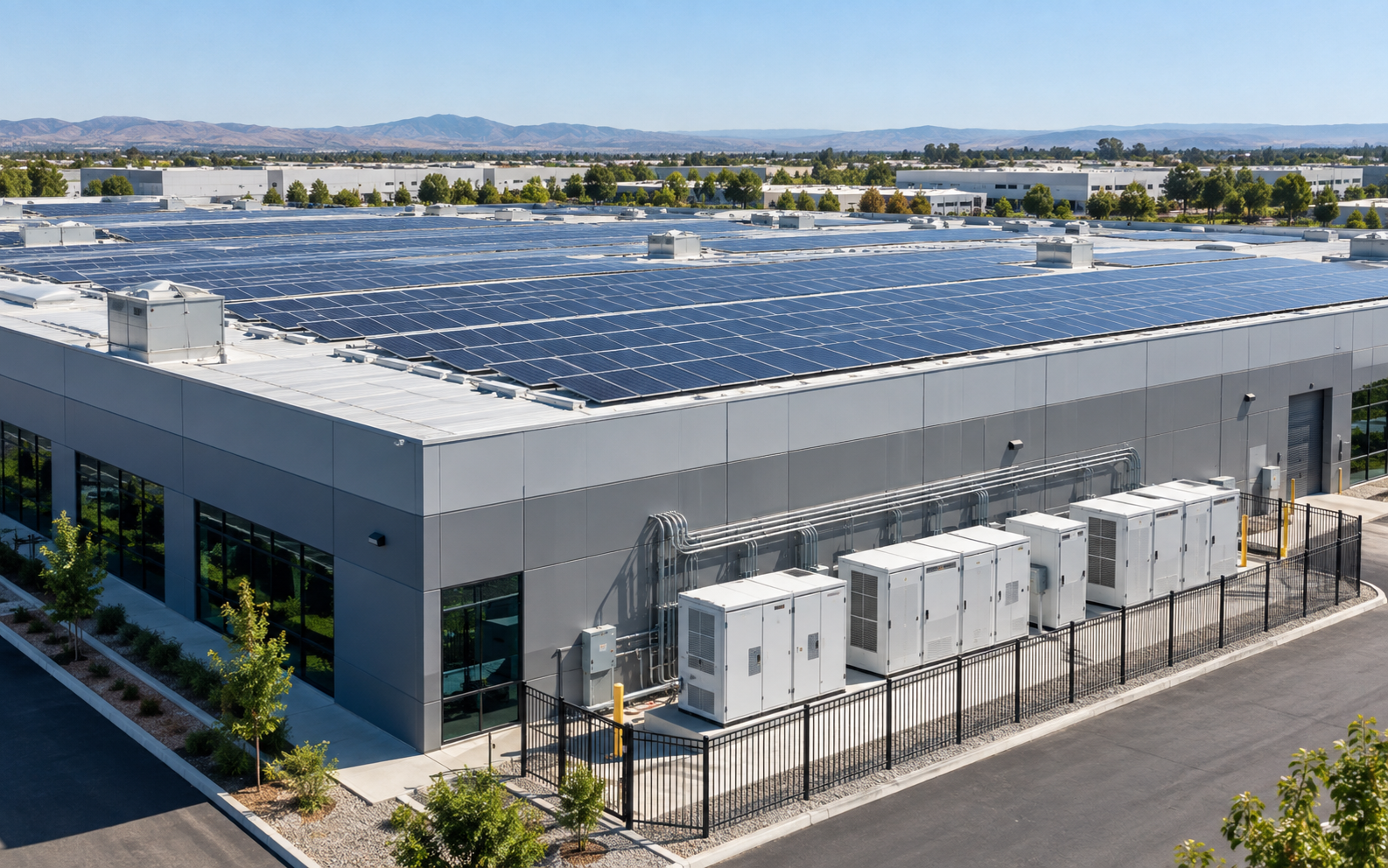
Commercial energy storage system

Rooftop PV + Energy Storage

Assess storage of surplus solar generation for use when site demand is higher. PV coupling, inverter compatibility, and export limits must be confirmed for the installation.
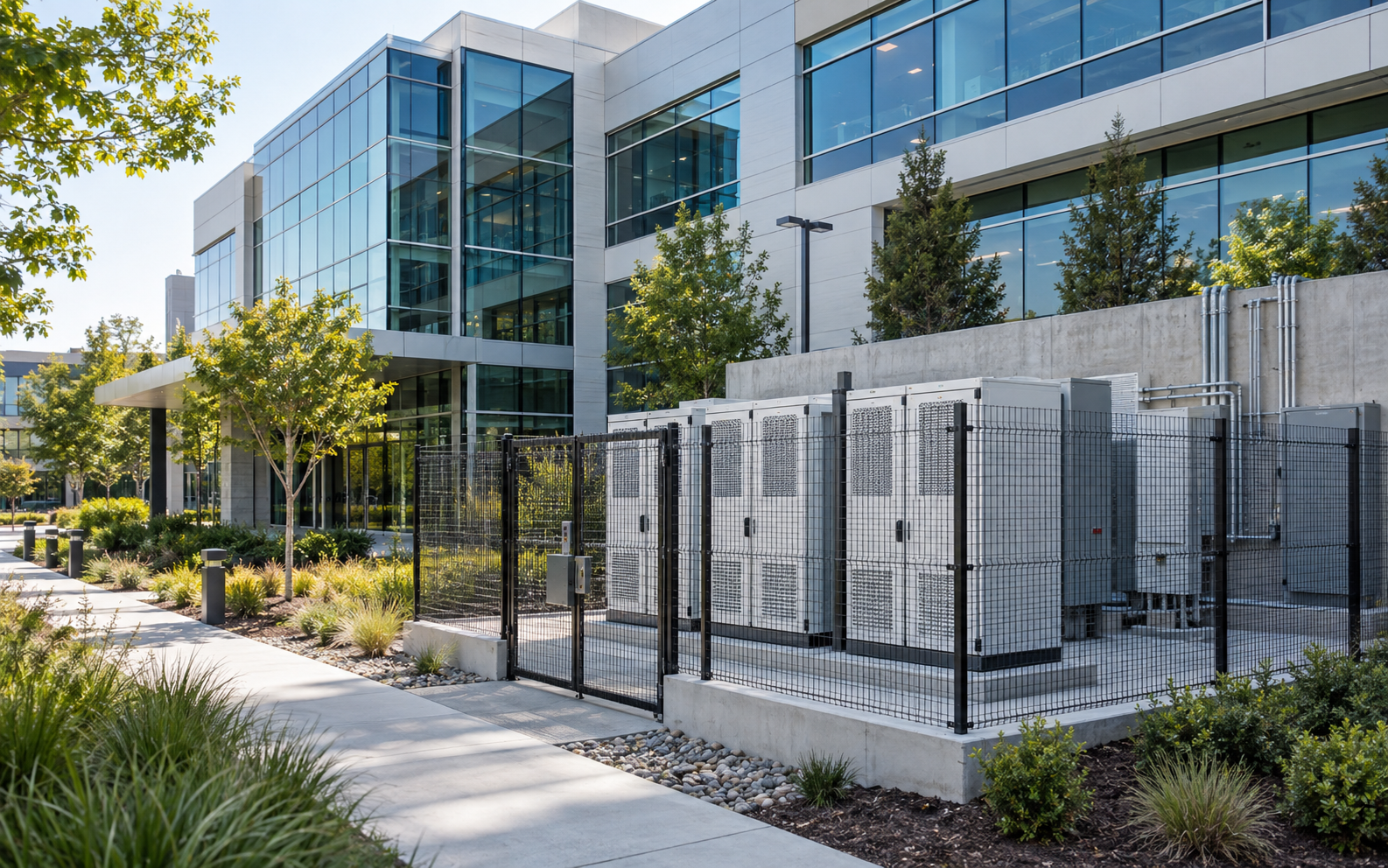
Commercial Building Backup Power

Plan backup power around essential loads, required runtime, and the approved inverter and transfer equipment. Backup capability depends on the project configuration.
Data Center Energy Storage Planning

Evaluate energy storage as part of a coordinated power architecture. Uninterruptible operation requires a separately validated UPS, transfer, protection, and redundancy design.
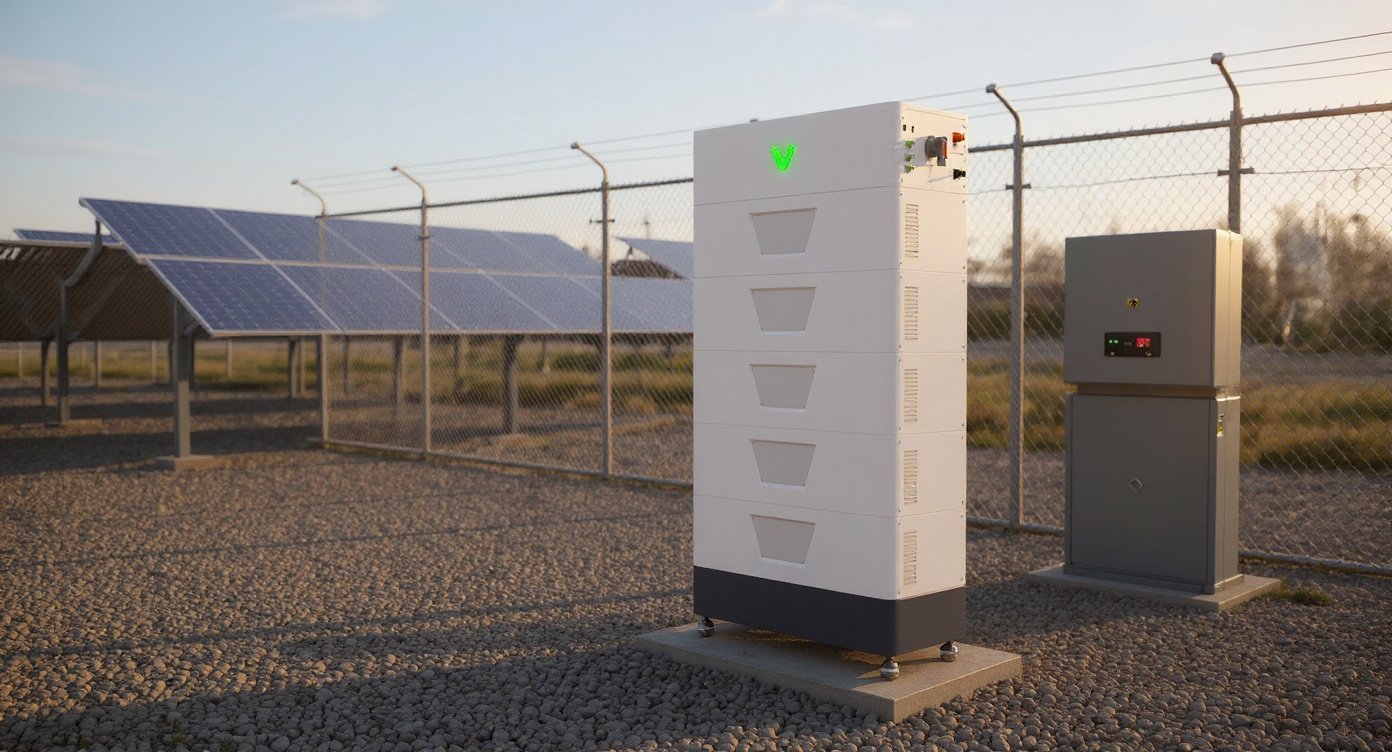
Remote Off-Grid Microgrid

Assess off-grid projects together with the inverter, generation sources, controls, and protection scheme. Operating modes and available backup capacity depend on the approved system design.
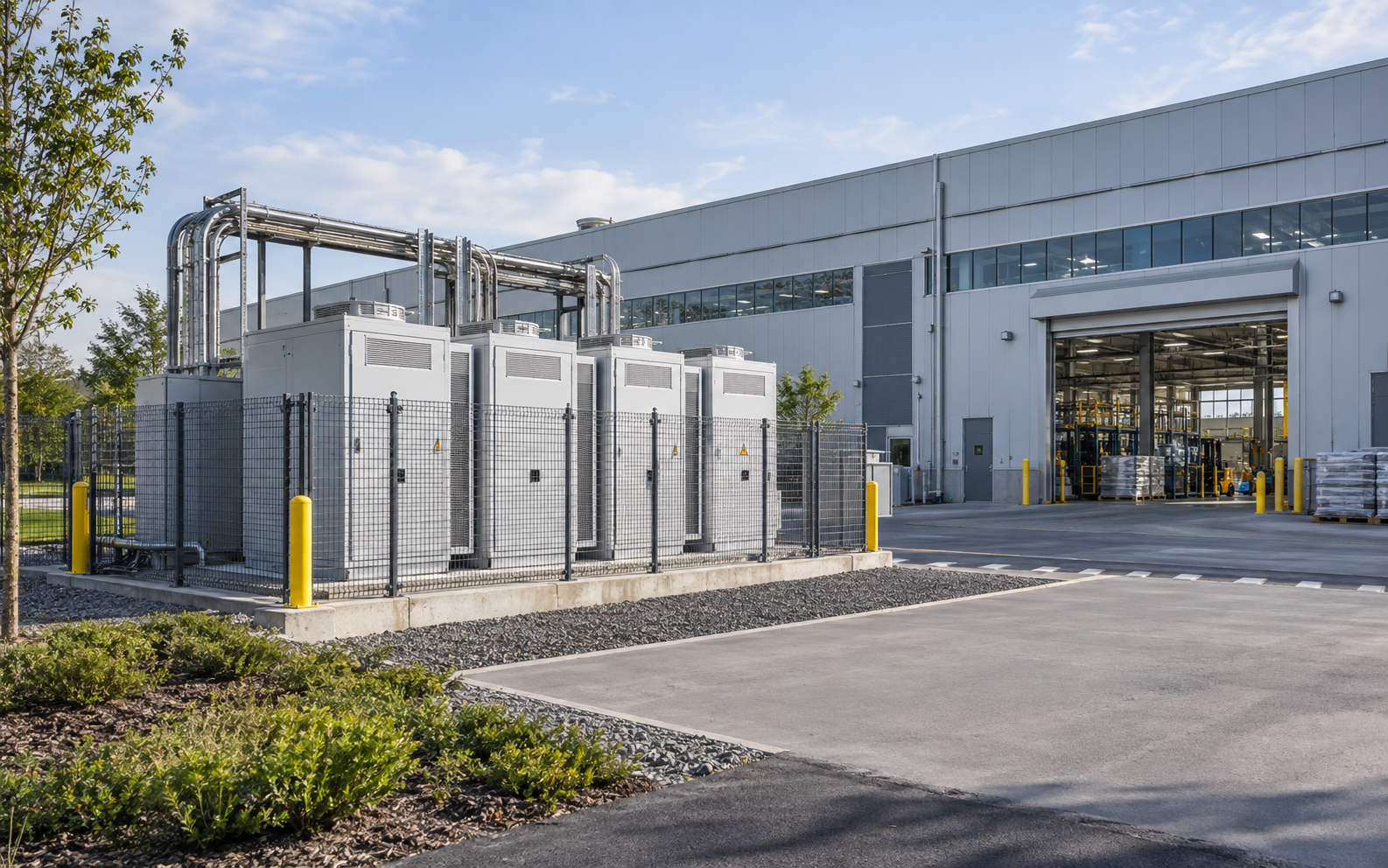
Factory Energy Cost Optimization

Develop a charging and discharging strategy using the factory load profile and local electricity tariffs. Potential savings depend on operating conditions, system losses, and project costs.

Scroll to Top