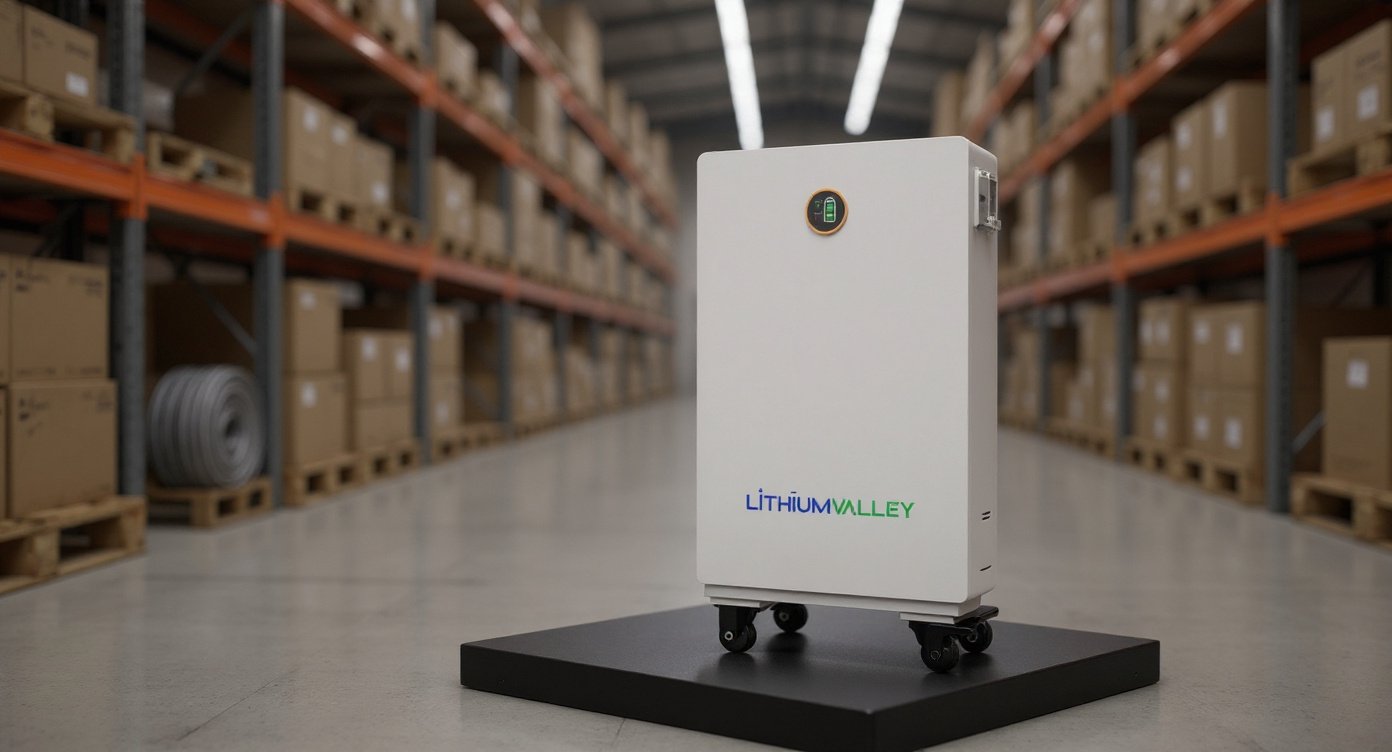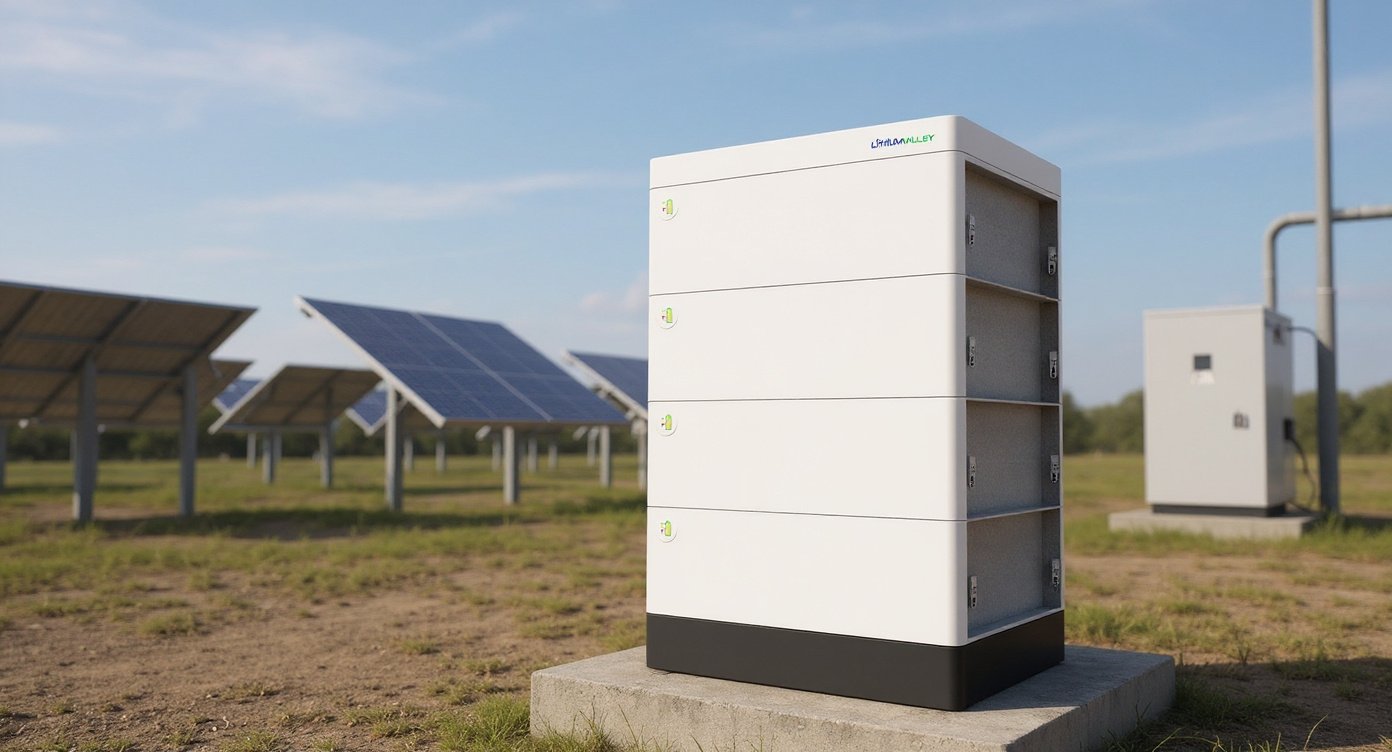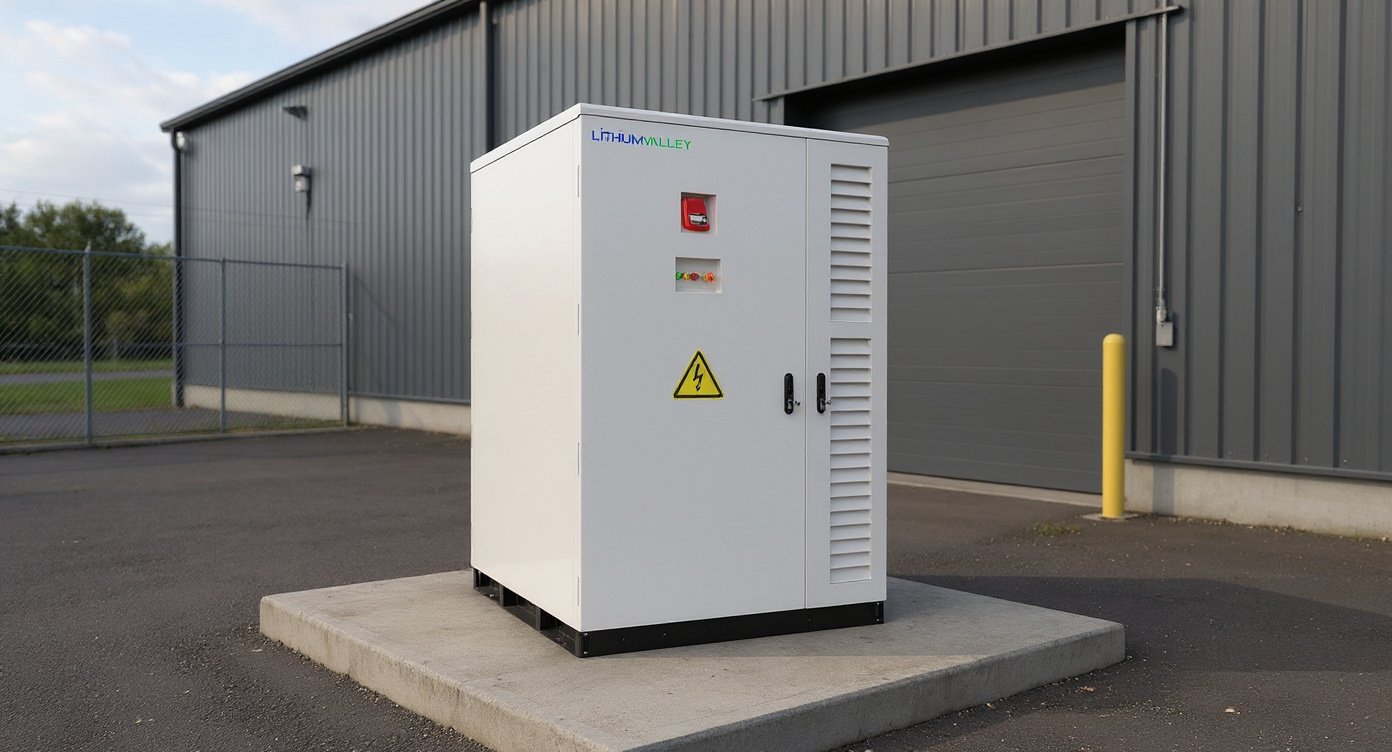
If you’re buying a high voltage LiFePO4 ESS for a factory, campus, plant room, or microgrid, the real decision is not chemistry first. It’s architecture first.
I’ve seen buyers get stuck on the phrase “high voltage” and miss the things that decide whether the system behaves well in year 4: cabinet protection, balancing method, communications, airflow path, service access, and how expansion works when the site adds another 300 kW load next summer.
Short version. A high voltage LiFePO4 ESS makes sense when you need lower current at the same power, cleaner cabling, better fit with commercial inverter voltage windows, and a modular metal battery cabinet format that can scale without turning the electrical room into a wiring mess. It does not fix bad controls, weak commissioning, or poor thermal planning.
I run a small shop in the energy hardware world, and we spend a silly amount of time looking at battery cabinets, busbars, cable entries, contactor layouts, and the little service details that brochures skip. Last year I walked a customer site where the spec sheet looked fine, but the front clearance in the battery room was so tight that swapping a failed module would have meant moving conduit first. That project got redesigned. Good call.
Another one. We saw a cabinet bank in a dusty industrial space with forced-air cooling and no real maintenance habit. Eight months in, filters were clogged, fan noise was up, and the operator thought the battery had a chemistry problem. It didn’t. It had an airflow problem.
Quick answer box
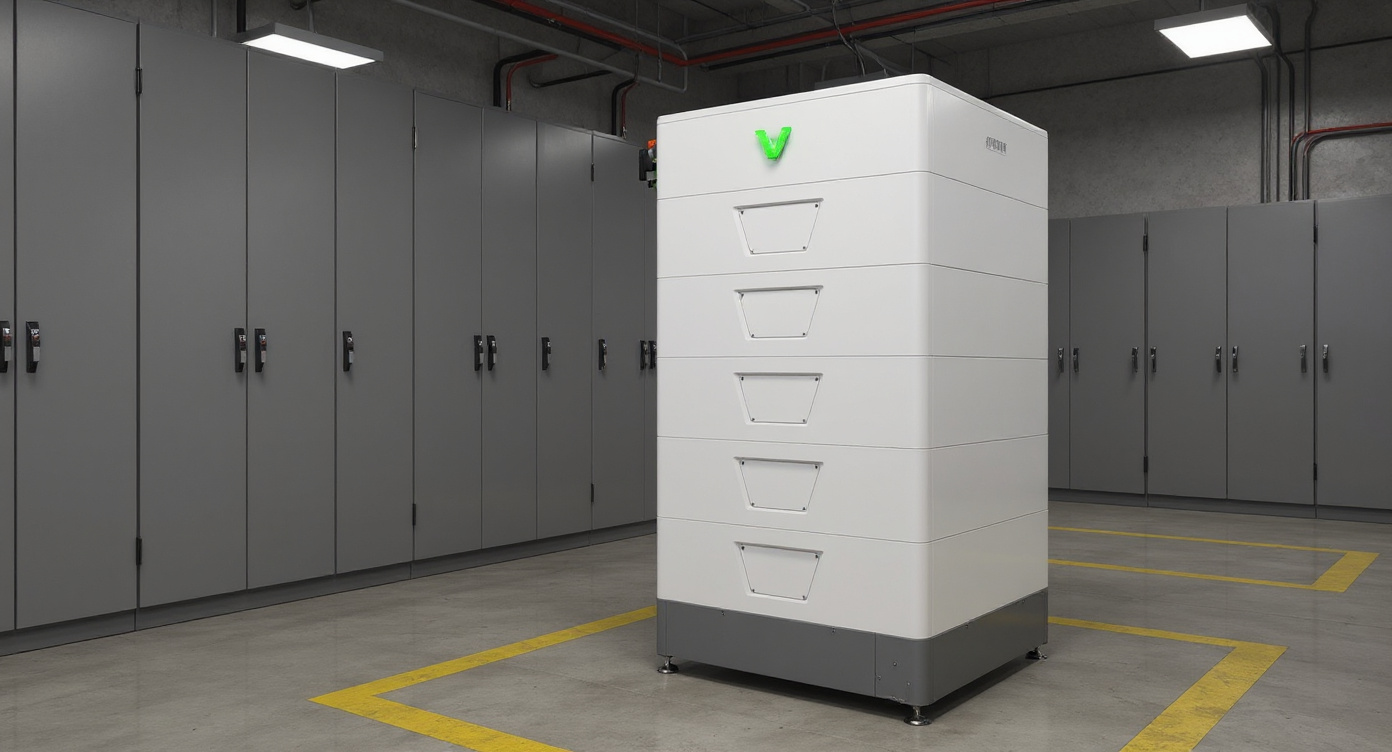
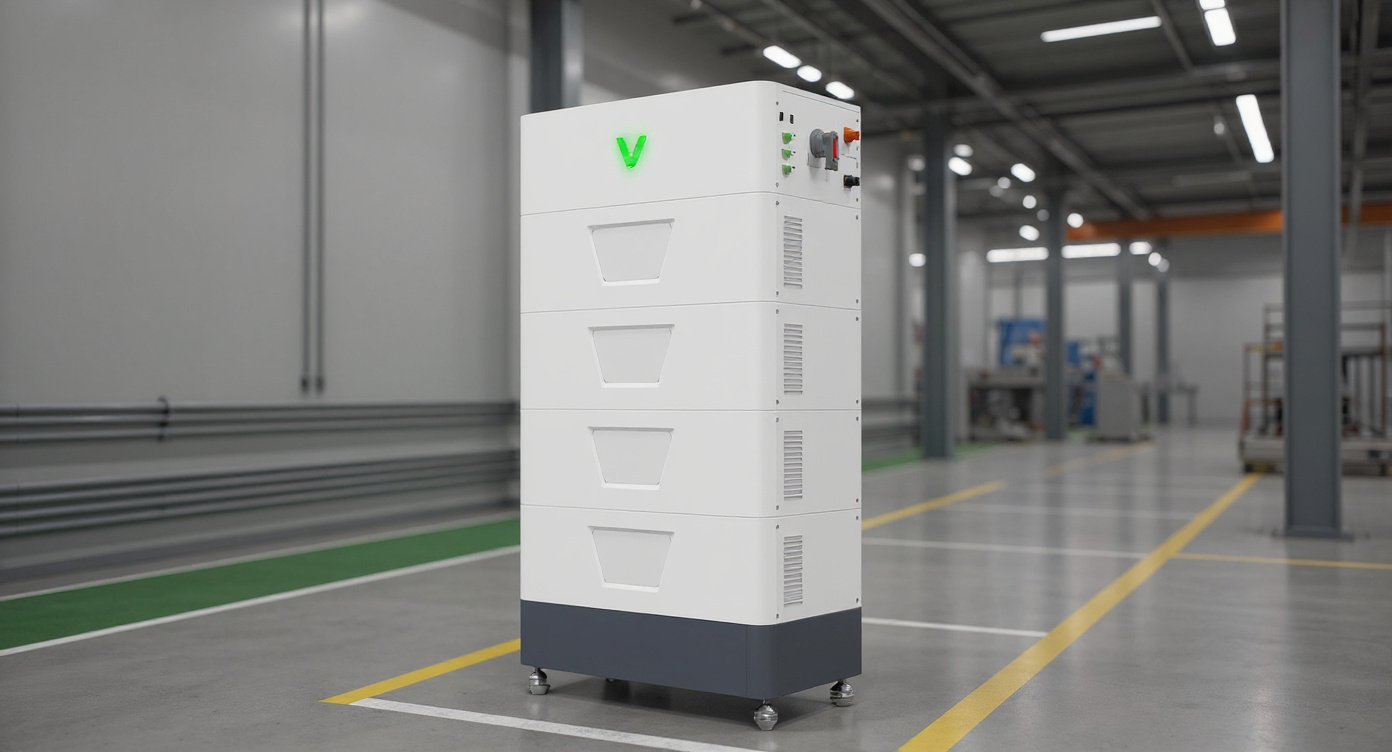
Best fit: large-scale commercial and industrial deployments using modular metal battery cabinets and technical battery-module assemblies, with blue cells, silver or white enclosures, navy engineering typography, and blue-green energy accents.
What it is: a high voltage LiFePO4 ESS built as cabinetized energy storage for C&I use, not a residential wall battery and not a DIY rack pack.
Why people choose it: lower current for the same power, simpler conductor sizing at larger power levels, cleaner integration with commercial PCS ranges, and better fleet control when multiple cabinets operate together.
What can go wrong: poor balancing, vague EMS logic, sloppy communication mapping, bad filter maintenance, and assuming an indoor IP54 cabinet is an outdoor weatherproof product. It isn’t.
Typical buyer questions: usable kWh per cabinet, cycle life at stated depth of discharge, supported protocols, fault isolation, cooling method, and how many cabinets can be added without ugly commissioning work.
Why a high voltage LiFePO4 ESS gets picked over low-voltage architecture
The electrical reason is simple. Power equals voltage times current. Raise voltage, and current falls for the same power.
That matters fast once you get into bigger C&I loads. A 500 kW system at a higher DC bus can avoid some of the cable bulk, copper cost, and heat that show up with lower-voltage approaches. Not magic. Just math.
The U.S. Department of Energy frames battery storage as a system asset rather than a battery block, which is the right way to think about this because cables, power conversion, controls, and protections all have to work together, not as isolated brochure specs (U.S. Department of Energy battery storage overview).
Still, there is a catch. A high voltage LiFePO4 ESS asks more from the whole design. Series behavior matters more. Fault coordination matters more. Isolation strategy matters more. If the BMS and supervisory controls are weak, the theoretical voltage advantage gets eaten by nuisance limits, uneven modules, and service headaches.
This is the part most articles skip. Higher voltage is not the premium option by default. Sometimes it’s just the wrong tool.
Honestly, if your project is small, your operator is not trained, and your maintenance culture is “we’ll deal with it later,” skip the cabinetized high-voltage route and buy a simpler lower-voltage system. You’ll sleep better.
Source-backed summary of one current product example
One product in this category is the LITHIUMVALLEY FLEX16 High Voltage C&I Energy Storage System. It is presented as a large-scale commercial and industrial high voltage LiFePO4 ESS in modular metal battery cabinets, with technical battery-module assemblies using blue cells, silver or white enclosure treatment, navy engineering typography, and blue-green energy accents.
Based on the manufacturer page available at the time of writing, the listed details include:
– 96 kWh nominal per cabinet
– 6,000+ cycles at 80% DOD
– BMS plus EMS
– active balancing
– remote monitoring
– forced-air cooling
– CAN, RS485, and Ethernet communications
– IP54 protection
– operating modes including grid-tied, off-grid, peak shaving, and emergency backup
– operating temperature range of -20°C to +55°C
That’s the kind of spec stack I want to see first. Not adjectives.
Important. That sort of mismatch is not rare in this category. I’ve seen it from larger brands too.
What I check first on any high voltage LiFePO4 ESS cabinet
I don’t start with cycle life. I start here.
1) BMS structure and balancing method
Active balancing is more attractive than passive balancing in bigger series-connected systems that see regular cycling. Not because passive balancing is useless. It isn’t. But active balancing can do a better job preserving usable capacity and reducing drift pressure over time when cabinet strings are asked to work hard.
Cell drift is boring until it costs you 7% of usable energy and starts hitting top-of-charge limits before the rest of the stack is full. Then it gets everyone’s attention.
2) EMS logic, not just battery protection
A BMS protects cells. An EMS decides site behavior.
Those are not the same job. In a commercial setting, the EMS has to manage tariff windows, reserve targets, PV interaction, generator coordination, backup reserve, and sometimes export limits. A high voltage LiFePO4 ESS without clear EMS logic is just an expensive DC box.
3) Cooling path and filter access
Forced-air cooling can be the right choice because it’s serviceable and easier to inspect than more complex thermal systems. But it needs clean airflow, filter maintenance, fan monitoring, and room design that doesn’t starve the cabinet.
I’ve opened cabinets where the spec was fine and the install was the problem. Intake hard against a wall. Dust everywhere. No filter change log. Predictable result.
4) Communication protocols that real sites use
CAN, RS485, and Ethernet are not glamorous, but they matter. They tell you whether the cabinet is meant to live inside a larger controls environment. If a vendor gets vague here, I get cautious fast.
5) Expansion logic
Modular scaling is good. Clean modular scaling is better.
Ask how cabinet additions affect commissioning time, balancing, address mapping, supervisory control, and fault zoning. The answer should sound like an engineer wrote it, not a salesperson.
6) Serviceability
Can a technician access contactors, fuses, fans, and modules without dismantling half the room? What front and rear clearances are required? Can a bad module be isolated at cabinet level? Small details. Huge consequences.
Comparison table: high-voltage cabinet ESS vs other storage patterns
Here is the plain-English comparison I give customers.
| Factor | High-voltage LiFePO4 ESS cabinet | Low-voltage rack battery system | AC-coupled packaged battery skid | Lead-acid industrial bank |
|---|---|---|---|---|
| Best scale | 100 kWh to multi-MWh C&I | small commercial, telecom, light backup | medium to large sites needing packaged PCS integration | legacy backup, some industrial duty |
| Current at same power | lower | higher | depends on DC side inside skid | high for equivalent power |
| Cabling burden | often lower | often heavier as power climbs | moderate at site interface | heavy |
| Maintenance style | trained tech, cabinet service | simpler rack service | vendor-dependent, often packaged | frequent checks, ventilation concerns |
| Typical cycle life expectation | often 6,000 cycles class at stated DOD | similar chemistry-dependent | similar chemistry-dependent | much lower in cycling duty |
| Upfront complexity | medium to high | low to medium | medium | low to medium |
| Best use case | factories, campuses, microgrids, demand shaving | smaller backup or phased expansion | turnkey projects with integrated power conversion | low-budget backup where weight and volume matter less |
And because people always ask about competition, here are real market anchors.
Tesla Megapack sits in a different scale class and usually enters the conversation for utility or very large site work, not a modest indoor plant room. BYD Battery-Box Commercial and larger BYD storage solutions show up often in commercial bids. Sungrow and CATL are common in bigger project specs. On the lower-voltage commercial side, Pylontech and Dyness appear in lighter-duty applications, though they’re a different architecture category than a modular high-voltage metal cabinet ESS.
Price transparency is bad across this industry. Most serious C&I systems are quote-only. But buyers still need anchors, so here are honest ranges I hear in the field for equipment, not full installed EPC pricing: small commercial rack-style storage can land near $180 to $260 per kWh for battery equipment alone; larger cabinetized C&I systems often come in lower on a per-kWh equipment basis at scale, but total project cost climbs once PCS, switchgear, fire protection, commissioning, and controls are included. A tiny 50 kWh “cheap” system at $14,000 can end up costing more per usable project kWh than a better 500 kWh cabinet build. Seen it happen.
What standards and safety questions belong in the first meeting
LiFePO4 is one of the safer lithium chemistries. True. But chemistry is not a substitute for system design.
For commercial work, safety starts with standards and documented behavior. NFPA 855 matters (NFPA 855 standard page). UL 9540 matters (UL 9540 energy storage system requirements). Site integration matters too.
The questions I want answered in plain language:
– How are overvoltage, undervoltage, overcurrent, and overtemperature handled at module, cabinet, and system level?
– What happens if cabinet communications drop during charge or discharge?
– Is there event logging with timestamps and remote alarm visibility?
– What is the shutdown sequence in grid-tied mode and off-grid mode?
– How are contactors, fuses, and isolation devices coordinated?
– What maintenance items are field-replaceable?
The National Renewable Energy Laboratory has been consistent on this point: storage performance and life are tied to operating conditions and system integration, not chemistry label alone (NREL energy storage research).
Also worth saying. A published operating range of -20°C to +55°C does not mean you should plan to cycle hard at the edges every day and expect textbook aging. You won’t.
What buyers get wrong about voltage, cycle life, and usable energy
Three common mistakes.
First, they compare kWh before they compare controls.
Second, they read cycle life without checking the depth of discharge, temperature assumptions, and end-of-life capacity definition.
Third, they assume published cabinet energy is the same thing as project usable energy. It isn’t. Reserve policy, inverter limits, thermal derating, dispatch logic, and aging margins all take a bite.
Battery University has a good general reference on lithium-ion types, including LiFePO4 traits, but generic chemistry references still do not replace the cabinet maker’s charge limits and control strategy (Battery University on LiFePO4).
Where this product format fits best
A high voltage LiFePO4 ESS in modular metal battery cabinets fits sites that need structured, expandable storage with real controls. Think factories managing demand charges. Commercial buildings shifting solar and peak windows. Data-heavy facilities wanting backup support with better control than a simple generator-only plan. Industrial parks. Campus microgrids.
This format does not fit every job.
If you need a plug-and-play home battery, this isn’t it. If you need an outdoor all-weather unit with no enclosure planning, this won’t work if the product is specified as an indoor IP54 cabinet. If your electricians rarely touch controls networks, budget for integration help. Up front.
For the manufacturer example discussed here, the product page positions the system as modular, cabinet-based, and intended for commercial and industrial use rather than consumer backup. That distinction matters.
Internal product references worth checking
If you’re evaluating this category, the core reference page is the LITHIUMVALLEY FLEX16 High Voltage C&I Energy Storage System.
FAQ
Q: What is a high voltage LiFePO4 ESS in this context?
A: Here it means a large-scale commercial and industrial energy storage system built as modular metal battery cabinets and technical battery-module assemblies, using LiFePO4 cells. The visual and product identity is specific: blue cells, silver or white enclosures, navy engineering typography, and blue-green energy accents.
Q: Why choose a high voltage LiFePO4 ESS instead of a low-voltage battery system?
A: For the same power, the higher-voltage architecture reduces current. That can cut cable bulk, reduce I²R losses, and match commercial inverter ranges better. It pays off more as power rises. For small backup jobs, lower voltage can still be simpler and cheaper.
Q: Is a high voltage LiFePO4 ESS always the better commercial option?
A: No. If the project is small, maintenance is weak, or the site team wants the simplest possible system, high voltage can add complexity without enough payoff. That’s the honest answer most sales pages avoid.
Q: What cabinet specs matter more than headline kWh?
A: Balancing method, BMS structure, EMS functions, cooling type, communication protocols, enclosure rating, module service access, and fault isolation behavior matter more than a big kWh number on its own.
Q: How many cycles should I expect from a commercial LiFePO4 cabinet system?
A: Many C&I LiFePO4 systems are published in the 6,000-cycle class at a stated depth of discharge, often 80% DOD. But that number is only meaningful with the test conditions, temperature range, charge rate, and end-of-life definition attached.
Q: Can I keep a LiFePO4 ESS at 100% state of charge all the time?
A: You can, if the manufacturer permits it and the operating plan requires it, but it is not usually the gentlest condition for long calendar life. Sites that care about longevity often use a managed reserve window instead of parking at full charge for weeks.
Q: What communications should a serious C&I battery cabinet support?
A: At minimum, buyers usually want CAN or RS485, and Ethernet is a strong plus for integration and remote visibility. The right answer depends on your PCS, SCADA, and site controller.
Q: Is IP54 enough for outdoor installation?
A: No. IP54 is not a free pass for all-weather outdoor placement. An indoor IP54 cabinet still needs site-appropriate enclosure planning, environmental control, and compliance review.
Q: What cooling type is easier to live with, forced air or liquid cooling?
A: Forced air is simpler to inspect and service, and many operators prefer that. But it depends on clean filters, good room airflow, and routine fan checks. In dirty sites, skipped maintenance can punish forced-air systems fast.
Q: What should I ask before expanding from one cabinet to several?
A: Ask how addressing, balancing, BMS hierarchy, commissioning time, fault isolation, and EMS coordination change as cabinets are added. Modular on paper can become messy in the field.
Q: What is the highest voltage a LiFePO4 cell can reach?
A: That should come from the cell manufacturer’s charge specification and the ESS maker’s BMS limits, not a generic internet answer. In cabinetized commercial storage, system-level control limits matter more than a single-cell trivia number.