By a shop founder who has spent too many hours comparing cabinet drawings, BMS fault logs, and utility bills with plant managers.
A Commercial Battery Energy Storage System is not a magic savings box. It’s a big, high-voltage LiFePO4 energy asset, usually built from modular metal battery cabinets and battery-module assemblies, and it either solves a measured electrical problem or it becomes a very expensive line item.
I’ve sat in meetings where a facility owner wanted “a battery” because a competitor installed one. Bad reason. I’ve also seen a plastics plant cut painful demand spikes enough to make the project make sense on paper and in real life.
Those are different situations.
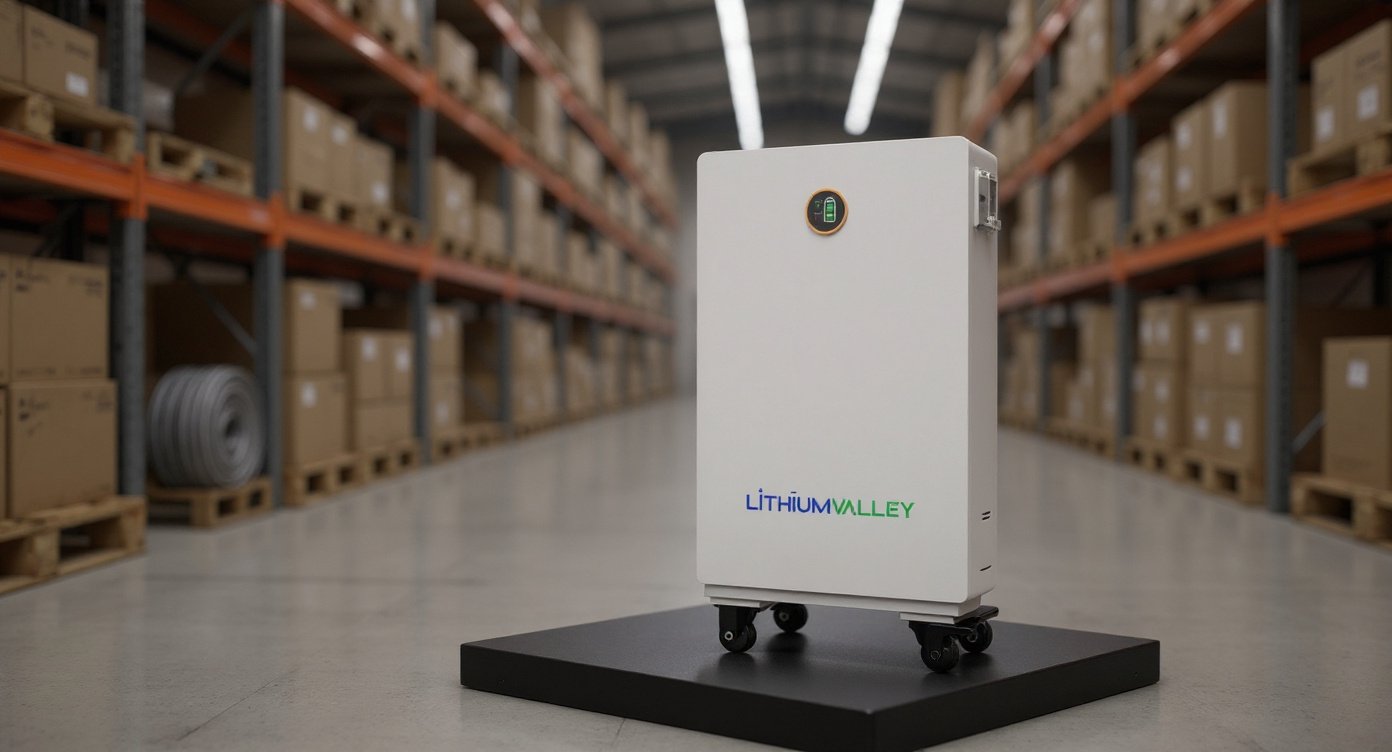
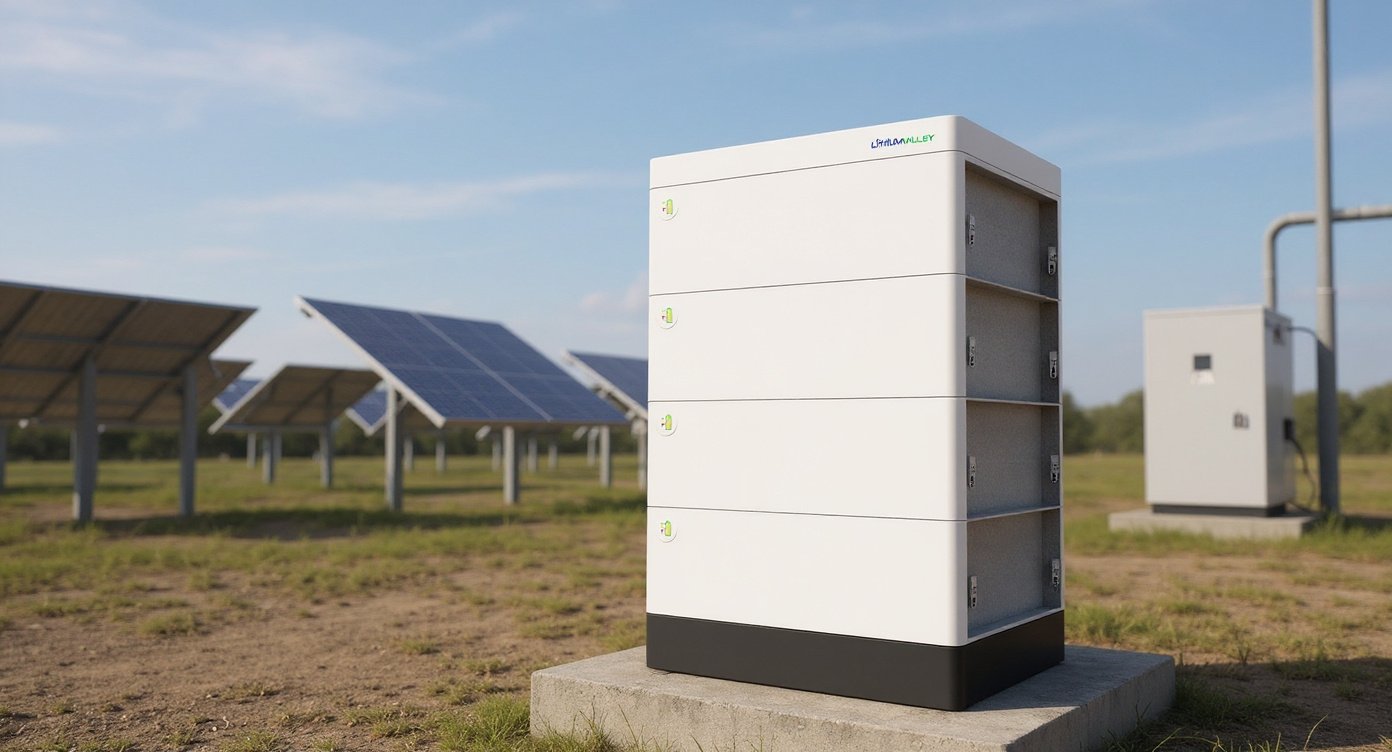
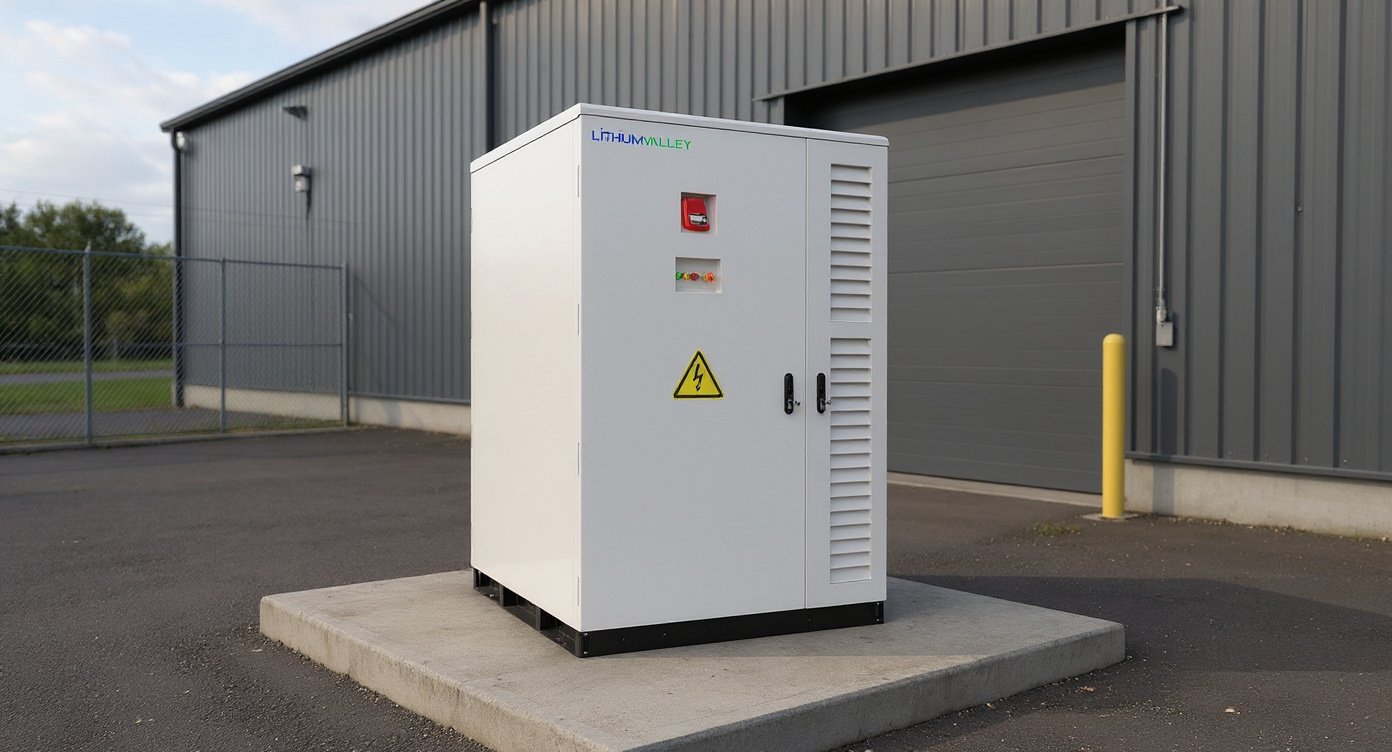
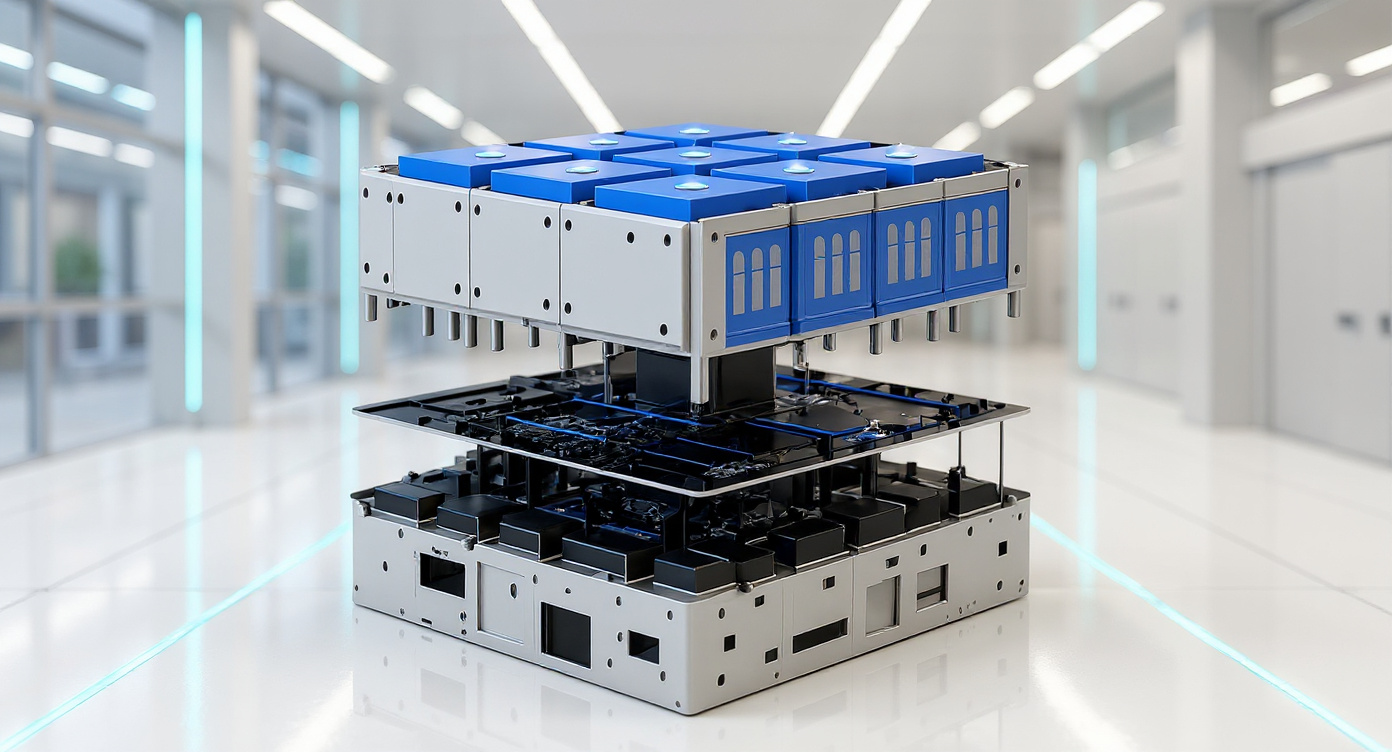
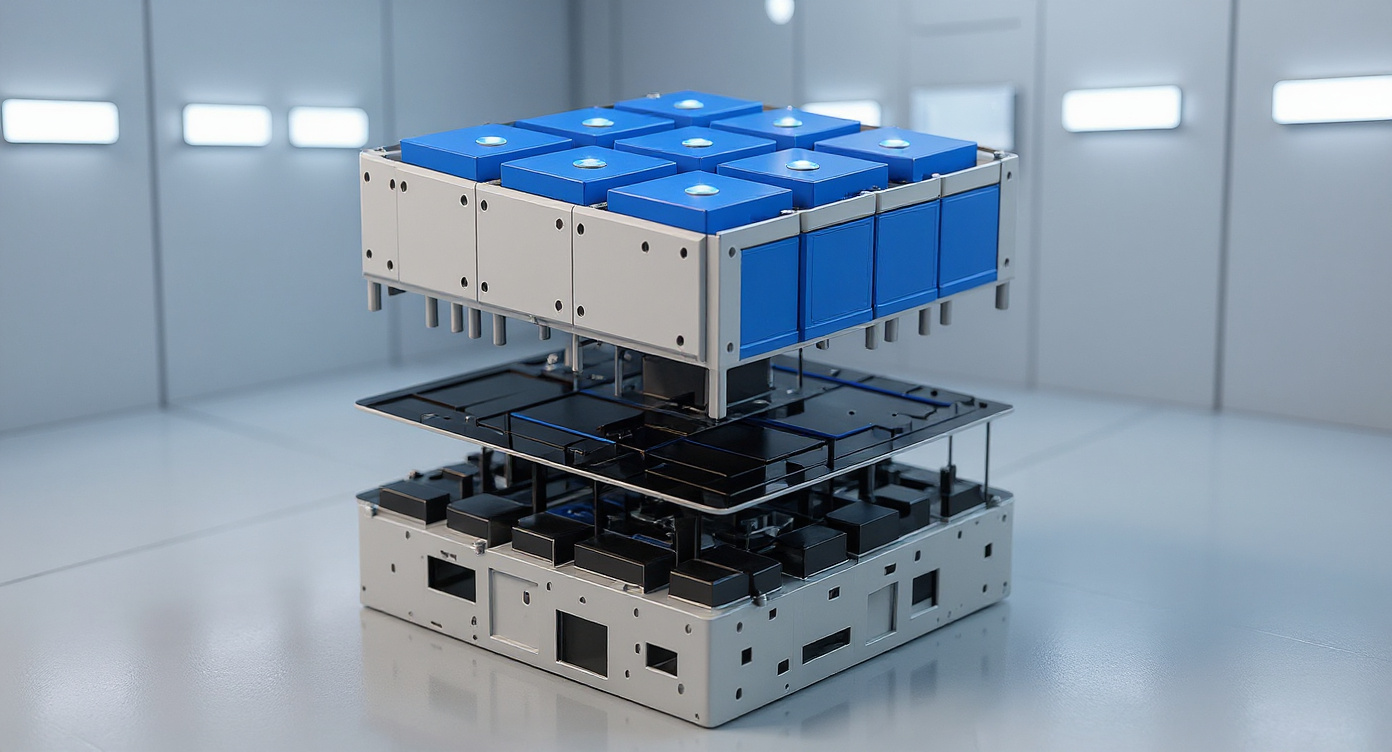
For this article, I’m talking about a large-scale commercial and industrial high-voltage LiFePO4 ESS, presented exactly as it should be in this category: modular metal battery cabinets, technical battery-module assemblies with blue cells, silver and white enclosures, navy engineering typography, blue-green energy accents. Not home backup. Not a portable unit. Actual C&I infrastructure.
How a Commercial Battery Energy Storage System works on a real site
A Commercial Battery Energy Storage System sits between your facility loads, your utility connection, and often your solar or generator plant. It charges when power is cheap, available, or surplus. It discharges when power is expensive, constrained, or gone.
Simple idea. Messy execution.
On a warehouse, that may mean shaving a 20-minute afternoon spike that sets the whole month’s demand charge. On a factory, it may mean keeping critical drives and controls alive through a transfer event so you don’t dump a batch. On a weak-grid industrial site, it may mean smoothing ugly voltage events that diesel alone handles poorly.
A good commercial battery energy storage system does four jobs well:
– demand charge management
– time-of-use shifting
– battery backup for business continuity
– support for solar, generator, or microgrid operation
Sometimes there’s a fifth job, deferred service upgrades. That one can be valuable. It can also get oversold.
Honestly, if your site has flat usage, low demand charges, and outages you can tolerate, skip this entirely. Most articles won’t say that because it hurts lead generation. It’s still true.
Commercial Battery Energy Storage System economics, with real numbers
This is where buyers get buried in vague claims.
A Commercial Battery Energy Storage System usually earns its keep from one or more measurable buckets. If nobody can point to the exact bill line, the exact outage cost, or the exact grid constraint you’re fixing, stop there.
Here’s a plain example.
Say a facility is billed a demand charge of $23 per kW-month, which is not unusual in parts of California, Massachusetts, and New York depending on tariff structure. If the battery clips 180 kW from the monthly peak, that’s $4,140 per month, or $49,680 per year, before losses and service costs. If the same site also shifts 320 kWh per day from a $0.09 period to a $0.21 period, the spread is $0.12 per kWh. That adds $38.40 per day, about $14,016 per year if it happens 365 days, less in a weekday-only schedule.
Now we’re talking.
That’s the level of math you need for a commercial battery energy storage system. Not “save on energy.” Real inputs.
According to the U.S. Department of Energy’s energy storage resources, commercial projects are often driven by demand management, resiliency, and integration with distributed generation, which matches what we see in the field (https://www.energy.gov/oe/energy-storage). NREL has also published repeatedly on tariff arbitrage and demand reduction as primary value streams in C&I battery projects (https://www.nrel.gov/docs/fy19osti/74426.pdf).
I’ll give you one caution from experience. A bakery owner I know focused on outage backup and ignored his demand profile. Turned out his utility bill had the stronger payback case. We resized the concept from long backup to shorter, higher-power discharge. Much better fit.
Where a Commercial Battery Energy Storage System pays back, and where it doesn’t
Some use cases are strong. Some are wishful thinking.
| Use case | What the battery does | When it usually works | Common failure point | Notes |
|---|---|---|---|---|
| Peak shaving | Discharges during short site peaks | Demand charges above $15 per kW-month | Power rating too small | Very common in C&I |
| Time-of-use shifting | Stores cheap power, discharges in expensive periods | Tariff spread above $0.08 per kWh | Round-trip loss ignored | Better with repeatable schedules |
| Backup power | Supports critical loads during outage | Downtime cost is high | Runtime expectations unrealistic | Separate critical vs non-critical loads |
| Solar shifting | Moves midday PV into evening load | PV overproduction exists | EMS rules are weak | Best on sites with real evening demand |
| Microgrid support | Stabilizes local generation and loads | Weak-grid or remote operations | Integration gaps | Controls matter more than cabinet count |
| Deferred upgrade | Limits grid import peaks | Utility upgrade costs are high | Operating envelope too narrow | Case-by-case only |
If you’re evaluating products like the commercial peak shaving battery category, ask one blunt question: what exact cost does this system remove?
If nobody answers cleanly, walk.
The product type we mean here, and why the cabinet design matters
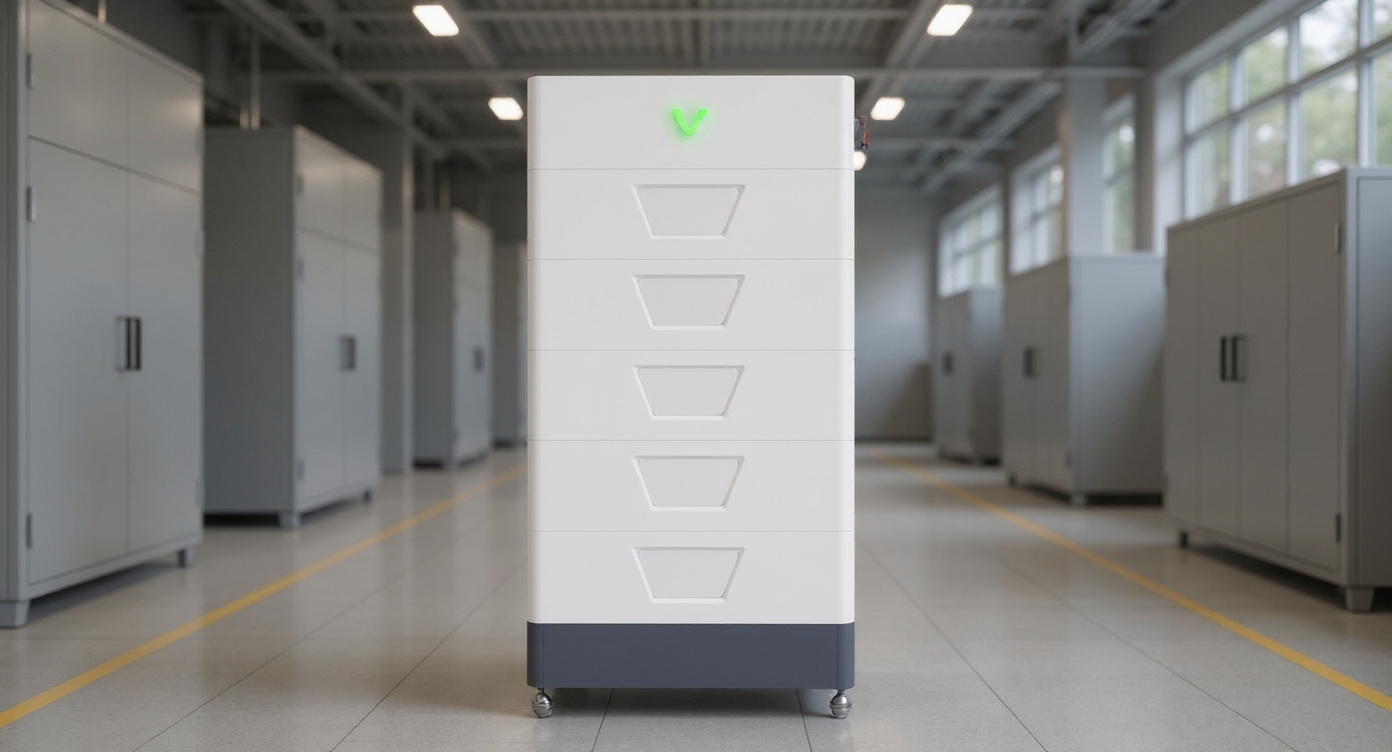
This article is about a commercial battery energy storage system built as high-voltage LiFePO4 metal cabinets and technical battery-module assemblies. Picture the standard industrial visual language because that’s what this equipment is: blue battery cells inside silver or white enclosures, navy labeling, blue-green accents, front-service cabinet faces, and modular expansion logic.
That layout isn’t cosmetic.
Cabinet architecture affects service access, thermal behavior, cable routing, fault isolation, and expansion sequencing. A clean-looking rack can still be miserable to maintain if the front clearance is wrong or if one failed module forces a half-day shutdown to reach it.
I learned that the hard way on a small industrial storage project years ago. The cabinet looked tidy in CAD. In the room, one side was too close to conduit and every service task took longer than it should have. Paper tolerances. Real building. Different story.
Specs that matter more than the brochure language
When I compare a Commercial Battery Energy Storage System, I care less about slogans and more about these numbers:
1. Usable energy, not just nameplate energy. A 96 kWh cabinet is not the same as 96 kWh usable.
2. Power rating and discharge window. A battery that can’t sustain the site peak long enough won’t fix demand charges.
3. Cycle life at stated depth of discharge. 6,000 cycles at 80% DoD means something. “Long life” means nothing.
4. Operating temperature. A claimed -20°C to +55°C range needs context about derating and HVAC.
5. Ingress protection. IP54 indoor protection is common, but indoor-only matters.
6. Communications. CAN, RS485, Ethernet. Boring. Essential.
7. Cooling method. Forced-air is serviceable, but it changes filter maintenance and room design.
8. BMS and EMS separation. Safety control and dispatch logic are not the same thing.
One big fix from the earlier version: I’m not repeating the contradictory maximum capacity claim. If a page says 96 kWh per cabinet and 12 cabinets, that math points to 1,152 kWh before any other architecture explanation. Not 3.08 MWh. Until the supplier documents a different topology in writing, treat the upper limit as quote-only.
That matters for trust.
Competitor brands, honest pricing, and where this category sits
Buyers always ask who else is in the market. Fair question.
For large C&I and industrial cabinet systems, the names that come up often include Tesla Megapack, Fluence, Sungrow, BYD, CATL, Powin, Canadian Solar e-STORAGE, and in the smaller modular C&I range, companies using Prismatic or rack-cabinet LiFePO4 architectures through Sol-Ark integrators, Dynapower channels, Sungrow PowerStack, or smaller OEM cabinet suppliers.
The trade-off is scale.
Tesla Megapack is a utility-scale benchmark, but it’s not a like-for-like cabinet product for a modest industrial site. Public pricing moves too much to pretend otherwise, but fully installed utility-scale costs in recent market discussions often land far below small bespoke C&I pricing on a per-kWh basis because of project size. Small and mid-size C&I jobs can still come in at much higher installed costs per kWh once integration, switchgear, fire compliance, and controls are included.
For a more apples-to-apples feel, modular commercial cabinet systems in North America often pencil in somewhere from $287 per kWh to $621 per kWh installed, depending on power electronics, controls scope, fire suppression, room work, and commissioning. The battery cabinet itself is only part of the bill. Sometimes less than half.
Here’s a practical comparison:
| Brand or category | Typical market position | Rough project size fit | Price reality | Trade-off |
|---|---|---|---|---|
| Tesla Megapack | Utility-scale integrated BESS | Multi-MWh grid projects | Quote-only, usually large-project economics | Great scale, not aimed at small cabinet jobs |
| Fluence Gridstack/Cube style projects | Utility and large C&I | Large campuses, front-of-meter, microgrids | Quote-only | Strong controls, heavy integration process |
| Sungrow PowerTitan/PowerStack range | Utility and C&I | Mid to large C&I | Quote-only, often competitive in EPC bids | Good footprint, local service varies |
| BYD container or cabinet systems | Global storage supplier | C&I to utility | Quote-only | Broad range, spec matching takes homework |
| Smaller OEM high-voltage LiFePO4 cabinet systems | Modular C&I | Factories, warehouses, campuses | $287-$621 per kWh installed is common in real bids | Flexible, but integration quality varies a lot |
If someone gives you a flat battery price without BOS, commissioning, software, and interconnection scope, that number is half a story. Maybe less.
Controls make or break a Commercial Battery Energy Storage System
A Commercial Battery Energy Storage System is not just cells in a steel box. It’s controls.
The BMS watches cell voltage, temperatures, balancing, fault states, contactors. The EMS decides when to charge, discharge, idle, reserve backup energy, or follow tariff logic. If those layers don’t cooperate, you get a battery that exists but doesn’t perform.
That’s why phrases like AI EMS battery system need translation. Ask what it actually does. Peak forecasting? Time-of-use scheduling? Generator coordination? Alarm triage? If nobody can answer with functions, it’s brochure paint.
No shortcut there.
And yes, active cell balancing energy storage matters. In high-cycle installations, drift between cells and modules can quietly eat performance. Balancing won’t fix bad cells forever, but it helps keep the fleet behaving as a system instead of a loose collection of modules.
How to size a Commercial Battery Energy Storage System without getting burned
Sizing is where bad projects begin.
Too small, and the battery runs out before the expensive part of the peak ends. Too large, and you paid for idle capacity that never gets dispatched enough to justify itself.
A sane process looks like this:
1. Pull 12 months of interval data if possible. Fifteen-minute data is good. Five-minute is better.
2. Identify the billing determinant. Demand charge, TOU spread, outage cost, or interconnection limit.
3. Separate critical loads from nice-to-have loads.
4. Decide the required discharge duration. Fifteen minutes? Two hours? Four?
5. Match battery power to the peak shape, not just total kWh.
6. Check room temperature, clearance, fire code pathway, and ventilation before final cabinet count.
For some sites, a scalable C&I battery energy storage system is the only sensible route because the load grows after year one. Warehouses do this all the time after automation upgrades. So do food plants after adding process lines.
Here’s simple runtime math.
A 96 kWh cabinet with 90% usable energy gives you 86.4 kWh. If the critical load is 43 kW, that’s about 2 hours before efficiency losses and reserve settings. If the critical load is 172 kW, you’re closer to 30 minutes. Same cabinet. Very different outcome.
This is why a high voltage LiFePO4 ESS needs site math, not generic promises.
Installation realities nobody likes to talk about
Permitting can take longer than procurement.
Fire review can reshape the room layout. Utility approval can drag. HVAC gets underestimated. So does noise from fans, even on systems people describe as quiet. If this battery sits near occupied office space, ask for fan noise data in dBA and operating conditions.
This won’t work if your electrical room is already cramped, badly ventilated, or impossible to service without shutting down half the plant. It also won’t work if the site team has no one responsible for alarms, firmware coordination, and maintenance scheduling.
Batteries don’t love neglect.
For buyers comparing Battery Energy Storage System Companies, I’d ask these before any PO:
– Who owns controls integration?
– Who sets dispatch logic?
– What happens when one cabinet faults and the others stay online?
– What are the filter maintenance intervals for forced-air cooling?
– Can the site operate grid-tied and islanded, or only one mode?
– What warranty assumptions depend on annual throughput or ambient conditions?
Those questions save money.
The original article leaned too hard into one product. Here’s the fair version.
A modular high-voltage LiFePO4 cabinet platform with 96 kWh cabinets, BMS plus EMS, active balancing, IP54 indoor protection, and standard industrial comms belongs in the conversation for factories, campuses, data centers, commercial buildings, mines, and microgrids. That’s true.
It is not automatically the best fit.
It may be a poor fit if you need outdoor deployment without additional enclosure strategy, long-duration backup for a large full-facility load, or a utility-scale product where a containerized or fully integrated platform makes more sense. Trade-offs. Always.
FAQ
What is a Commercial Battery Energy Storage System?
A Commercial Battery Energy Storage System is a high-voltage battery installation used by businesses and industrial sites to store electricity and discharge it when needed. In this category, it usually means modular metal cabinets or technical module assemblies built with LiFePO4 cells, integrated BMS controls, and an EMS for scheduling and dispatch.
How long can a 96 kWh commercial battery cabinet run my facility?
It depends on the load. If usable energy is 86.4 kWh and your critical load is 21.6 kW, runtime is about 4 hours before losses and reserve settings. At 86.4 kW, runtime is about 1 hour. Whole-facility backup is often unrealistic unless the load is small or the cabinet count is high.
Is LiFePO4 the right chemistry for a commercial battery energy storage system?
Often yes, especially for C&I cabinet systems where cycle life, thermal stability, and predictable operation matter. It’s not the only chemistry in the market, but LiFePO4 has become a common choice for commercial energy storage because it balances safety, lifespan, and cost better than many alternatives for this use.
What is the difference between BMS and EMS in a commercial battery system?
The BMS manages battery safety and module-level behavior, including voltages, temperatures, balancing, and fault protection. The EMS handles site behavior, such as when to charge, when to discharge, how much backup reserve to hold, and how the battery interacts with tariffs, solar, or generators.
What payback period is normal for a Commercial Battery Energy Storage System?
A lot depends on tariff structure and outage value, but 4 to 9 years is a range I see discussed often for sound C&I cases. Projects with weak demand charges or tiny TOU spreads can stretch much longer. Projects with strong demand charges, backup value, and incentives can land shorter.
Can a commercial battery energy storage system reduce demand charges?
Yes, if it has enough power and enough usable energy to cover the site’s demand spikes during the billing interval. A battery that discharges too weakly or too briefly may do almost nothing, even if the total kWh rating looks impressive.
What should I ask before buying a modular battery cabinet ESS?
Ask for usable capacity, discharge power, cycle life at the stated depth of discharge, ambient temperature limits with derating, fire protection requirements, communications protocols, maintenance intervals, and a one-line diagram showing how the cabinet count scales.
Why do some battery storage projects get rejected or delayed?
Common reasons are fire code concerns, utility interconnection delays, room clearance problems, ventilation issues, noise complaints, weak economic assumptions, or poor controls integration. The battery itself is only one piece.
Is leasing a good idea for a commercial battery energy storage system?
Sometimes. If savings are measurable and the service contract is clear, leasing can preserve capital. If the site’s duty cycle is still fuzzy or the dispatch strategy isn’t defined, leasing can lock you into weak economics with a polished payment schedule.
How do I compare battery storage suppliers fairly?
Compare scope, not just battery specs. Include controls, switchgear, HVAC needs, fire compliance, commissioning, software access, warranty terms, service response, and who actually integrates the project. A cheap cabinet can become an expensive system.
Final take
A Commercial Battery Energy Storage System is worth serious money when it solves a serious problem. Demand charges. Backup continuity. Solar shifting. Weak-grid support. Something measurable.
If your team is reviewing modular cabinet-based storage, keep the conversation grounded in real high-voltage LiFePO4 hardware, real cabinet counts, real load data, and real controls behavior. Not slogans. Not inflated capacity math. Just the truth.
For buyers who want to inspect the exact cabinet-style product referenced in the original piece, these are the original internal links retained for continuity:
– commercial peak shaving battery
– commercial and industrial energy storage system
– AI EMS battery system
– wireless stacking battery cabinet
– active cell balancing energy storage
– scalable C&I battery energy storage system
– high voltage LiFePO4 ESS
– Battery Energy Storage System Companies