A commercial and industrial high-voltage LiFePO4 ESS is worth quoting when a site has painful demand spikes, expensive downtime, or a real need for controlled backup, and not when someone just wants a battery because storage sounds modern.
I’ll be plain about it. Most bad battery projects start with the wrong question. People ask, “How many kWh should we buy?” when they should ask, “What is the utility bill punishing, what loads must stay up, and how fast does the system need to respond?”
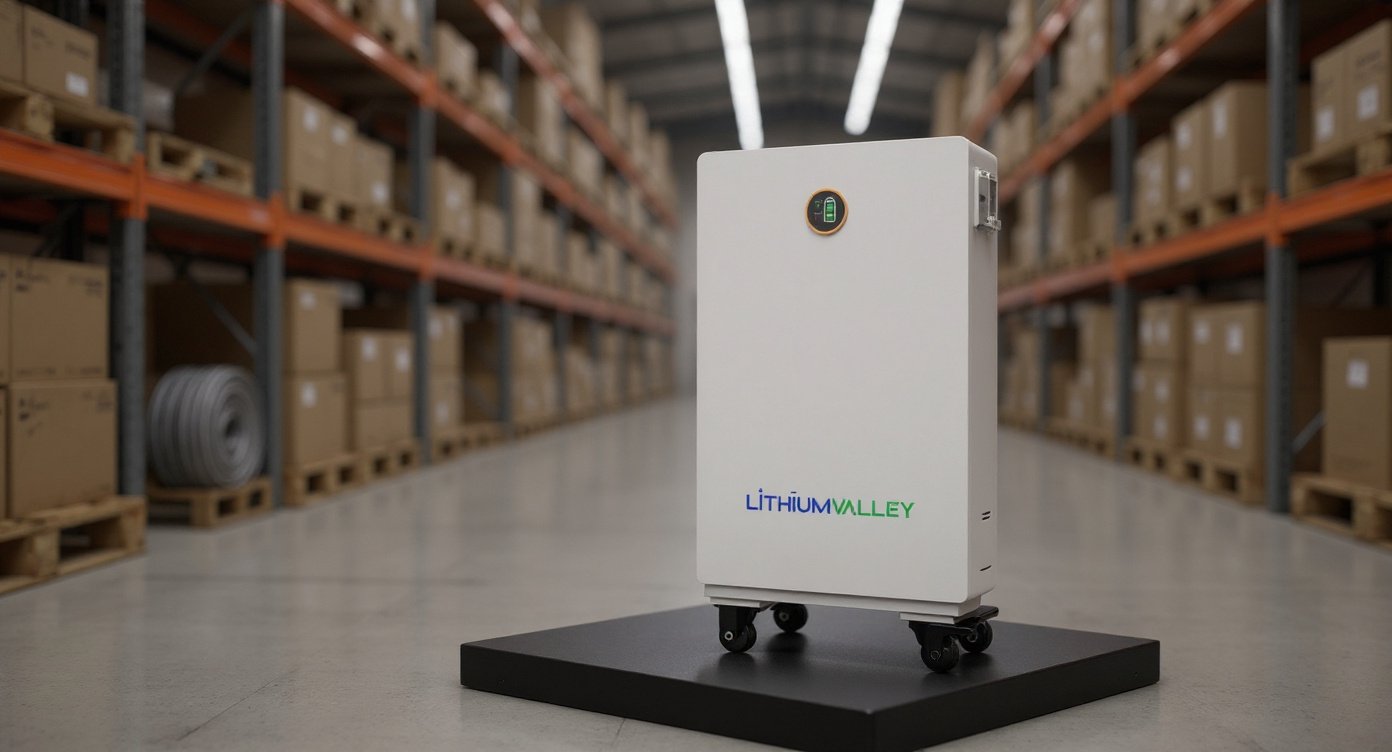
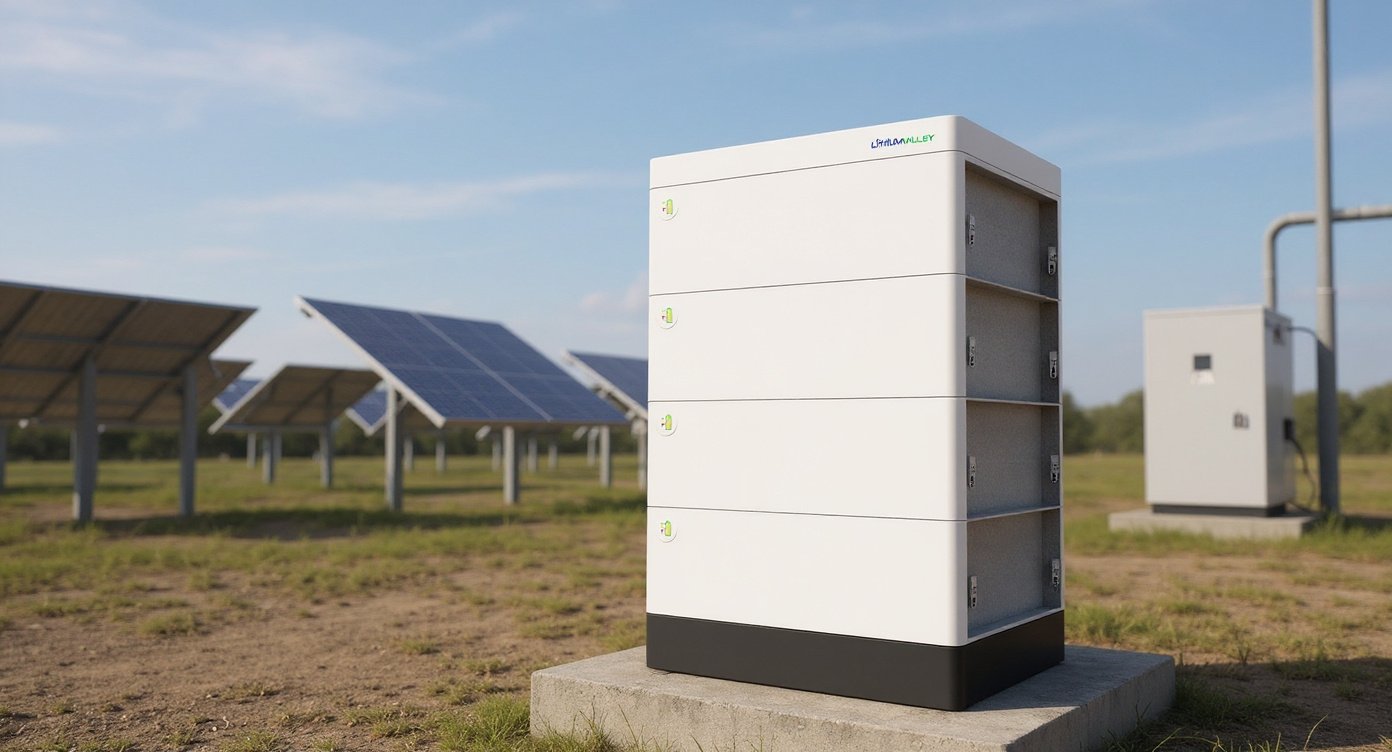
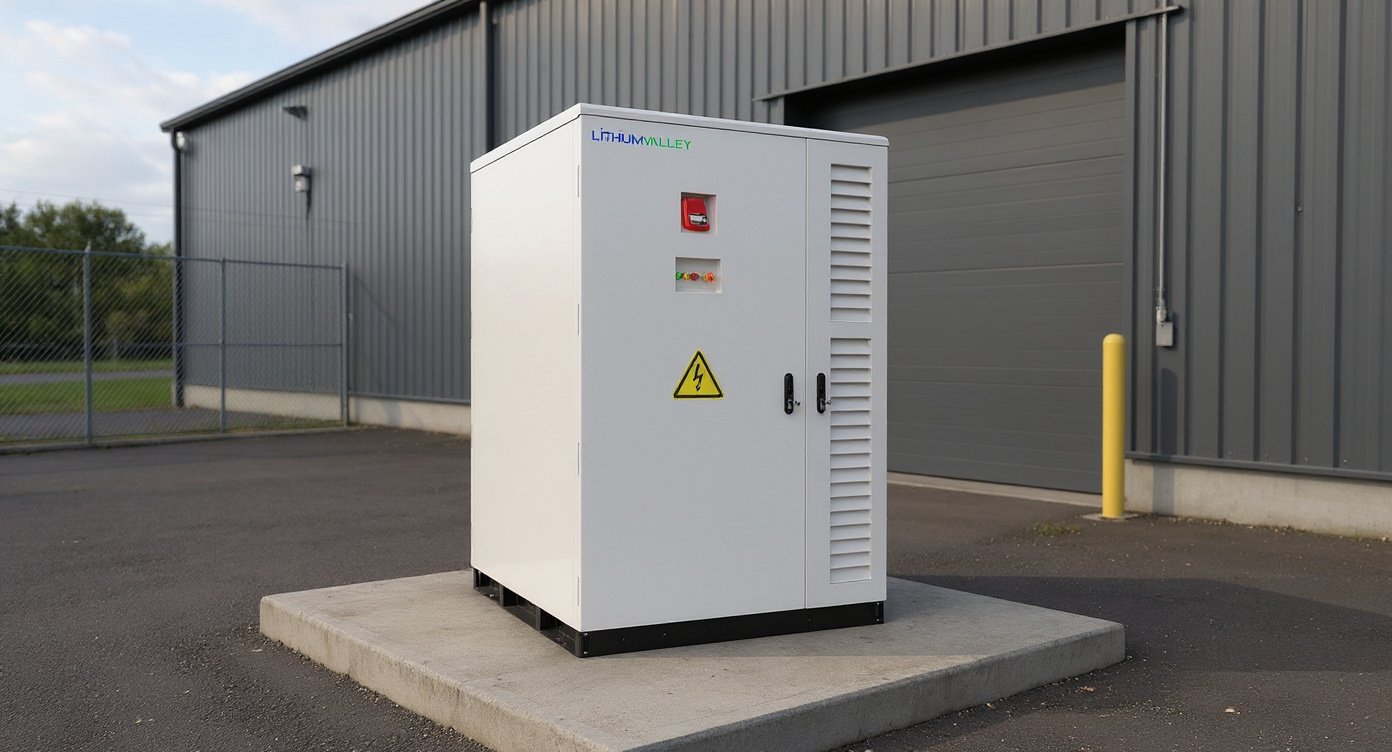
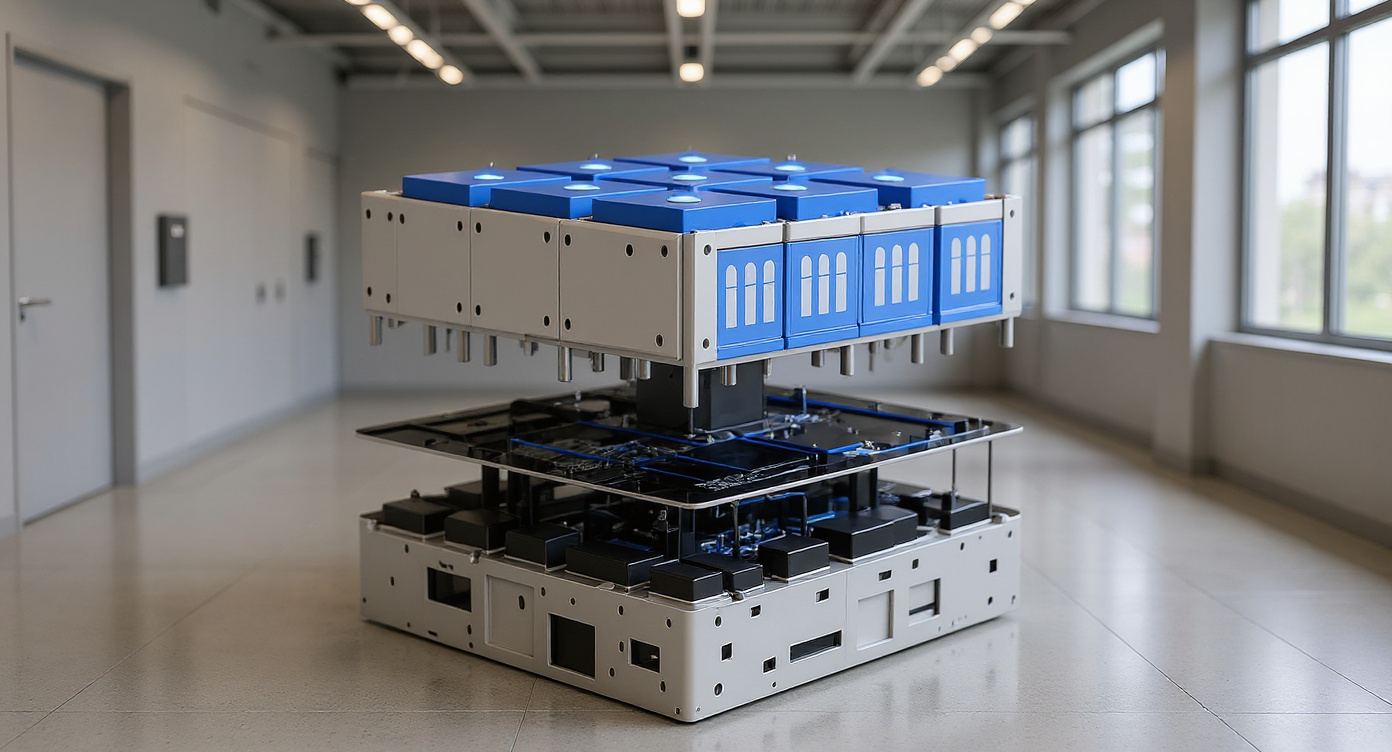
We work in this category every week, the unglamorous part of it: modular metal battery cabinets, technical battery-module assemblies, blue LiFePO4 cells inside silver and white enclosures, navy engineering labels, blue-green status accents, service doors, busbars, BMS harnesses, thermal paths. The stuff that ends up in plant rooms and utility yards, not lifestyle photos.
And yes, trade-offs exist. Big ones.
The short answer
If your facility gets hit with demand charges, has a load profile with ugly 15-minute peaks, or can’t tolerate even a 2-second transfer gap, a high-voltage cabinet ESS deserves a quote.
If your load is flat, your power is cheap, and your outages are rare, don’t force it. A lot of sites won’t see good economics. That’s the honest answer most sales pages avoid.
What this product actually is
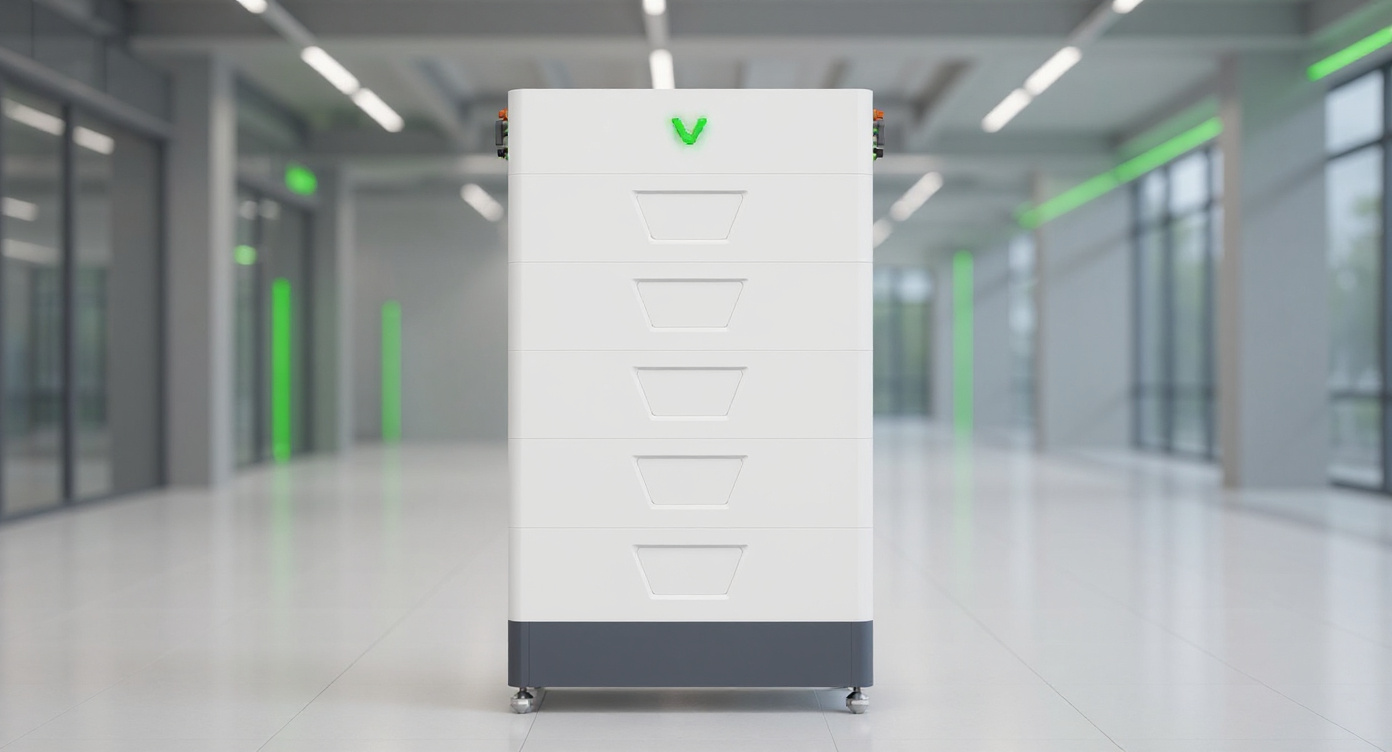
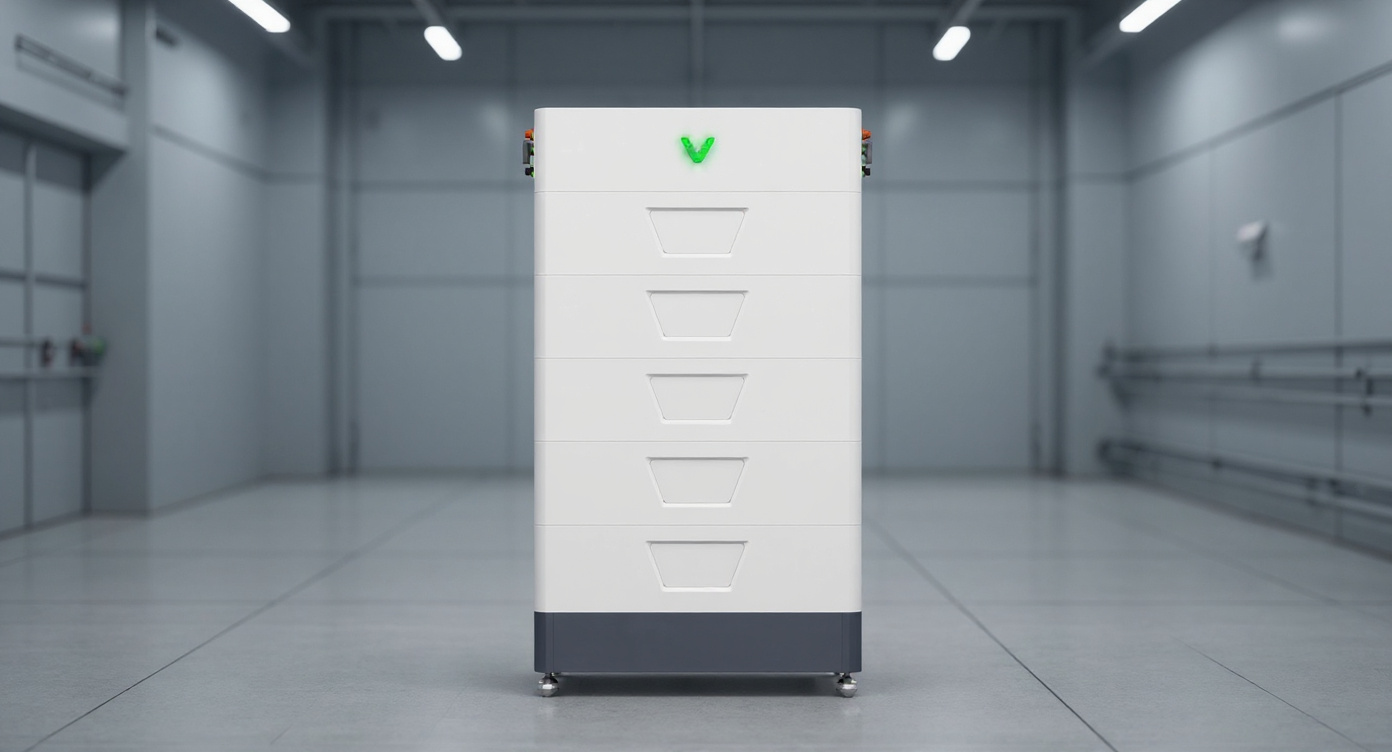
This article is about a large-scale commercial and industrial high-voltage LiFePO4 ESS, built as modular metal battery cabinets and technical battery-module assemblies. Think blue prismatic cells, silver or white cabinet bodies, navy engineering typography, and blue-green energy accents. Not a wall battery. Not a portable power station. Not a home backup toy.
The specific example in the draft, FLEX16, sits squarely in that lane. The published specs describe a 96 kWh nominal cabinet, high-voltage architecture, LiFePO4 chemistry, modular expansion, peak shaving, emergency backup, grid-tied and off-grid modes, CAN/RS485/Ethernet communications, forced-air cooling, IP54 indoor protection, and 6,000+ cycles at 80% DOD.
Those are useful specs. But specs don’t pay the electric bill by themselves.
Why businesses buy battery cabinets instead of just another generator
Generators still have their place. I sell and specify storage, and I’ll still say that.
If you need 18 hours of backup for a food plant with diesel already on site, a generator may do the heavy lifting for less money per hour of runtime. Batteries win where speed, control, and repeat daily cycling matter.
A generator is good at long-duration backup.
A high-voltage LiFePO4 ESS is good at fast response.
Together, they can be excellent.
This matters because many commercial and industrial sites do not fail in dramatic movie-scene fashion. They suffer from smaller, expensive problems:
– a demand peak that adds $19,400 to one billing cycle
– a voltage dip that trips a line and wastes 42 minutes
– a transfer delay that reboots controls
– a tariff window from 4 PM to 9 PM that makes every kWh hurt
I’ve seen one plastics processor chase a “backup power problem” for months. Turned out backup wasn’t the first problem at all. Their killer was a 12-minute compressor overlap every weekday at shift change. A battery cabinet system sized for that short spike penciled out faster than a larger generator upgrade. Not glamorous. Just math.
What a C&I battery system is doing behind the scenes
A commercial ESS isn’t cells in a box. It is cells, battery modules, contactors, high-voltage DC architecture, BMS layers, EMS logic, communications, thermal management, safety interlocks, and site-level controls that can behave with the rest of the electrical plant.
For the kind of cabinet system described here, the architecture that matters most usually includes:
– battery modules assembled from blue LiFePO4 cells
– silver or white modular steel cabinets built for service access
– a master and slave BMS structure
– EMS controls for peak shaving, time shifting, backup dispatch, and microgrid coordination
– CAN, RS485, and Ethernet for inverter and site integration
– forced-air cooling with real airflow design, not brochure vapor
– high-voltage operation that cuts current and helps keep cable sizes sane at larger power levels
One sentence that deserves more attention than it gets: high-voltage cabinet ESS is often easier to build cleanly at commercial scale than low-voltage stacks, because current rises fast when voltage stays low, and the copper bill gets ugly.
The decision criteria I use first
When someone asks me if a high-voltage LiFePO4 ESS is worth quoting, I start here.
1. Demand charge exposure
If the utility bill punishes 15-minute or 30-minute peaks, storage may work. In the U.S., commercial demand charges can range from under $10 per kW-month to more than $40 per kW-month depending on tariff and region. In parts of California and the Northeast, painful bills are common.
2. Downtime cost
If one brief outage ruins a batch, trips drives, or stops chilled process equipment, batteries earn attention fast. If the site shrugs off a 5-minute outage, less so.
3. Required ride-through time
Some sites need 30 seconds. Some need 20 minutes. Some want 2 hours to bridge to generator or finish a process safely. Different problem. Different cabinet count.
4. Power versus energy
This gets missed all the time. A site may need high kW for short bursts, not huge kWh. Or the opposite. If you size for the wrong axis, the project disappoints.
5. Integration reality
Can the ESS talk to the inverter, switchgear, SCADA, PLC, or building controls? CAN, RS485, and Ethernet matter because integration work is where many projects get expensive.
6. Room conditions and service access
IP54 indoor protection is not permission to shove cabinets into any hot back room and forget them. Leave service space. Check airflow. Verify cable routes. Basic stuff. Vital stuff.
Where storage pays off fastest, and where it doesn’t
The fastest payback usually shows up in facilities with one of these patterns:
– manufacturing lines with short, repeatable peaks
– commercial buildings with ugly demand charges
– data facilities that need clean transfer and ride-through
– mines and remote sites pairing storage with gensets
– campuses or industrial parks doing time-of-use shifting
– PV plus storage projects where midday excess can be moved into evening use
Where does it fail?
Flat-load sites. Cheap tariffs. No outage risk. No operating discipline.
Honestly, if your utility rate is simple energy-only billing and your peak demand barely moves all month, skip this entirely unless resilience is worth paying for on its own. I don’t say that to kill a sale. I say it because bad-fit projects sour people on the whole category.
A useful comparison, battery cabinet vs generator vs hybrid
| Use case | High-voltage LiFePO4 ESS | Diesel generator | Hybrid ESS + generator | Honest take |
|---|---|---|---|---|
| 1-second outage ride-through | Excellent | Poor without transfer lag | Excellent | Battery wins on speed |
| 15-minute demand peak shaving | Excellent | Poor | Excellent | Generator fuel cost makes this clumsy |
| 8-hour outage backup | Limited unless very large | Strong | Strong | Generator usually cheaper for long duration |
| Daily cycling | Strong, if cycle life is solid | Weak | Good | Batteries are built for repetition |
| Fuel logistics risk | None on site for fuel | High | Medium | Storms expose this fast |
| Maintenance cadence | Moderate electrical service | Engine service, fuel, testing | Highest complexity | Hybrid gives best performance, not simplicity |
I had one customer insist he only wanted generator backup because “batteries are for solar people.” Six months later, after two nuisance transfer events knocked out controls for less than a minute each, he added a cabinet ESS in front of the genset. The generator stayed. The battery fixed the real problem.
Real competitor context, with honest pricing
People deserve price anchors, even if exact project pricing depends on inverter choice, fire code, shipping, commissioning, and country.
At the cabinet and system level, market pricing moves a lot, but here are honest reference points from the commercial side of the market:
– Tesla Megapack is utility scale, not a direct fit for most building-level installs, and pricing is project-based. Public discussions often land well above small C&I budgets because you’re buying a grid-scale platform, not a neat indoor cabinet.
– Sungrow PowerStack and similar liquid-cooled C&I units often compete in larger outdoor projects. Depending on scope, total installed pricing can land in the rough band of $280 to $480 per kWh in some markets. Sometimes lower in China. Rarely after all soft costs in North America.
– BYD Battery-Box Commercial / larger BYD ESS configurations can be competitive on hardware, but integrator support and local service vary by region.
– CATL EnerC and related containerized offers are strong at larger scale, though many projects end up above the sweet spot for a modest factory or campus building.
– Generac C&I storage offerings can make sense when buyers want one familiar U.S. power brand, but that convenience can cost more once the final package is assembled.
For a modular 96 kWh high-voltage LiFePO4 cabinet system, a buyer should expect the final number to depend on PCS, switchgear, EMS scope, and commissioning. Hardware-only numbers can look attractive. Installed numbers tell the truth.
That’s why I distrust any article that tosses out one magical cost per kWh and acts done.
The features that matter, and the ones I would not overpay for
Here are the specs from the draft that deserve attention on a project sheet:
– 96 kWh nominal per cabinet
– 6,000+ cycles at 80% DOD
– -20°C to +55°C operating range
– CAN / RS485 / Ethernet
– forced-air cooling
– IP54 indoor protection
– grid-tied and off-grid support
– modular expansion
Now the opinionated part.
I would care more about BMS quality, serviceability, fault isolation, thermal design, and integration support than a flashy software label. If an EMS is sold as “AI-assisted” but can’t cleanly handle demand-charge windows, generator coordination, SOC reserve logic, and alarm reporting, the AI label is wallpaper.
Same for modularity. A cabinet system is only modular if expansion doesn’t turn into a field wiring mess or a controls rewrite.
For a deeper look at how control software changes project behavior, the AI EMS battery system discussion is still relevant, provided you read it with a skeptic’s eye.
Common sizing mistakes
This is where money gets burned.
1. Sizing by annual kWh bill instead of interval data
You need 15-minute data, and in some cases 1-minute data. Monthly totals hide the ugly parts.
2. Buying for energy when the site problem is power
If a process spike lasts 6 minutes, the discharge power rating may matter more than stuffing in more kWh.
3. Ignoring reserve state of charge for backup
If the battery gets emptied every afternoon for bill savings, then backup disappears unless controls hold reserve.
4. Trusting room temperature on paper
Electrical rooms lie. I have seen a room listed at 30°C hit 41°C by midafternoon with the doors shut and two VFDs cooking nearby.
5. Forgetting service clearances
Cabinets need access. Front, rear if required, and cable bend space. Obvious. Still missed.
6. Assuming every inverter speaks every dialect
Communication standards exist, but real interoperability still needs validation. CAN is not a magic word.
Commercial ESS versus utility-scale storage
These categories overlap in chemistry, but not in job description.
| Category | Typical scale | Primary purpose | Control focus | Physical format |
|---|---|---|---|---|
| Building or factory C&I ESS | Tens of kWh to a few MWh | Peak shaving, backup, TOU shifting | Facility load and resilience | Indoor or outdoor modular cabinets |
| Industrial microgrid ESS | Hundreds of kWh to multi-MWh | Islanding, genset support, process continuity | Local generation and critical loads | Cabinet arrays or containers |
| Utility-scale BESS | Multi-MWh to hundreds of MWh | Grid services, arbitrage, network support | Grid dispatch and market participation | Containers or large integrated blocks |
| Telecom or edge critical power | Smaller, high-availability niches | Ride-through and uptime | Transfer speed and reliability | Compact cabinets and battery strings |
If you’re trying to solve a plant-level problem, don’t let a utility-scale brochure distract you. Wrong frame.
For anyone comparing deployments, the commercial and industrial energy storage system category makes more sense when you keep the conversation tied to site resilience, tariff control, and electrical-room reality.
Wiring, stacking, and backup behavior without the nonsense
Wireless stacking and modular cabinet expansion sound flashy, but the practical question is simple: can you add cabinets without turning commissioning into a week of pain?
That is the value.
Not the buzzword.
The backup sequence matters too. In a real site design, the ESS has to coordinate with the inverter or PCS, transfer equipment, protection settings, and any generator logic. Fast backup is possible. Clean backup is possible. But not if the whole design was treated like a catalog order.
The concept behind the wireless stacking battery cabinet matters because expansion discipline matters. It affects install time, fault tracing, and future cabinet additions.
Third-party references that should guide any serious buyer
A battery page should not be your only source. Here are the outside references I point people to:
– NFPA 855, for installation requirements for stationary energy storage systems
– UL 9540, for ESS safety listing at the system level
– UL 9540A, for thermal runaway fire propagation testing method
– IEEE 1547, for interconnection behavior in many grid-connected applications
– Utility tariff sheets, especially demand-charge structures and TOU windows
– Local fire marshal and AHJ requirements, because code interpretation changes by jurisdiction
If a vendor avoids those conversations, pause.
FAQ
Q: What is commercial and industrial energy storage (C&I ESS)?
A: It is a battery energy storage system built for business, factory, campus, and infrastructure use rather than home use. In this case, it means a large-scale high-voltage LiFePO4 ESS built as modular metal battery cabinets and technical battery-module assemblies.
Q: When is a high-voltage LiFePO4 ESS worth quoting?
A: When the site has measurable demand-charge pain, costly downtime, or a defined backup requirement with fast transfer needs. If the site has flat load, cheap power, and low outage risk, a quote may not turn into a sensible project.
Q: Why choose high-voltage cabinets instead of low-voltage battery stacks?
A: At larger commercial power levels, higher voltage helps reduce current, which can reduce cable size, busbar burden, and balance-of-system complexity. This won’t fix bad design, but it often makes scaling cleaner.
Q: What can a 96 kWh cabinet actually do?
A: It can serve as one modular building block for peak shaving, time shifting, and backup support. Whether 96 kWh is enough depends on discharge power, target loads, reserve SOC, and outage duration. One cabinet may trim a short peak well and still be too small for long backup.
Q: How many cycles are enough for a daily-use project?
A: For frequent cycling, 6,000 cycles at 80% DOD is a serious number worth noting. It is not the whole story though. Temperature, charge rate, reserve strategy, and warranty terms matter too.
Q: Can this replace a generator?
A: Sometimes, for short-duration backup or fast ride-through. For long outages, generators still win on runtime economics unless you install a very large battery system. Many of the best designs are hybrid.
Q: What communications should a commercial ESS support?
A: At minimum, buyers often look for CAN, RS485, and Ethernet because those are common for inverter, EMS, BMS, and site-control integration. Even then, protocol mapping must be checked model by model.
Q: Does IP54 indoor protection mean the cabinet can go in any room?
A: No. You still need proper ventilation, service clearance, ambient temperature control, and code-compliant placement. IP54 is useful protection, not a free pass.
Q: Is forced-air cooling enough?
A: It can be, if the thermal design is sound and the room conditions are honest. In a cramped hot electrical room, forced-air cooling can struggle. Site conditions decide a lot.
Q: How does C&I ESS differ from utility-scale BESS?
A: C&I ESS serves one facility or campus and focuses on demand control, backup, and local power management. Utility-scale BESS serves the grid and is dispatched for network or market objectives.
Q: What standards should I ask about before buying?
A: Ask about UL 9540, UL 9540A test relevance, NFPA 855 installation alignment, inverter certifications, and local interconnection requirements. Those conversations tell you how mature a project team really is.
Q: What is the most common buying mistake?
A: Using a monthly bill to size the battery without interval load data. That shortcut creates oversized, undersized, or badly targeted systems all the time.
Final take
If your site has ugly peaks, expensive process interruptions, or a backup requirement that needs fast transition, a modular high-voltage LiFePO4 ESS in metal battery cabinets is worth a serious look.
If not, don’t force it.
For projects that need modular expansion, remote monitoring, and high-voltage cabinet storage built for daily commercial operation, FLEX16 still fits the brief cleanly on paper. If you want to check the details against your own load profile, see LITHIUMVALLEY FLEX16 High Voltage C&I Energy Storage System and confirm cabinet count, reserve strategy, PCS pairing, and operating mode before you commit.