By Aaron Hale, founder of a small industrial power systems shop
If you’re evaluating an IP54 indoor energy storage cabinet for a commercial or industrial site, the short answer is yes, it can be the right call. But only for the right room, the right duty cycle, and the right service plan. I’ve seen buyers fixate on the IP rating and miss the room conditions, cable routing, clearance, and HVAC burden. That’s where budgets get wrecked.
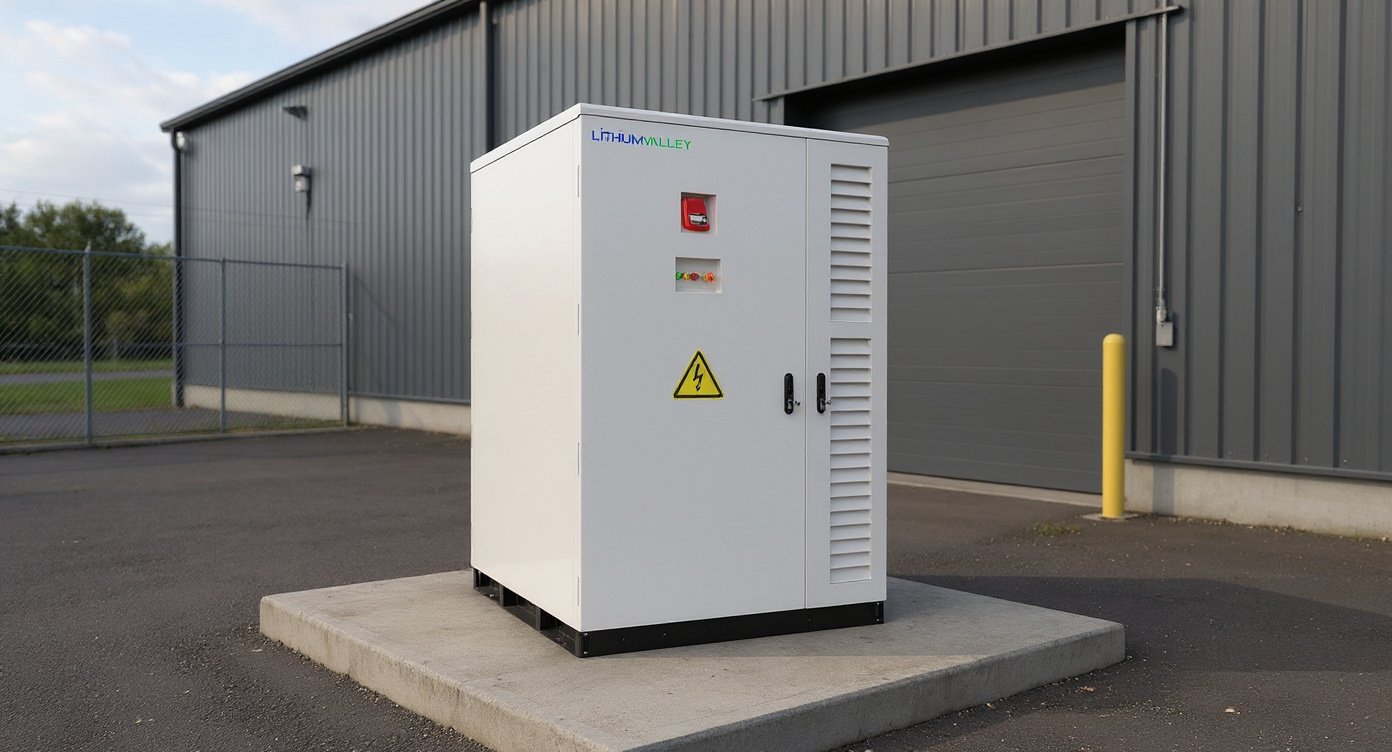
And to be clear about the product category here, I’m talking about a large-scale commercial and industrial high-voltage LiFePO4 ESS, built as modular metal battery cabinets and technical battery-module assemblies with blue cells, silver or white enclosures, navy engineering typography, and blue-green energy accents. Not a home wall battery. Not a telecom box. This exact class of equipment.
We had one prospect last year who wanted to place a high-voltage indoor cabinet in a converted janitor closet because the dimensions fit on paper. The room had a floor drain, mop sink splash risk, no stable cooling, and a louver that pulled in warehouse dust every afternoon when the loading doors opened. The cabinet itself wasn’t the weak link. The room was.
That’s the whole point of this article.
What an IP54 indoor energy storage cabinet actually means
An IP54 indoor energy storage cabinet gives you two specific kinds of protection, no more than that.
– IP5X for solids: dust isn’t sealed out completely, but it shouldn’t enter in an amount that interferes with operation.
– IPX4 for water: splashing water from any direction.
That’s from the IEC framework for ingress protection, here if you want the source text: IEC 60529 ingress protection overview.
What it does not mean is outdoor-ready, hose-down safe, flood-safe, corrosion-proof, or suitable for any ugly indoor environment somebody wants to call an equipment room.
People stretch that rating way too far.
A proper IP54 indoor energy storage cabinet can work well in clean electrical rooms, power rooms, controlled utility spaces, and prepared industrial rooms. It will not save you if the space has washdown, grinding dust, conductive fines, roof leaks, sprinkler complications, or chronic heat buildup.
That last one matters more than most brochures admit. The enclosure rating doesn’t tell you much about thermal behavior, BMS quality, DC isolation strategy, fire detection, module replacement workflow, or whether your technicians can actually open the doors without hitting conduit and wall.
Small detail. Huge consequence.
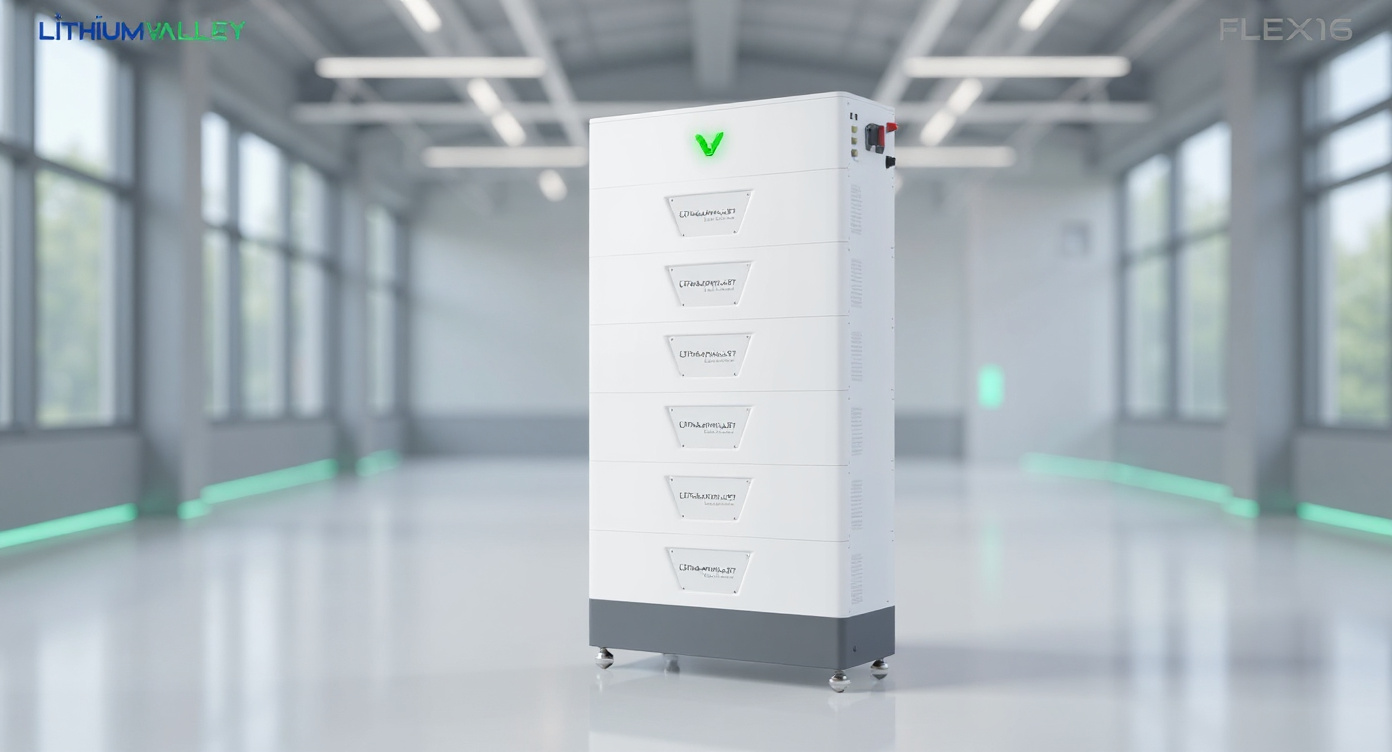
The room does half the job
This is the part buyers skip because it isn’t glamorous.
An IP54 indoor energy storage cabinet depends on the room to provide a lot of what the enclosure does not. Temperature stability. Clean air. Service clearance. Dry conditions. A layout that won’t make maintenance a circus. If the room can’t deliver those, the cabinet spec starts looking better on paper than in use.
I’ve walked rooms where the battery cabinet quote was $87,400 and the room upgrades needed to make it sane were another $31,600. Door widening, exhaust path changes, bollards, new HVAC branch, smoke detection work, cable tray modifications. None of that showed up in the first vendor slide deck.
This won’t work if the room is doing the opposite of what the cabinet needs.
That includes:
– frequent door opening to outdoors
– forklift traffic kicking up debris
– overhead water lines with no shielding plan
– no reliable cooling path
– cramped access that blocks front or rear service zones
– mixed-use rooms where people keep storing junk because there was floor space once
Honestly, if your “battery room” is just leftover square footage near a loading bay, skip an IP54 indoor energy storage cabinet and rethink the whole siting plan.
IP54 indoor energy storage cabinet versus outdoor cabinet
People love simple rules. Indoor is cheaper. Outdoor is tougher. Done.
Not really.
An IP54 indoor energy storage cabinet can save money when the building already provides what the system needs. If the room is clean, dry, conditioned, secure, and easy to service, indoor can be the leaner choice. If the room is marginal, indoor becomes false economy fast.
Here’s the comparison I use with customers.
| Decision point | IP54 indoor energy storage cabinet | Outdoor cabinet |
|---|---|---|
| Building dependency | High, room must do a lot | Lower, enclosure does more |
| Water exposure tolerance | Splash only | Better for rain and site exposure |
| Dust resilience | Good for normal indoor dust | Better for harsher ambient conditions, depends on rating |
| Floor space use | Consumes indoor square footage | Keeps that space free |
| Service environment | Great in a real equipment room | Great if pad access is clean and secure |
| HVAC burden | Often shared with room HVAC plus cabinet cooling | Often more self-contained, but costs more upfront |
| Best fit | Prepared utility rooms, electrical rooms, controlled industrial spaces | Sites with poor indoor rooms or exterior-first layouts |
In some cases the outdoor option costs less over five years even if the cabinet price is higher on day one. I’ve seen that happen twice, both at food production sites where indoor washdown adjacency made the room work expensive and awkward.
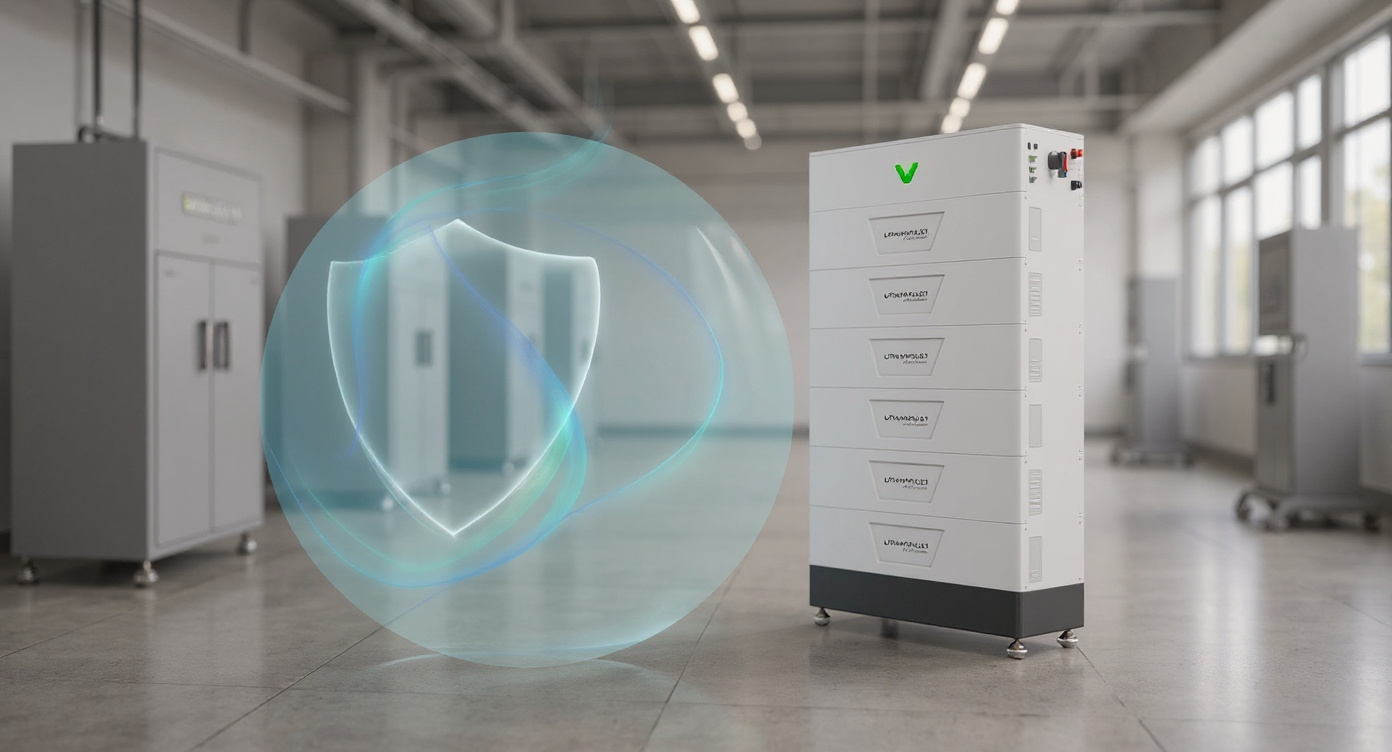
What a high-voltage LiFePO4 ESS cabinet should include, beyond the IP54 label
For this product class, we’re talking about modular metal battery cabinets housing high-voltage LiFePO4 battery-module assemblies, often with visible blue prismatic cells inside technical subassemblies, silver or white cabinet shells, navy engineering labeling, and blue-green energy accents used in status and branding elements. That’s the product identity. Stick to that.
The better systems in this category usually combine:
– high-voltage LiFePO4 battery modules
– cabinet-level BMS and system controls
– metal enclosure architecture meant for multi-cabinet deployment
– CAN, RS485, or Ethernet communications
– thermal management matched to the room and duty profile
– field-replaceable module access that doesn’t require heroics
One model that sits in this lane is the LITHIUMVALLEY FLEX16 High Voltage C&I Energy Storage System. Published specs include 96 kWh nominal per cabinet, IP54 indoor protection, forced-air cooling, active balancing, BMS plus EMS, remote monitoring, and support for grid-tied, off-grid, peak shaving, and emergency backup modes.
Those are solid features. But features don’t erase room constraints.
HVAC, airflow, and dust, where good projects get separated from bad ones
A lot of commercial battery cabinets fail in planning, not hardware.
If the IP54 indoor energy storage cabinet uses forced-air cooling, then the room has to support that airflow strategy. Warm return air, clogged filters, wall-hugging installs, and dead air pockets will punish the battery long before the nameplate says anything dramatic.
I learned this the hard way on a power electronics install in 2019. Different product, same lesson. The room looked fine at handover, 76°F at the door, but one rear corner where the cabinet exhaust recirculated sat 14°F hotter by mid-afternoon because of cable tray congestion and a lazy supply register. The unit kept running. It just ran hot, noisy, and unhappy. We ended up moving ductwork and adding a baffle. Cheap fix if you catch it early. Not cheap if you discover it after acceptance.
ASHRAE guidance is broad, but the basic rule carries over: stable temperature and clean airflow matter. Their standards library is here: ASHRAE standards and guidelines.
Dust is another trap. IP5X helps. It does not mean install next to cutting, grinding, packaging fines, or dusty forklift lanes and forget about it. Fine conductive dust is bad news. Sticky residue is worse.
And sprinklers. Complicated.
An IP54 indoor energy storage cabinet can resist splashing, but sprinkler discharge is not the same thing as incidental splash. Room drainage, detector placement, agent strategy, AHJ interpretation, and approved installation pathway all matter. U.S. projects keep coming back to NFPA 855 for siting and fire protection, and to UL 9540 plus UL 9540A for product and fire test context.
No one should reduce that to “IP54 is enough.” It isn’t that simple.
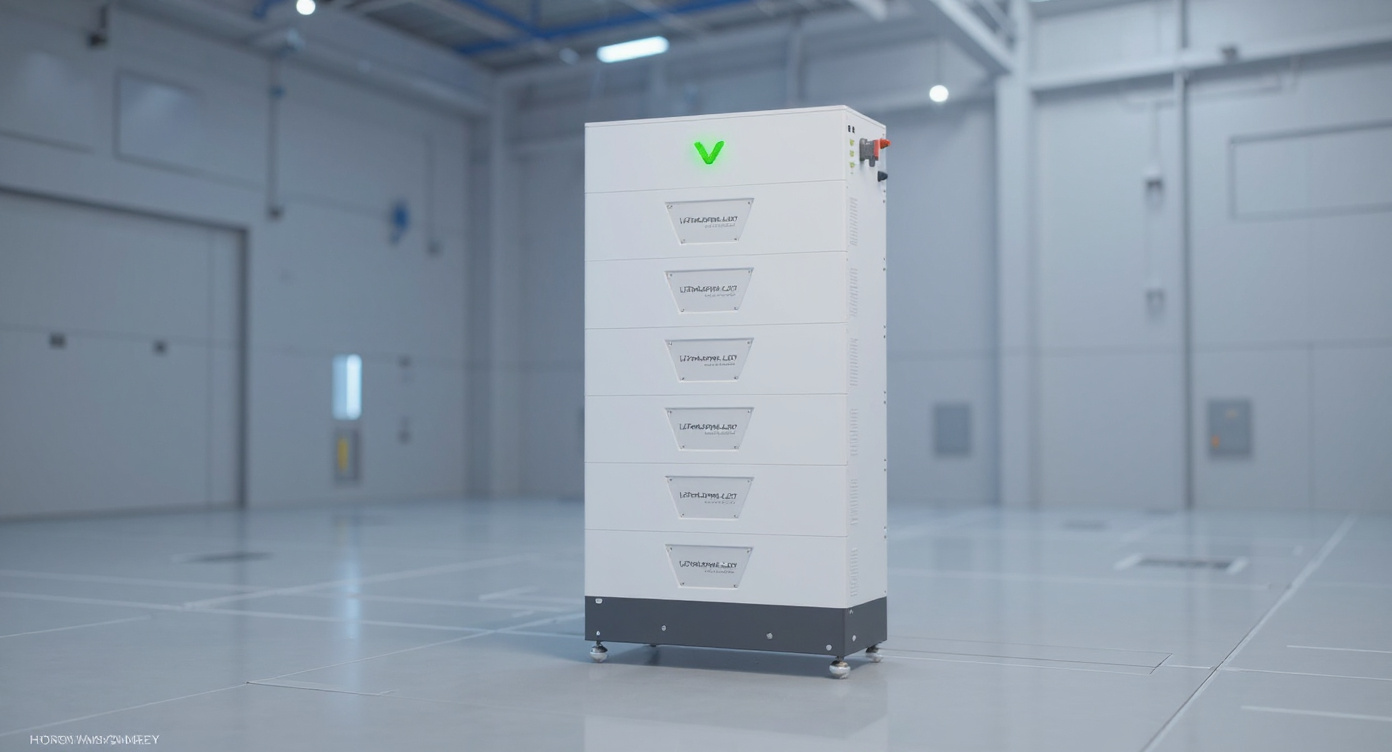
Real market comparison, brands, prices, and where this cabinet class sits
People deserve honest benchmarks. So here they are.
For commercial and industrial high-voltage LiFePO4 ESS cabinets, pricing moves with energy capacity, PCS scope, certifications, controls, shipping terms, and commissioning support. Still, rough market reality helps.
| Brand / product class | Typical form factor | Chemistry | Protection approach | Street price signal | Notes |
|---|---|---|---|---|---|
| LITHIUMVALLEY FLEX16 class | Indoor modular metal cabinet, 96 kWh class | LiFePO4 | IP54 indoor | Project-priced, often quoted with integration scope | Best judged as part of full C&I package |
| Sungrow PowerStack | Outdoor liquid-cooled cabinet | LiFePO4 | Outdoor enclosure | Usually far above a single indoor cabinet on hardware cost | Strong for exterior installs, heavier civil work |
| Tesla Megapack | Utility-scale outdoor containerized system | LFP | Outdoor utility-grade | Not a direct competitor, seven figures per block | Wrong comparison for most indoor cabinet projects |
| BYD Battery-Box Commercial / larger C&I stacks | Modular commercial systems | LFP | Varies by model | Commonly higher per-kWh when heavily accessorized | Broad dealer network |
| Dyness / comparable Asian C&I cabinets | Indoor or outdoor depending on model | LFP | Varies | Aggressive pricing, support quality varies by market | Check service depth before buying |
| Eaton xStorage / building-integrated commercial solutions | Integrated building power systems | Mixed by package | Application-dependent | Often premium because of integration and brand support | Strong if facility already uses Eaton gear |
If you want a blunt opinion, many buyers compare an IP54 indoor energy storage cabinet against products that aren’t even in the same job category. Tesla Megapack is not your benchmark if you’re fitting modular metal battery cabinets inside a plant room. Sungrow’s outdoor units are closer in seriousness, but still a different siting logic. BYD and Dyness are more realistic points of comparison depending on region.
Price honesty matters too. For indoor C&I cabinets in the sub-100 kWh to low-MWh modular band, I see battery hardware discussions start near the high five figures per cabinet and move well past that once BMS, EMS, power conversion, switchgear integration, freight, and commissioning enter the quote. A cabinet that looks like $62,000 in a first conversation can become $109,000 landed and commissioned without anyone doing anything dishonest. That’s just the full project cost.
Where an IP54 indoor energy storage cabinet fits best
A good IP54 indoor energy storage cabinet belongs in spaces that behave like equipment spaces.
Good fits:
– dedicated electrical rooms in commercial buildings
– prepared utility rooms in industrial plants
– indoor microgrid support rooms with controlled access
– clean power rooms in logistics or manufacturing sites
– some telecom or data-adjacent support environments
Less ideal fits:
– washdown-adjacent food facilities
– rooms with grinding dust or conductive debris
– humid service corridors with poor air turnover
– spaces under active plumbing risk
– improvised corners near dock doors
And yes, humid climates complicate this. People don’t say that enough. If your building sweats in summer and the facility team already fights condensation on pipe runs and panels, an IP54 indoor energy storage cabinet may be the wrong simplification. You can still do indoor storage, but not with lazy room prep.
Controls, cycle life, and the money side
The enclosure matters. The value stack matters more.
For a high-voltage LiFePO4 ESS, published cycle life at a stated depth of discharge is one of the few numbers worth taking seriously. The FLEX16 page cites 6,000 cycles at 80% DOD. Good. That’s a usable claim because the condition is attached.
Dispatch logic changes the economics fast.
Peak shaving wants frequent cycling. Backup reserve wants held capacity. Off-grid support changes reserve strategy again. If your controls are weak, the IP54 indoor energy storage cabinet becomes a costly pile of underused cells with a nice sheet-metal skin.
This is where system architecture matters, especially in a commercial and industrial energy storage system. If a site wants both demand charge reduction and outage support, the EMS needs clear reserve logic, load priorities, and event handling. Otherwise the battery either sits too full to earn money or cycles too deep to cover outages.
Active balancing matters too, particularly in larger arrays. A system designed around active cell balancing energy storage tends to maintain usable capacity better over time than simpler architectures that wait for drift to show up as a service call.
And about wireless stacking. Buyers hear that phrase and imagine fewer headaches. Sometimes true. Sometimes not. In a wireless stacking battery cabinet setup, ask what is actually wireless, what still requires hardwired coordination, what the cabinet count limit is, and how commissioning handles communication loss. Ask before the PO. Not after.
For applications with strict uptime expectations, some projects should think in terms closer to a data center battery backup system, even if the chemistry and cabinet style overlap with broader C&I storage. The operating philosophy is different. So are the consequences.
Questions to ask before you buy an IP54 indoor energy storage cabinet
1. What room temperature range will the battery see for 95% of operating hours, not just the annual extremes?
2. What front, rear, and side clearances are required for module swap and live maintenance isolation?
3. Is the room sprinklered, and has the AHJ reviewed this ESS approach before?
4. What dust sources exist within 50 feet of the room entrance?
5. Does the quoted capacity reflect one cabinet, one lineup, or a family-level maximum pulled from another configuration?
6. Can the room support future expansion without redoing cable tray, HVAC, and egress?
7. What exact communications protocols are live on day one, and which are optional?
If a vendor gets slippery on any of those. Pause.
FAQ: IP54 indoor energy storage cabinet
What does IP54 mean on an indoor energy storage cabinet?
It means the enclosure is dust-protected at the IP5X level and protected against splashing water at the IPX4 level. It does not mean sealed against all dust, safe for hose spray, or suitable for outdoor weather exposure by default.
Is an IP54 indoor energy storage cabinet enough for commercial use?
Yes, often. But only when the room is clean, dry, temperature-controlled, and built for electrical equipment. In a harsh room, IP54 can be too little protection or the wrong enclosure strategy.
Can an IP54 indoor energy storage cabinet go in a sprinklered room?
Sometimes, but you need a code review. Splash protection alone does not answer sprinkler discharge effects, drainage, detection layout, suppression compatibility, or AHJ approval.
Does an IP54 indoor energy storage cabinet need HVAC support?
Usually yes. If the cabinet relies on forced-air cooling, the room temperature, airflow path, and dust burden have direct impact on battery performance and service life.
Is LiFePO4 the right chemistry for this cabinet type?
For many C&I applications, yes. High-voltage LiFePO4 ESS cabinets are popular because they balance cycle life, safety profile, and commercial duty performance well. The U.S. DOE keeps a broad technology resource library here: DOE energy storage resources.
How many cycles should a commercial high-voltage LiFePO4 ESS deliver?
That depends on temperature, depth of discharge, charging rate, and controls. A published claim like 6,000 cycles at 80% DOD is a meaningful comparison point because the operating condition is stated.
What is the difference between an indoor cabinet and an outdoor cabinet for C&I storage?
An indoor cabinet depends more on the building for protection and thermal stability. An outdoor cabinet carries more of that burden in its own enclosure design and usually fits sites without a suitable indoor room.
What does wireless stacking mean in a battery cabinet system?
It usually refers to simplified communication or coordination between cabinets. It does not mean the cabinets operate without physical power connections. Buyers should ask for the exact topology and commissioning method.
Can one IP54 indoor energy storage cabinet handle both peak shaving and backup?
It can, if the controls support reserve management and dispatch priorities. The hard part is not chemistry. It’s making sure enough usable capacity remains available for backup after economic cycling.
What room conditions make an IP54 indoor energy storage cabinet a bad idea?
Washdown exposure, high dust load, unstable temperature, condensation risk, poor service clearance, and overhead water hazards are the big ones.
How should buyers verify cabinet capacity claims?
Ask for the exact nominal energy per cabinet, maximum cabinet count in one system, DC bus limits, usable versus nominal energy, and a single-line diagram tied to the quoted configuration.
Are modular metal battery cabinets easier to service than containerized systems?
Sometimes yes. For indoor projects with proper clearance, modular cabinets can make staged expansion and module replacement easier. But only if the room was designed with service access in mind from the start.
Final take
A good IP54 indoor energy storage cabinet can be a sensible, durable choice for a commercial and industrial high-voltage LiFePO4 ESS. But the right answer depends less on the label and more on the room, controls, HVAC, service access, and code path.
If the building already gives the cabinet a clean, dry, stable environment, this format can work very well. If the room is marginal, don’t pretend the ingress rating will rescue the project.
It won’t.
And if you want to compare one serious option in this category, the LITHIUMVALLEY FLEX16 High Voltage C&I Energy Storage System is worth reviewing alongside the room design, the operating strategy, and the exact aggregate capacity math.