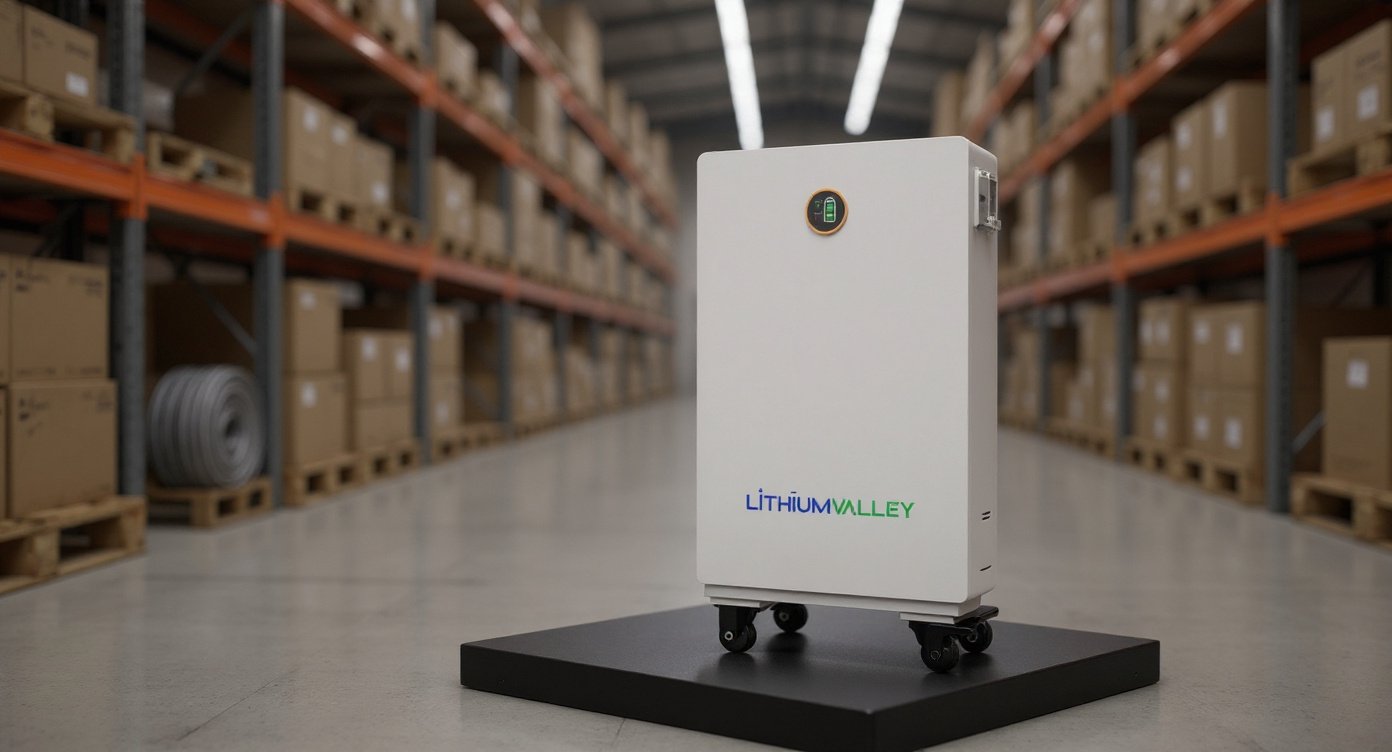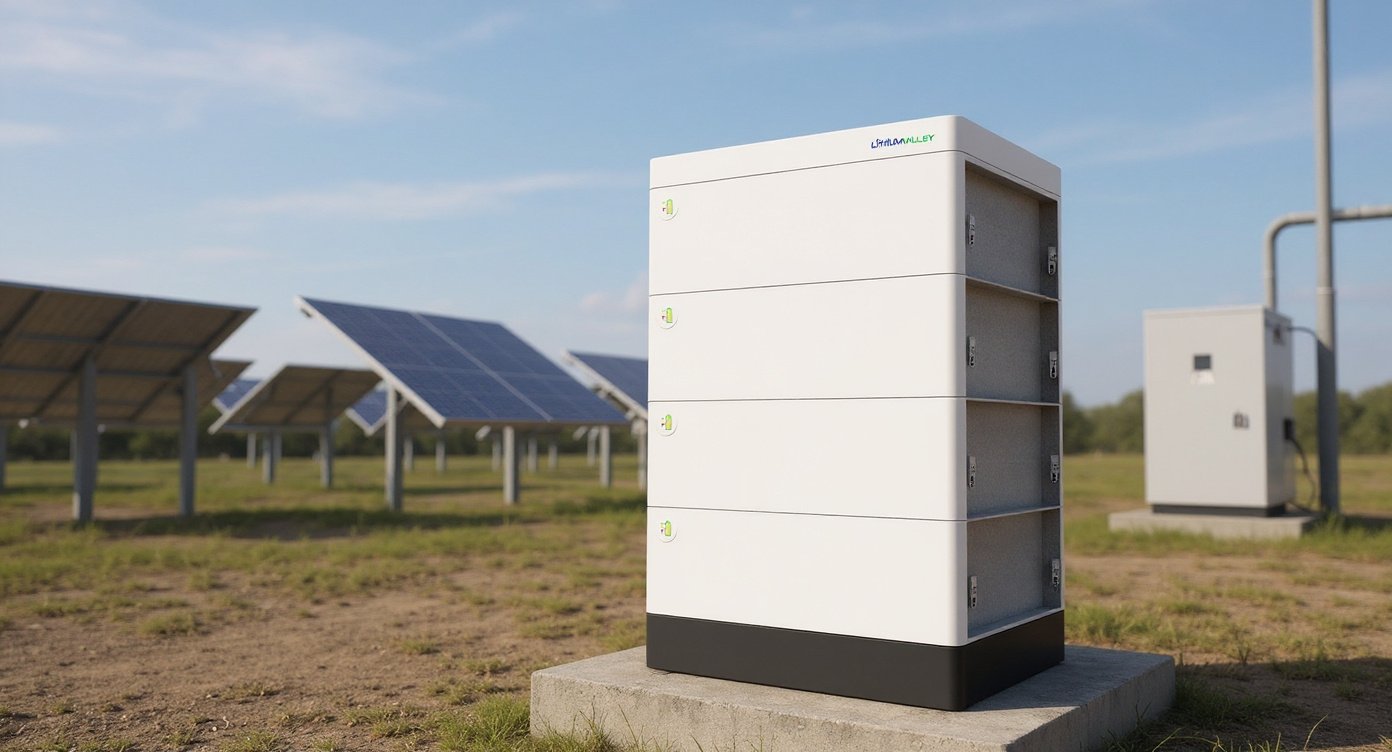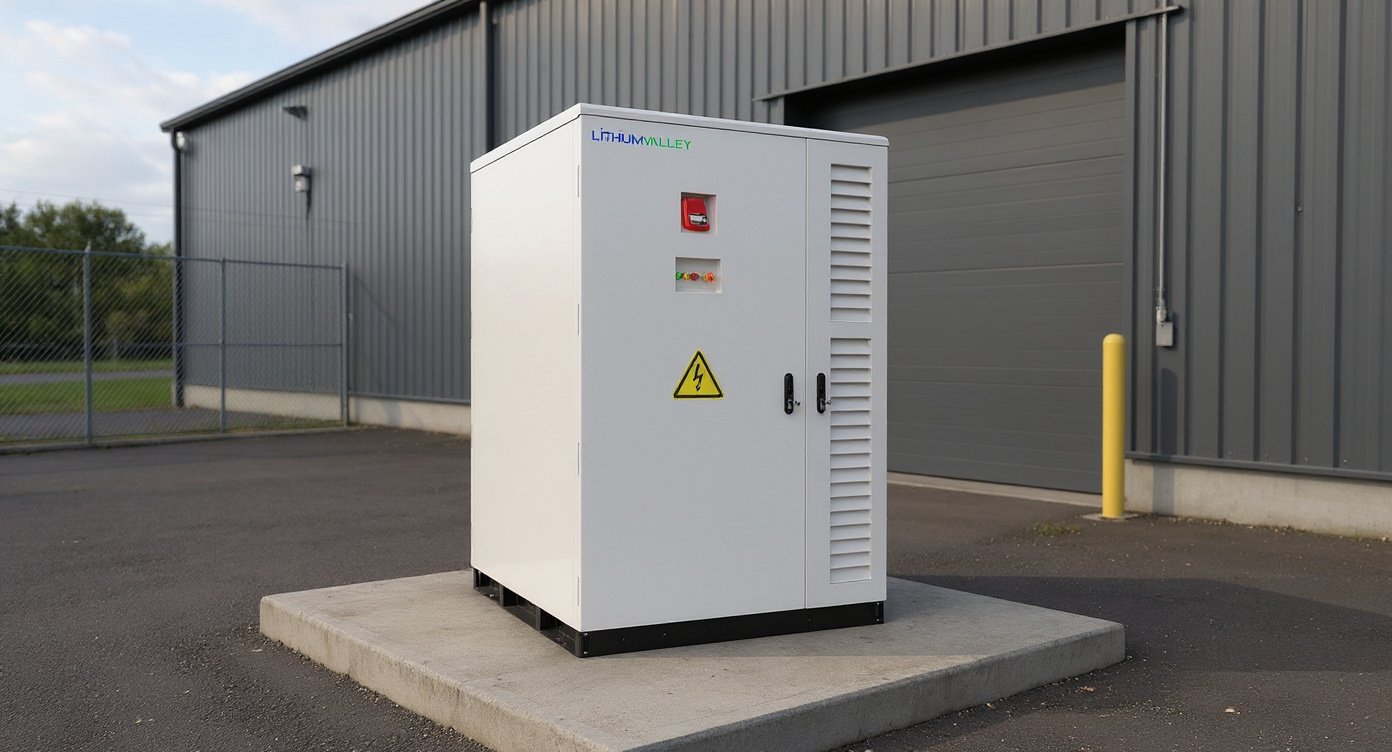
The short answer is this: LV-BST-H5.12Aa runs at 51.2V nominal, and the listed system size ranges from 5.12kWh to 30.72kWh. That tells you two big things right away, how it fits the common 48V-class inverter ecosystem, and how far you can scale storage before you need a different battery architecture.
Most confusion around LV-BST-H5.12Aa capacity and voltage comes from mixing up three separate numbers: nominal voltage, nameplate energy, and usable energy. The product page gives you the first two clearly. It lists a modular stacked residential battery at 51.2V nominal, with scalable energy from 5.12kWh to 30.72kWh. What it does not tell you by itself is whether your inverter will communicate properly with the battery, how much of that energy you should plan to use daily, or how many modules your exact installation should include. Those are the details that matter more than the headline spec.
What 51.2V nominal actually means in a home battery
A 51.2V nominal battery is generally part of the low-voltage residential storage category, often grouped with so-called 48V systems. In practice, installers and inverter makers often talk about 48V batteries even when the lithium battery’s nominal voltage is 51.2V. That’s normal. The chemistry and battery management system define a real operating voltage window that moves above and below nominal during charging and discharge.
So nominal does not mean fixed. It means the reference voltage used to describe the battery family.
For a homeowner, the practical question isn’t whether 51.2V sounds slightly higher than 48V. It’s whether the inverter, charge settings, communication protocol, and battery operating window all line up. Some inverters sold as 48V units are designed specifically for 51.2V lithium batteries. Some are not. That’s why “48V inverter compatible” is never something to assume from the label alone.
Safety and certification matter here too. Residential energy storage systems are evaluated as systems, not just as loose battery boxes, and UL’s residential ESS safety testing overview gives a useful snapshot of why battery behavior, controls, and system integration all matter. A battery can be electrically suitable in theory and still be a bad fit in a real installation if the inverter and BMS don’t coordinate correctly.
If you’re checking the LV-BST-H5.12Aa (Home Energy Storage Battery Series), treat 51.2V as a compatibility starting point, not a complete answer.
The capacity range tells you this is a modular stack, not a one-size battery
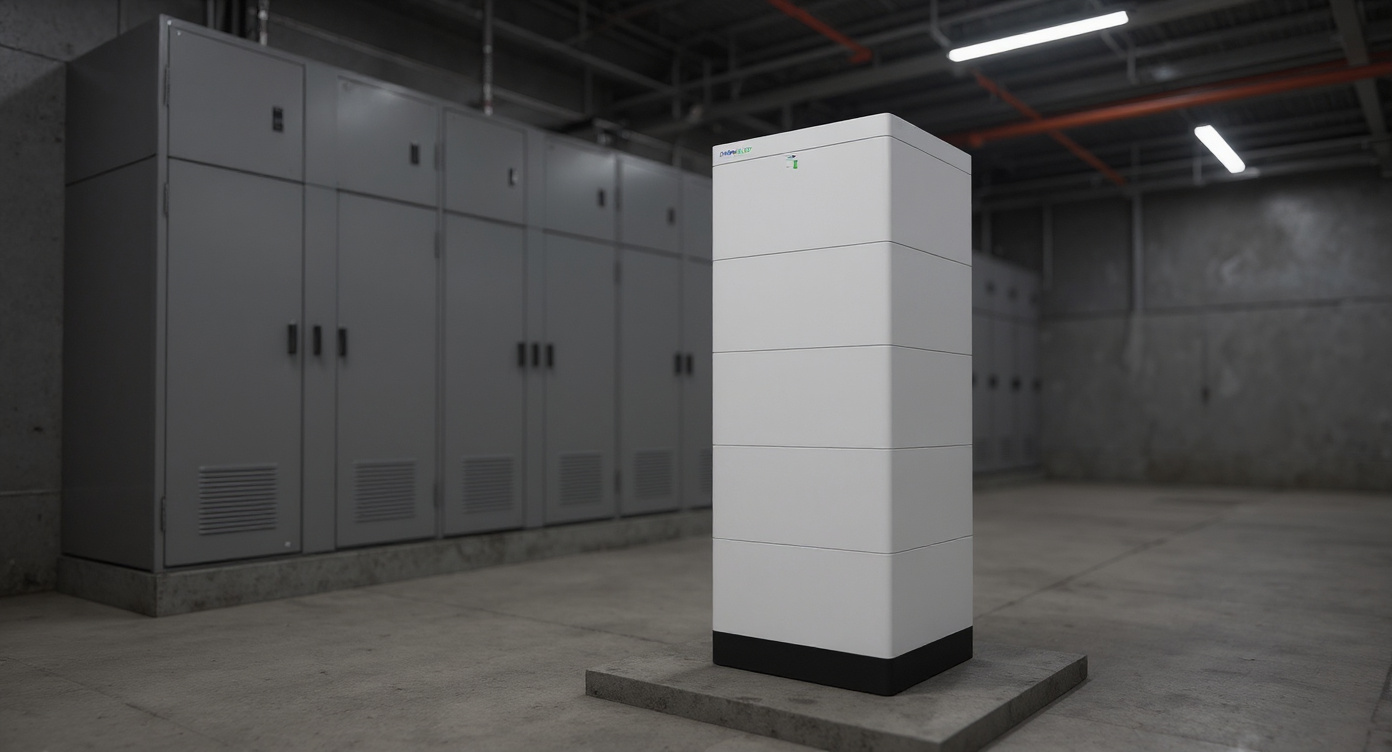
The published energy range is 5.12kWh to 30.72kWh. That’s the clue that this isn’t one fixed-capacity unit. It’s a stackable system built from repeating battery modules.
The math is straightforward: 30.72 divided by 5.12 equals 6. So the listed range strongly indicates a base module of 5.12kWh and a maximum listed stack of 6 modules, assuming the current product page reflects the intended configuration. Even so, it’s smart to confirm module count before ordering because product pages sometimes show a system family while local inverter rules, firmware limits, or bracket requirements narrow the actual installable stack.
Here’s the clean way to think about the range:
| Configuration view | Listed energy |
|---|---|
| Base system | 5.12kWh |
| 2-module stack | 10.24kWh |
| 3-module stack | 15.36kWh |
| 4-module stack | 20.48kWh |
| 5-module stack | 25.60kWh |
| 6-module stack | 30.72kWh |
That scaling is useful because most homes don’t need the same thing. A light evening backup load is one problem. Daily solar shifting with overnight coverage is a different one. Whole-home backup during outages, with air conditioning or resistance heat in the mix, is a much bigger problem.
This is where people get tripped up. They see 30.72kWh and think bigger is always safer. Sometimes it is. Sometimes it just means paying for stored energy that sits idle because the inverter power limit, not the battery energy limit, is the real bottleneck.
By the end of the second section, the practical takeaway is simple: the LV-BST-H5.12Aa (Home Energy Storage Battery Series) is appealing when you need a low-voltage modular battery that can start at 5.12kWh and scale in clear steps, but you still need to verify the final stack size, inverter match, and expected usable energy for your specific setup.
Nameplate kWh is not the same as what you’ll actually use
This is the part buyers tend to miss.
A battery listed at 5.12kWh does not automatically mean you’ll use 5.12kWh every cycle in real life. Nameplate capacity is the rated stored energy. Usable capacity depends on the battery’s allowed depth of discharge, reserve settings, inverter losses, ambient temperature, and how conservatively the BMS manages the pack.
The product context here mentions BMS protection for voltage and temperature conditions. That’s good and expected in a residential lithium system. It also means the battery is not just a bucket of energy. The BMS is actively deciding what charging and discharging conditions are acceptable, and that can affect the energy you can actually pull on a cold morning, during heavy loads, or when reserve percentages are set for backup.
Without a published usable-capacity figure, the honest answer is that usable energy varies by installation and settings. You should ask for three things before assuming runtime:
1. The usable capacity per module under the recommended operating settings.
2. The minimum state-of-charge reserve suggested for backup use.
3. The inverter’s round-trip and conversion losses in the actual AC-coupled or DC-coupled design.
4. Any temperature-related derating that applies to the installed location.
5. Whether the BMS limits discharge at low temperature or near empty state of charge.
6. The communication method used between inverter and battery.
That last point sounds minor. It isn’t. A well-integrated inverter and battery pair can show cleaner state-of-charge estimates and more predictable shutdown behavior. A mismatched pair may still run, but with crude voltage-based logic that gives you less confidence near the edges.
UL’s Q and A on marking energy storage systems for residential use is helpful here because it underlines that labeling and system markings exist for a reason. If a seller can’t tell you the usable window, operating constraints, and supported inverter pairing, that’s a problem.
Sizing for overnight use starts with loads, not battery marketing
A lot of people ask how many kWh they need to run a house overnight, but there isn’t one honest universal number. A house that only needs refrigeration, lights, internet, and a few plugs overnight is very different from one running large HVAC loads, electric water heating, or cooking.
The best way to estimate is to total the loads you actually expect the battery to cover, then match that to a realistic usable-capacity target rather than the nameplate alone. The U.S. Department of Energy’s home upgrades guidance is broad, but it points in the right direction: reducing demand through efficiency changes can matter just as much as adding battery storage.
A quick planning framework helps:
| Use case | What the battery is doing | Likely planning question |
|---|---|---|
| Essential backup only | Keeps core circuits alive during outages | How long do fridge, lights, router, and a few outlets need to run? |
| Solar self-consumption | Stores daytime solar for evening use | How much of the evening load should shift off the grid? |
| Partial overnight coverage | Carries selected circuits until morning | What’s the actual overnight kWh on those circuits? |
| Large-load backup | Supports more of the house during outages | Can the inverter power and surge limits handle those loads? |
For a system with a 5.12kWh starting point, the key is to decide whether that first step is for short backup, light overnight shifting, or just a modular entry point that will grow later. Once you know that, the larger stack options make more sense.
If you are trying to estimate runtime, focus on these questions first:
– Are you backing up the whole house or a critical-load panel?
– Is the battery recharged daily by solar, or mainly held in reserve?
– Are large nighttime loads, especially HVAC, included or excluded?
– How much reserve do you want to leave untouched for outages?
– Does the inverter limit discharge power before the battery energy runs out?
Those answers shape battery sizing far more than the phrase “up to 30.72kWh.”
The inverter question is where most expensive mistakes happen
This is the section that deserves the most caution.
A 51.2V nominal battery does not automatically work with any inverter advertised as 48V. Mechanical connection, voltage class, charge profile, current limits, communication protocol, and approved battery lists all matter. Some inverter brands allow generic lithium settings. Some perform best, or only fully support, batteries that are already validated in their firmware.
So when people ask if any 48V inverter can work with a 51.2V battery, the safest answer is no, not automatically.
What you need to confirm is boring but essential:
1. Battery nominal voltage and full operating voltage window.
2. Supported charging and discharge current for the final stack size.
3. Communication type required by the inverter, if any.
4. Whether the inverter has a tested profile for this battery family.
5. Whether backup surge loads exceed inverter power long before the battery is empty.
6. Shutdown behavior at low state of charge.
7. Warranty conditions tied to approved pairings.
This is where LV-BST-H5.12Aa capacity and voltage have to be read together, not separately. Capacity tells you how much energy may be available. Voltage tells you which inverter class you’re shopping in. Neither number, by itself, tells you the system will cooperate under real charge and discharge conditions.
The product page also notes BMS protection for voltage and temperature conditions. That’s a baseline feature you want, because overcharge, overdischarge, and thermal stress are exactly the failure modes a residential pack should be managing. But BMS protection is not a substitute for inverter compatibility. It helps protect the battery. It doesn’t magically make every inverter behave well with it.
If you’re comparing options, this is a useful mental split:
| Question | What matters most |
|---|---|
| Will it physically scale? | Maximum module count and stacking rules |
| Will it electrically work? | Voltage class, current limits, charge settings |
| Will it communicate cleanly? | Supported protocol and firmware pairing |
| Will it deliver expected runtime? | Usable capacity, reserve settings, load profile |
| Will it stay protected? | BMS functions for voltage and temperature |
If any seller skips that checklist and jumps straight to generic claims, slow down.
Common buyer questions about LV-BST-H5.12Aa capacity and voltage
What is the capacity of a typical stackable battery?
There isn’t one standard number. In this case, the listed system starts at 5.12kWh and scales to 30.72kWh, which suggests modular expansion in 5.12kWh steps.
What does 51.2V nominal mean in a home battery system?
It means the battery belongs to the low-voltage lithium class commonly used with 48V-style residential inverter systems. The actual battery voltage rises and falls during charging and discharge, so nominal voltage is a reference value, not a constant live reading.
How many kWh do I need to run a house overnight?
It depends on what “run a house” means in your case. Essential circuits may need far less than a whole-home setup with HVAC or electric heating. The right sizing method is to total expected overnight loads, then compare that to realistic usable capacity and inverter limits.
Is nameplate battery capacity the same as usable capacity?
No. Nameplate is the rated stored energy. Usable capacity is what you can regularly access after reserve settings, BMS protections, inverter losses, and operating conditions are factored in.
Can any 48V inverter work with a 51.2V battery?
No. Some can, some can’t, and some may work only in a limited way. You need confirmation on voltage compatibility, charge settings, communication support, current limits, and warranty approval.
How many modules can the LV-BST-H5.12Aa stack to?
Based on the listed energy range of 5.12kWh to 30.72kWh, the implied maximum is 6 modules. Still, confirm the allowed module count for your proposed installation before buying.
Does the BMS protect against overcharging and overheating?
The product context states BMS protection for voltage and temperature conditions. That indicates protection logic is built in for those categories, but the exact thresholds and control behavior should be confirmed for your installation.
Is a low-voltage 51.2V battery better than a high-voltage home battery?
Not universally. A low-voltage system can make sense when you’re pairing with compatible 48V-class inverter equipment and want modular residential storage in that ecosystem. A high-voltage system may be better in other designs. The right choice depends on inverter architecture, desired power, expansion plan, and installer support.
What I’d check before choosing a stack size
If you’re stuck between one module, a mid-size stack, or the full 30.72kWh, don’t start with the biggest number. Start with the constraints.
First, verify what the inverter can actually support. A battery stack that exceeds the inverter’s approved battery capacity, current handling, or communication support isn’t a better system, it’s just a more expensive mismatch.
Second, decide how the battery will be used most days. Daily solar shifting and backup reserve pull the design in different directions. A household that cycles storage every evening may care more about usable energy and charge timing. A household that mainly wants outage protection may care more about reserve strategy and low-load endurance.
Third, ask for the usable-capacity figure for the exact proposed configuration. If that number isn’t available, ask for the depth-of-discharge policy and the recommended reserve level instead. Those answers often tell you what you need.
Fourth, don’t ignore the operating environment. Batteries don’t live in a vacuum. Temperature conditions, ventilation, and installation layout all affect behavior, and the BMS can only work with the environment it’s given.
If your pain point is basic, reliable home storage without jumping into a totally different voltage class, a modular 51.2V system is often the natural place to start. And if the listed range fits your load planning, the LV-BST-H5.12Aa battery system is the kind of option that makes sense to evaluate closely, especially when you want room to grow from 5.12kWh toward 30.72kWh without changing the whole platform.