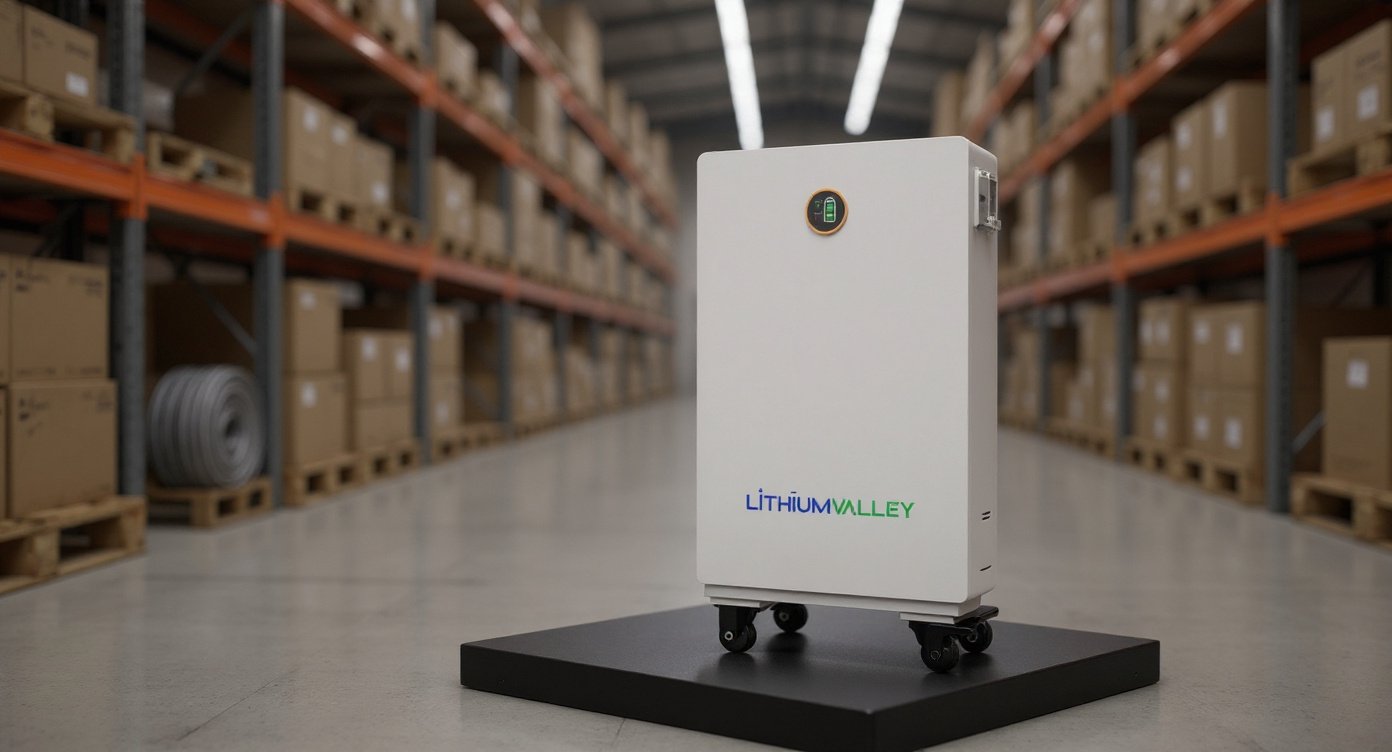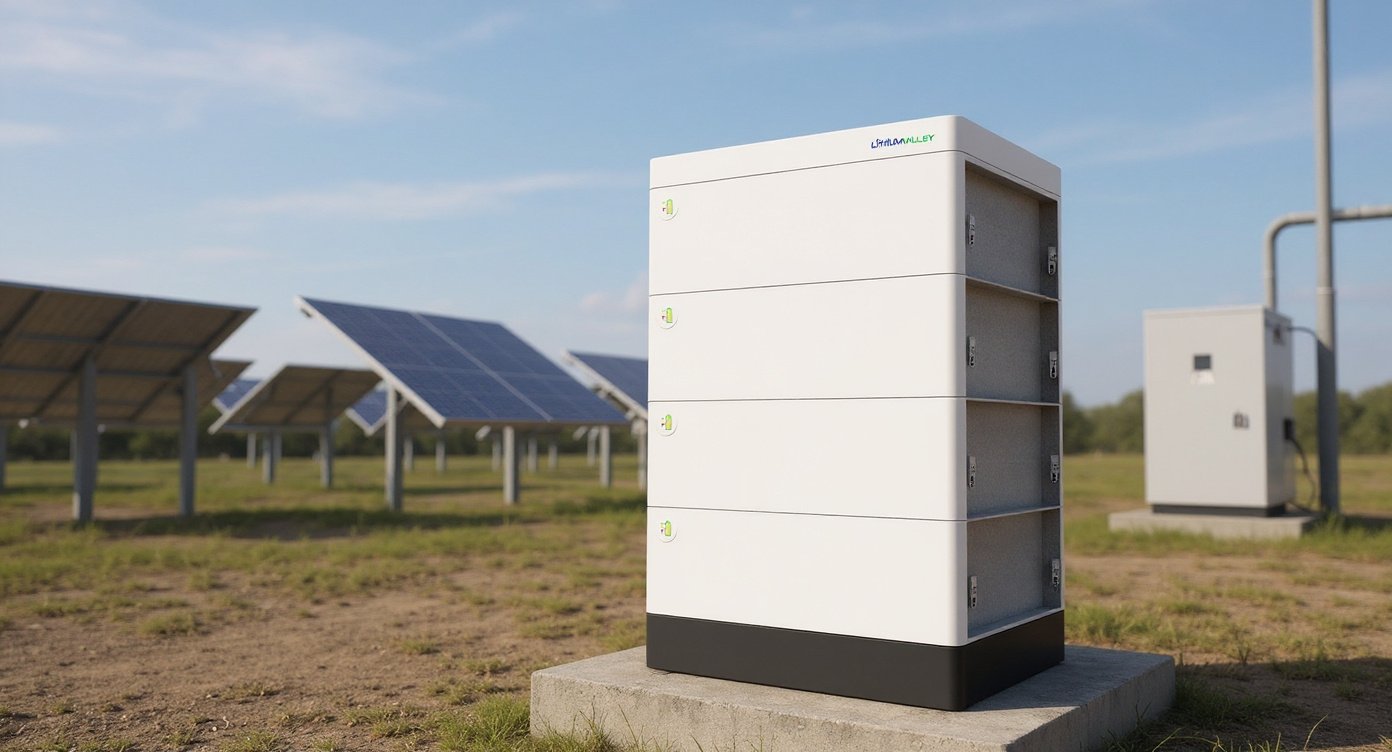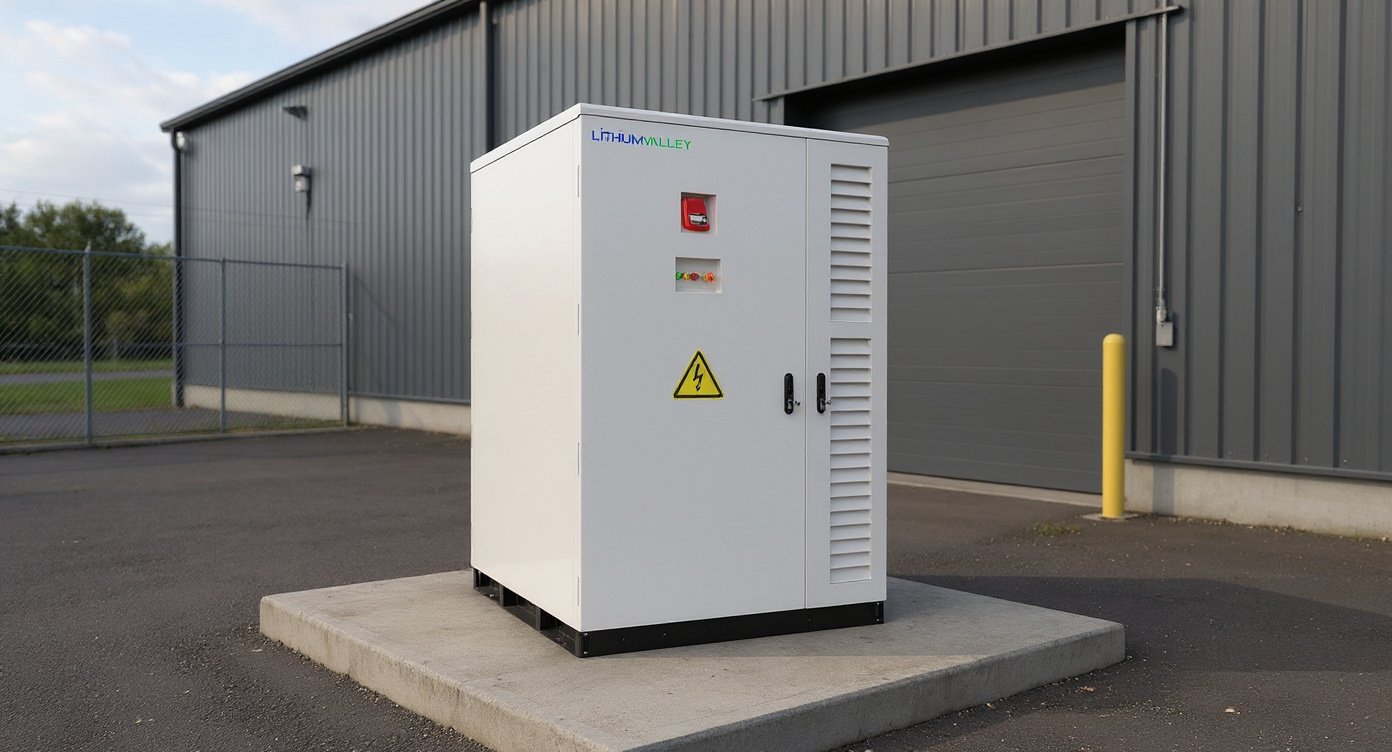
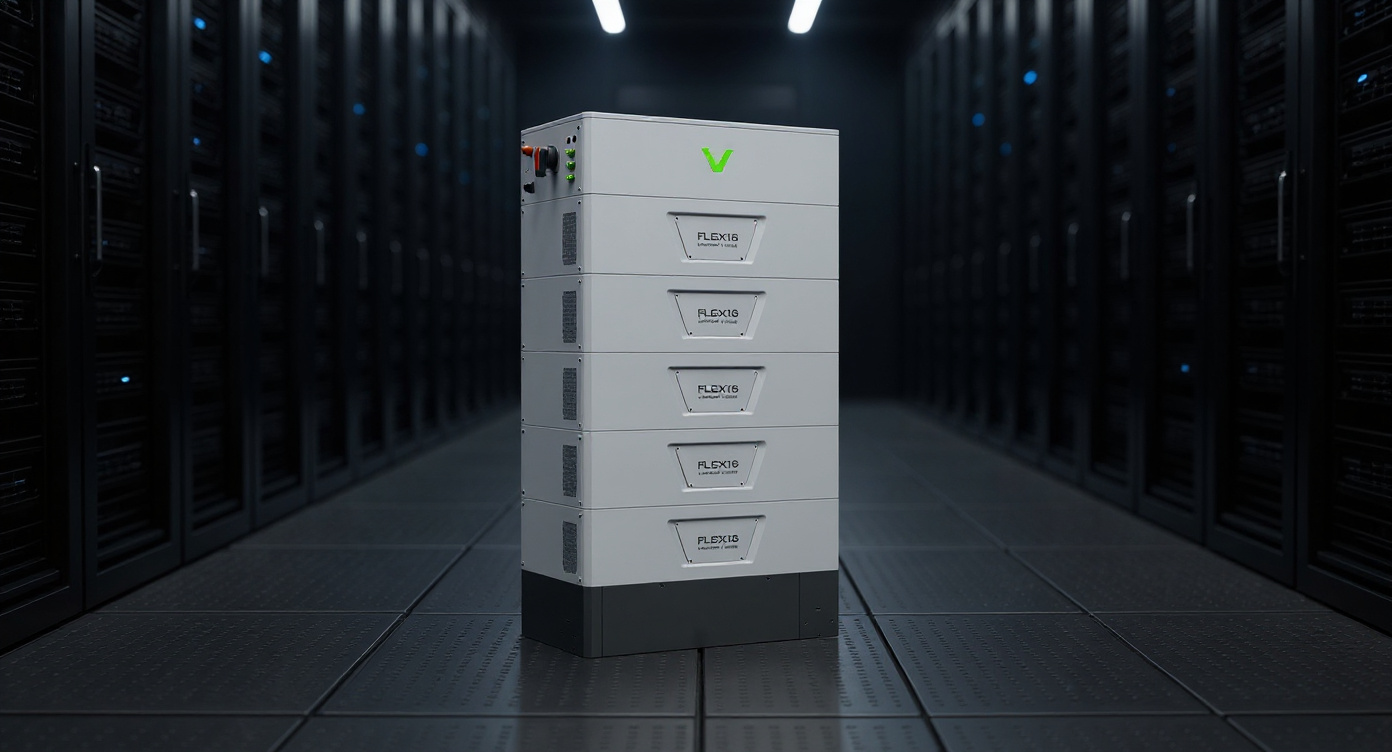
Commercial BESS applications pay off when the battery solves a specific cost or uptime problem with numbers that work on a spreadsheet. The best-fit projects are usually peak shaving, outage ride-through for critical loads, solar self-consumption, and time-of-use shifting. If the site needs an indoor cabinet, air cooling, and commercial controls in one enclosure, the Indoor installation Smart Air-Cooled Battery belongs on the shortlist early.
I’m writing this as someone who has spent too many afternoons staring at 15-minute interval data and asking a simple question: what pain are we paying to remove?
Because that’s the whole thing.
Not “storage is the future.” Not “electrification strategy.” A bill problem. A reliability problem. Sometimes both.
I’m Aaron Hu, founder of a small power equipment shop that sells battery systems and spends a lot of time helping facilities avoid buying the wrong one. We’ve looked at warehouses, food plants, small clinics, and one print shop that had a monthly demand spike caused by two giant laminators kicking on within the same 20-minute window. Their utility bill penalty was $2,184 in a bad month. The laminators ran fine. The tariff was the real villain.
The short answer: which commercial BESS applications make financial sense?
These are the ones I see pencil out most often:
| Application | Typical trigger | Battery job | What makes it worth doing |
|---|---|---|---|
| Peak shaving | Demand charges above $18 per kW-month | Discharge for 15 to 120 minutes during site peaks | Repeatable monthly spikes with ugly demand tariffs |
| Backup power for critical loads | Downtime costs more than stored energy | Carry selected loads for 30 minutes to 4 hours | Spoilage, production loss, IT downtime, safety needs |
| Solar self-consumption | Export rate is weak, load continues after sunset | Save midday PV for later use | Big gap between export credit and retail power price |
| Time-of-use shifting | On-peak energy is much pricier than off-peak | Charge off-peak, discharge on-peak | Stable tariff spread, frequent weekday cycling |
| Power quality support | Sensitive equipment trips on voltage dips or transients | Fast support through short disturbances | Costly nuisance trips, motor starts, process instability |
| Generator support | Existing genset is undersized for startup loads | Battery covers surges, generator handles steady load | Avoid buying a much larger generator |
That table is the clean version. Real sites get messy.
One battery often gets asked to do three jobs. Sometimes it can. Sometimes it can’t, at least not without making the economics worse.
Where people overspend
Here’s the contrarian part most articles won’t say: a lot of commercial storage projects should not be built.
If the load peaks once every few months, if the tariff has soft demand charges, or if the building already has a generator and nobody has defined which loads actually matter, skip the battery study for now. Save the engineering budget.
I’ve seen owners get excited about a shiny cabinet and then send us interval data showing a flat load profile with a $9 per kW demand charge. There is no heroics-based design fix for that. The math just won’t carry it.
And if your electrical room runs hot all summer and ventilation is an afterthought, don’t force an indoor air-cooled installation because it looks neat on the one-line. Bad room conditions will haunt the project for years.
Real commercial BESS examples with actual numbers
This is the part buyers want. Fair enough.
Example 1: Peak shaving at a light manufacturing site
Site: 118,000 square foot fabrication shop in Texas
Load pattern: daily base load near 186 kW, spikes to 342 kW during compressor and oven overlap
Tariff: $23.40 per kW demand charge
Battery dispatch goal: shave 90 kW for 1 hour during the worst peak windows
A 100 kW / 120 kWh battery was enough on paper, but too tight once you include conversion losses and capacity reserve. We modeled 125 kW / 160 kWh instead.
Expected monthly demand reduction: 76 kW to 94 kW
Expected monthly bill savings: $1,778 to $2,200
Installed project budget they received: $86,700
Simple payback before incentives: 3.9 to 4.9 years
The owner first asked for a 250 kWh system because another vendor told him, “more storage gives more flexibility.” Sure. It also added about $19,000 to the quote without improving the specific job much. Bigger isn’t wiser if the peak only lasts 40 to 60 minutes.
Example 2: Indoor backup for a food distributor
Site: refrigerated distribution facility in Malaysia
Critical load: 58 kW, mostly control systems, dock equipment, network rack, and one cold-room circuit
Outage history: 7 outages over 14 months, 3 longer than 45 minutes
Battery goal: bridge outages and avoid immediate generator start for short events
Required backup window: 90 minutes
Battery sizing target: 58 kW / 104 kWh usable
Quoted generator upgrade they avoided: $41,300
Battery-centered solution budget: $63,900
Estimated annual avoided spoilage and dispatch costs: $17,600
This one wasn’t sold on utility savings. It was sold on keeping product temperature excursions from turning into insurance paperwork.
The facility manager told me the most expensive outage they had was just 52 minutes. Not a full day. Fifty-two minutes. It spoiled enough inventory to pay for a big chunk of the storage project.
Example 3: Solar self-consumption at a commercial office with evening load
Site: 9-story office building in Manila
Solar array: 184 kW rooftop PV
Midday export: 210 to 290 kWh on sunny days
Retail tariff: $0.198 per kWh
Export value: $0.061 per kWh
Battery goal: catch excess midday production and push it into the 5 p.m. to 9 p.m. cooling load.
Modeled battery: 100 kW / 215 kWh
Recovered solar value per shifted kWh after losses: about $0.118
Estimated annual shifted energy: 54,900 kWh
Estimated annual value captured: $6,478
Not a home run. Still solid.
This kind of project gets oversold all the time. If the export credit is decent, storage may not be worth it. If the export credit is lousy and the evening load is real, then yes, it can make sense.
Why an indoor cabinet changes the buying checklist
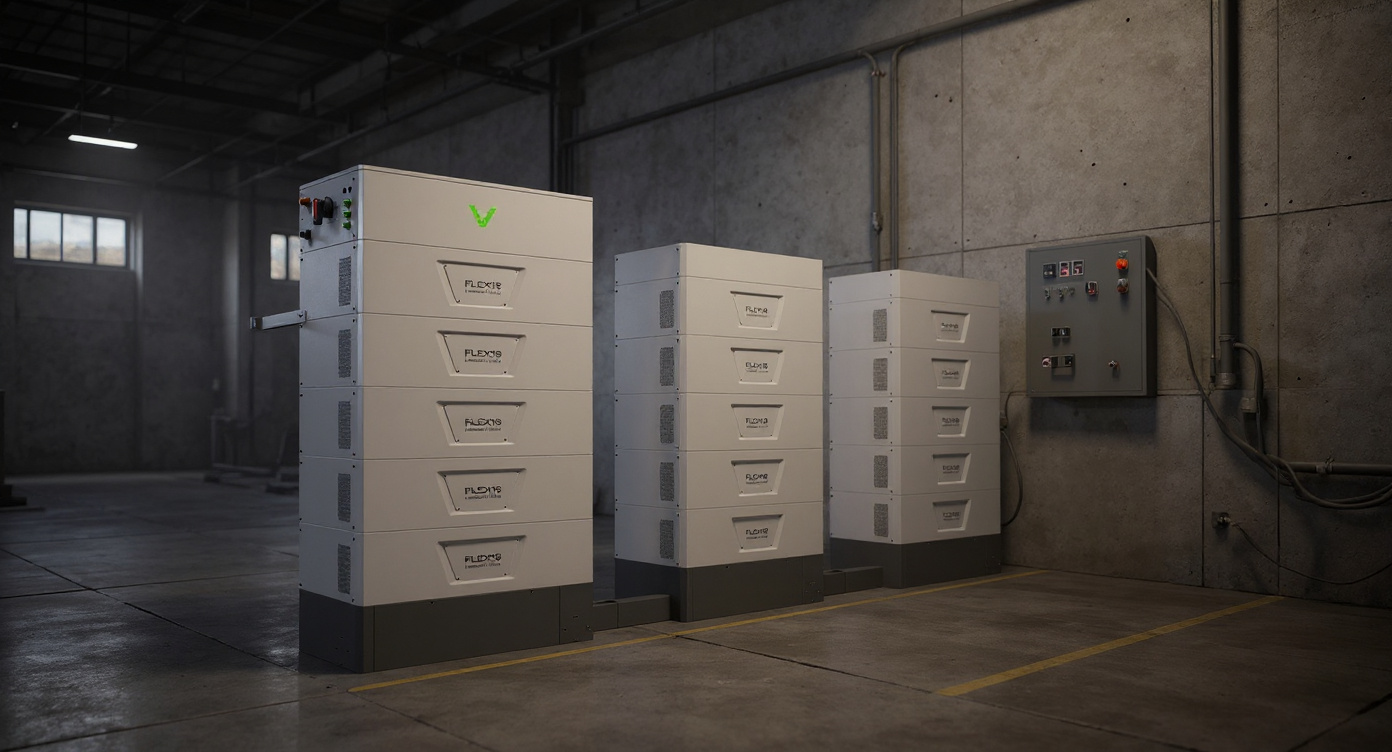
A commercial indoor battery is not just a stack of cells in a metal box. Room access matters. Service clearances matter. Heat rejection matters. The controls and connectors on the front of the enclosure matter because technicians have to touch them in the real world.
That’s why I’d rather start with a purpose-built cabinet such as the SI Series indoor battery cabinet than try to improvise from generic rack parts. Indoor jobs punish shortcuts.
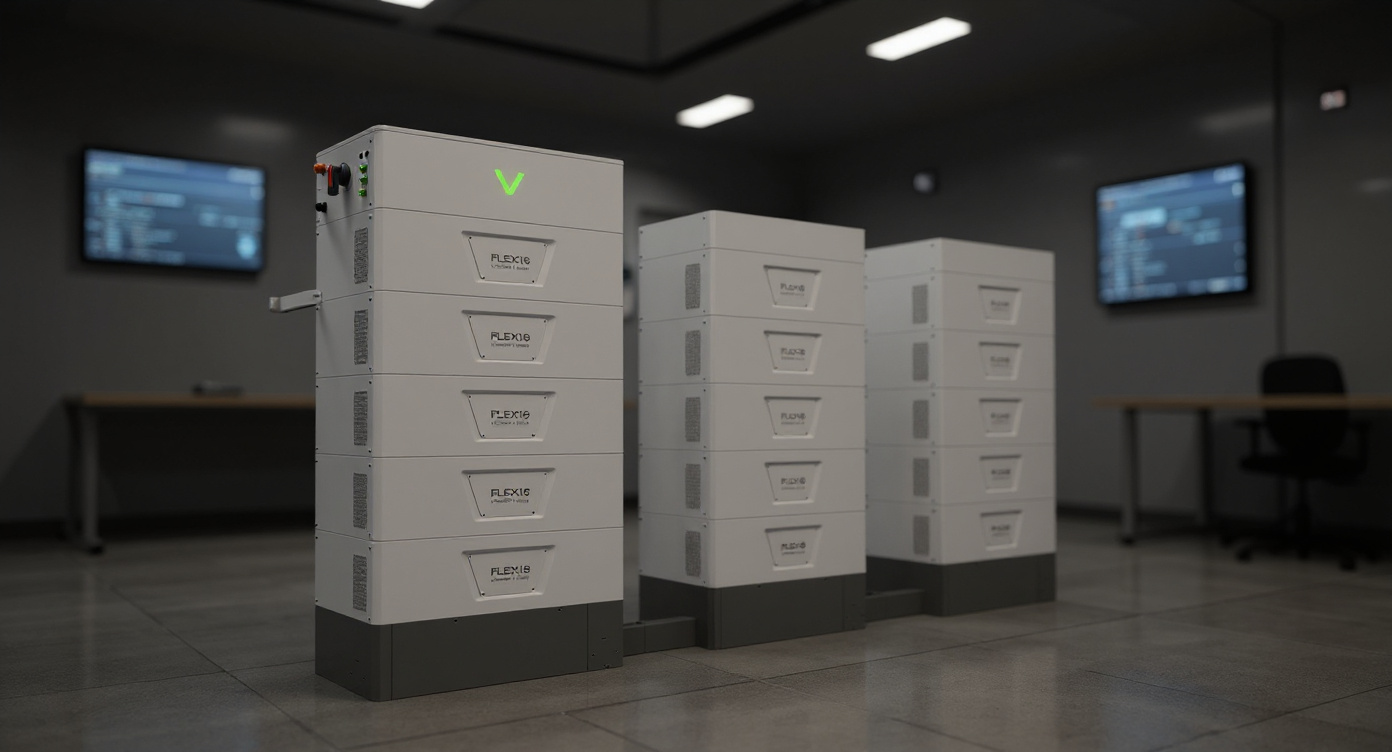
The exact product we’re talking about here is the Indoor installation Smart Air-Cooled Battery hardware shown in the official source images, with that same enclosure, door layout, front controls, connectors, labels, colors, and component count. That matters if you’re planning around room dimensions or service access. Swap the physical format and your install plan can unravel fast.
Air-cooled vs liquid-cooled, with honest trade-offs
People ask this all the time.
Air cooling is simpler. Fewer moving parts in the thermal loop. No coolant pumps, no glycol maintenance schedule, no leak anxiety. For indoor commercial sites with controlled ambient conditions, that simplicity is often a real advantage.
But it has limits.
If the room gets too hot. If airflow is poor. If dust is heavy. If maintenance is ignored.
Then air cooling loses its charm in a hurry.
Liquid-cooled systems from brands like Sungrow and CATL can be better for dense outdoor deployments or hotter climates, but those systems often come with higher project complexity. On the small to mid-size indoor commercial side, I’d still take a well-designed air-cooled cabinet over a liquid setup shoehorned into a building that doesn’t need it.
What I compare before I recommend any commercial battery cabinet
Here’s a practical comparison, using common brands people actually cross-shop. Prices swing a lot by region, inverter pairing, fire requirements, and shipping, so these are market-reference ranges for cabinet-class commercial systems, not promises.
| Brand / product family | Typical use case | Cooling | Install style | Ballpark hardware price | What I like | Trade-off |
|---|---|---|---|---|---|---|
| Lithium Valley Indoor installation Smart Air-Cooled Battery | Indoor C&I peak shaving, backup, solar shifting | Air-cooled | Indoor cabinet | Quote-based, often competitive in mid-size C&I | Built around indoor commercial cabinet deployment, smart balancing focus | Needs a decent electrical room and ventilation plan |
| Tesla Powerpack 2, legacy projects | Larger commercial and utility-adjacent | Liquid-assisted thermal management | Outdoor-heavy deployments | Often $430 to $520 per kWh in legacy secondary market context | Strong ecosystem recognition | Harder fit for compact indoor cabinet needs |
| BYD Battery-Box Commercial / LV families | Commercial storage with modular flexibility | Air-cooled by configuration | Rack/cabinet varies | Often $310 to $460 per kWh hardware-only | Widely known, broad integrator familiarity | Physical integration can vary a lot by installer |
| Sungrow C&I liquid-cooled ESS | Dense commercial and utility-style sites | Liquid-cooled | Outdoor cabinet | Often $345 to $495 per kWh hardware-only | Good for hot climates and dense deployments | More system complexity than many indoor jobs need |
| AlphaESS commercial cabinets | Light commercial backup and PV storage | Air-cooled | Cabinet | Often $330 to $470 per kWh hardware-only | Good feature set for some integrators | Support quality varies by market |
| Schneider + battery integrator packages | Building-level power and controls integration | Depends on battery partner | Indoor/outdoor varies | Often premium, project-specific | Strong controls and building integration | Usually not the cheapest path |
I’m naming names because buyers compare them anyway. You should.
The four numbers that matter most
Not twelve. Four.
1. Peak kW you need to reduce
2. Minutes or hours that reduction must last
3. Number of cycles per year
4. The value of each discharged kWh or shaved kW on the tariff
Everything else hangs off those.
A battery that clips 80 kW for 15 minutes is a different animal from one that carries 80 kW for 2 hours. Same power. Very different energy requirement. That’s where projects go sideways.
I once reviewed a proposal for a plastics plant where the seller sized the battery from the monthly peak number alone. No interval data. Just one billing maximum. That is like buying boots based on a photo of someone’s ankles.
Sizing for peak shaving without fooling yourself
Use interval data. At least 15-minute data, and if you can get 5-minute data, even better.
Then do this:
1. Find recurring peaks, not the single worst event of the year.
2. Measure how long those peaks actually hold.
3. Decide the target reduction, maybe 40 kW, maybe 120 kW.
4. Leave margin for losses and reserve state of charge.
5. Re-run the model using year-3 or year-5 usable capacity, not just day-one capacity.
That last part matters more than people think. A battery that works only when brand new is a bad investment.
According to the product page for the Indoor installation Smart Air-Cooled Battery, this system is built around smart management and chip-level bidirectional active balancing, with a 15-year design life target. I pay attention to that because balancing quality affects how much usable capacity you still have after years of cycling, not just what the brochure says on day one.
BMS vs EMS, in plain English
The BMS protects the battery. The EMS tells the battery when to work.
BMS jobs include cell voltage supervision, temperature checks, current limits, and balancing behavior. EMS jobs include charge windows, discharge schedules, demand-charge logic, solar capture, and backup reserve settings.
People mix them up because both are “controls.” But in practice they solve different problems.
If the BMS is weak, the battery ages badly or trips at the wrong time. If the EMS is weak, the battery sits there being healthy and financially useless.
Safety and standards, the non-glamorous part that decides the project
Indoor energy storage lives or dies on permitting and safety review.
For system certification, UL’s page on energy storage system testing and certification is worth reading because it frames the ESS as a complete system, not just cells in a cabinet. For fire testing and installation approach, UL’s guide to UL 9540A and NFPA 855 is one of the cleaner summaries I send to clients.
And if you’re building a procurement spec, the U.S. Department of Energy has a useful battery energy storage procurement checklist. It covers practical points people forget, such as maintenance access, integration responsibility, and operating assumptions.
This won’t work if your site treats fire review as paperwork to finish later. That mistake gets expensive.
When indoor commercial BESS is the wrong answer
Sometimes an outdoor cabinet is easier. Sometimes a generator plus a much smaller battery is smarter. Sometimes tariff negotiation or controls tuning gets you half the savings without any storage at all.
That last one stings a little, since I sell storage hardware. Still true.
If your building automation can stagger two 75 kW loads and erase the monthly peak event, do that first. Batteries are good tools. Not magic.
Questions I hear from buyers, with direct answers
What commercial BESS application has the fastest payback?
Peak shaving usually wins when demand charges are above about $18 per kW-month and the site has repeatable spikes that last 15 to 90 minutes. I’ve seen paybacks below 4 years on sites with demand charges above $23 per kW-month. On flatter loads with soft tariffs, payback can drift past 8 years fast.
How much battery do I need to shave 100 kW of demand?
You need both power and energy. For a 100 kW shave lasting 30 minutes, you need more than 50 kWh usable once you include reserve and losses. In practice I’d model closer to 70 to 85 kWh usable. If that peak lasts 2 hours, now you’re in the 220 to 250 kWh neighborhood, not 50.
Is backup power a good financial case by itself?
Only when downtime has a cost you can name. For one cold-chain operator we reviewed, a single 52-minute outage caused losses well above $10,000. For a quiet office that can tolerate an hour offline, backup alone may be hard to justify unless there are safety or compliance requirements.
Is air-cooled battery storage safe indoors?
It can be, yes, if the system certification, room design, clearances, ventilation, and fire strategy are handled correctly. Safe chemistry does not replace system design. Indoor projects need proper review against local code, equipment documentation, and fire planning.
What’s a realistic commercial battery price?
For commercial cabinet-class systems, hardware-only market references often land between $310 and $520 per kWh depending on brand, scale, thermal design, included controls, and region. Installed prices can be much higher once inverter, switchgear, fire scope, engineering, and commissioning are added.
Does solar plus battery always beat solar alone?
No. If your export credit is decent, or your evening load is small, battery storage may drag down the return. It helps most when midday exports are cheap and late-day self-consumption is valuable.
How long do commercial LiFePO4 batteries last?
It depends on depth of discharge, annual cycle count, room temperature, and balancing quality. A 15-year design life target can be credible for the right operating profile, but not every site will see that in practice. Heavy daily cycling at high temperature is hard on any system.
What’s the difference between BMS and EMS again?
BMS protects battery health. EMS runs operating strategy. If you want one sentence, that’s it.
Can one battery do peak shaving and backup at the same time?
Yes, if it’s sized and programmed for both jobs. The catch is reserve energy. If you spend the whole battery shaving the afternoon peak, you may have less left for an evening outage. That trade-off needs to be explicit, not buried in the controls menu.
Should I lease a battery instead of buying it?
Sometimes. Leasing can help when capex is tight and the savings are stable enough to cover the payment. But I’d want to see the lease payment compared against modeled savings line by line. If the savings forecast is fragile, the lease just hides the risk under a monthly number.
My take on this product category
If I’m evaluating an indoor commercial site with limited space, decent ambient control, and a real need for demand management or backup, I want a cabinet purpose-built for indoor deployment. Not a hacked-together rack. Not a generic box that leaves the installer to solve every last detail.
That is where the Indoor installation Smart Air-Cooled Battery makes sense.
Not for every site. For the right site.
If your project lives inside an existing electrical room, if service access matters, and if you care about matching the battery to an actual tariff or uptime problem, start there. Then compare it against BYD, Sungrow, AlphaESS, or a Schneider-led package with open eyes and a pencil. The spreadsheet usually tells the truth.