High-Voltage Stacked C&I ESS: FLEX16 Review, Sizing Notes, and Buyer Guide
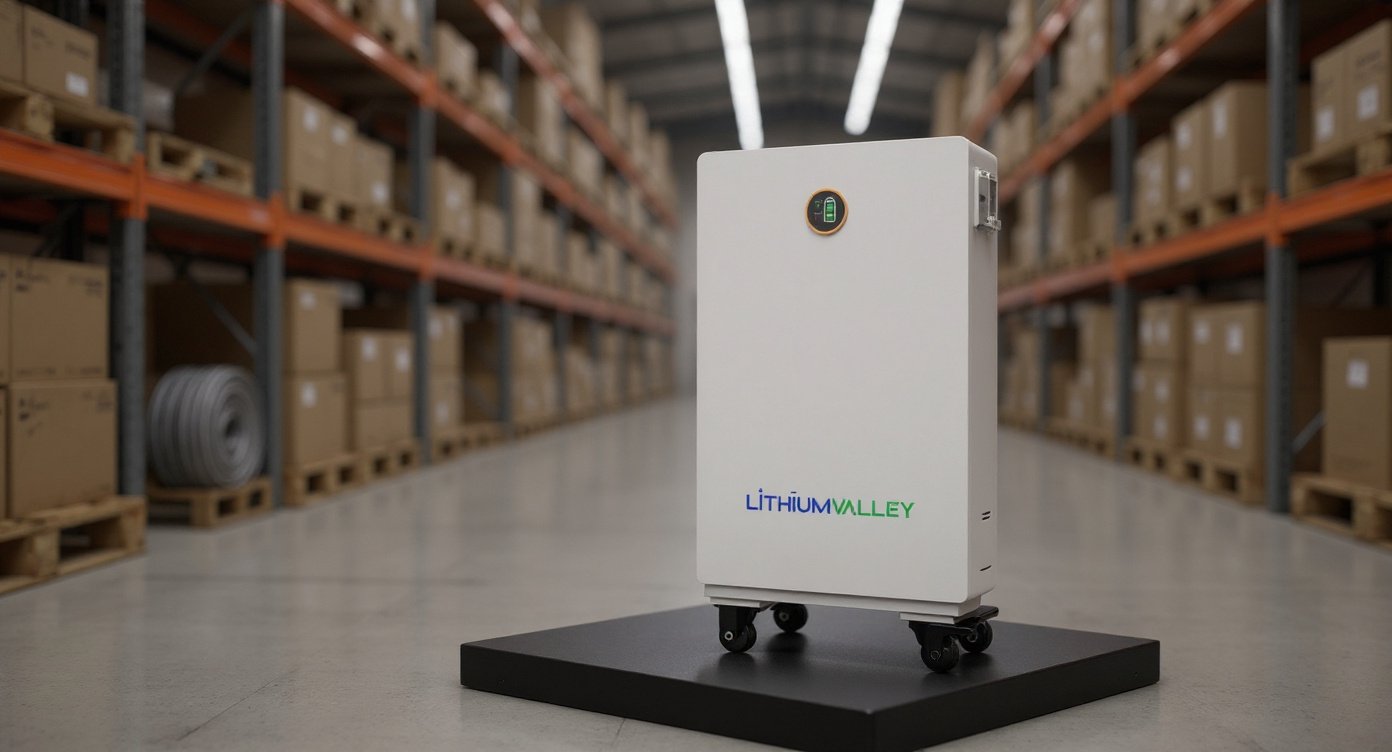
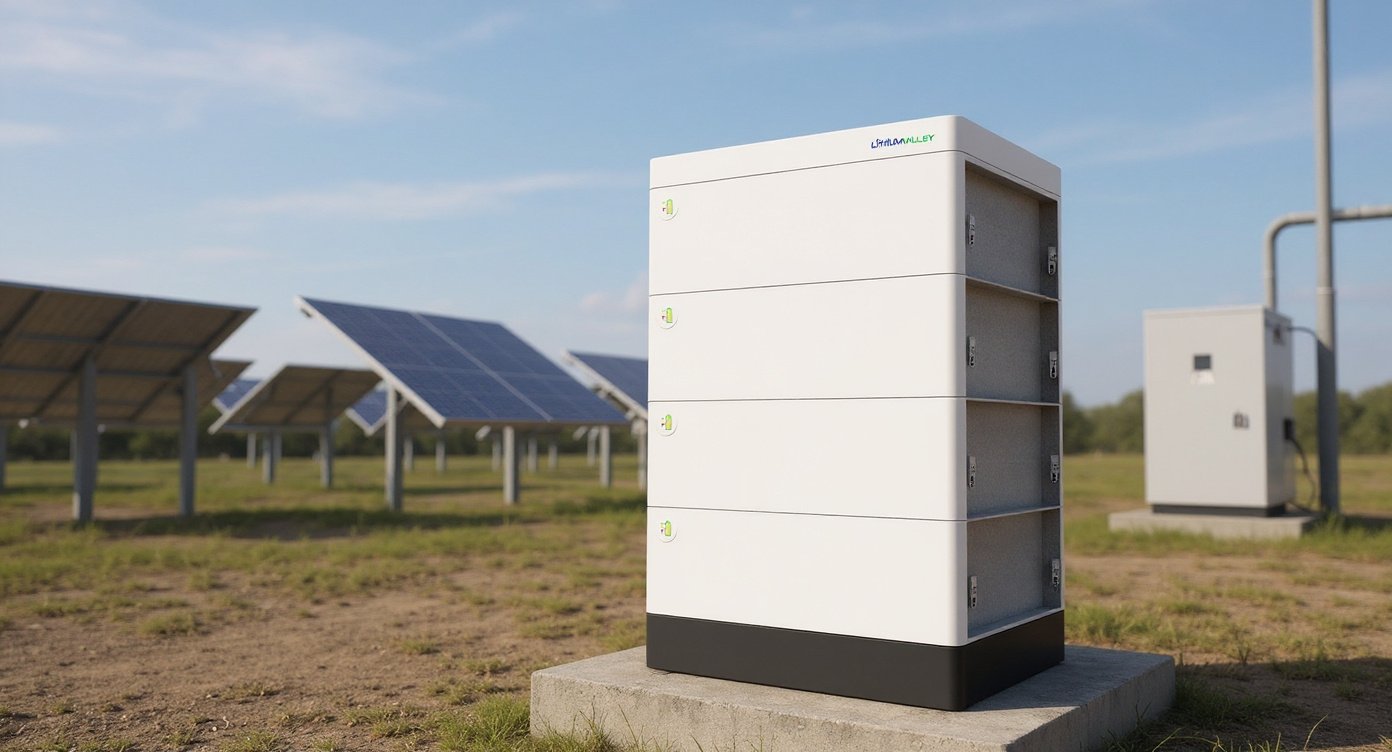
A high-voltage stacked C&I ESS makes sense when a site needs real storage for peak shaving, backup, or microgrid control, not a small cabinet meant for light-duty backup. The LITHIUMVALLEY FLEX16 High Voltage C&I Energy Storage System is aimed at that job: modular metal battery cabinets, LiFePO4 cells, high-voltage integration, and site-level control.
Short version. It fits commercial and industrial projects that can use cabinet-scale expansion, BMS and EMS coordination, and a managed indoor electrical room. It does not fit every building. If your need is one fridge and a router, this is the wrong product.
I’ve seen buyers get in trouble by starting with kWh instead of load shape. That mistake gets expensive fast. A factory in Ohio I worked with wanted “backup battery” as the first sentence of the brief, then it turned out they needed 40 minutes of demand charge control plus a 15-second ride-through for a PLC room. Different job. Different sizing. Different pain.
What a High-Voltage Stacked C&I ESS is for
This category exists for site energy problems that are bigger than a single rack and smaller than a utility substation. That sounds obvious. It isn’t obvious when procurement starts.
The three usual jobs are:
– Peak shaving, where the battery trims demand spikes and cuts monthly charges.
– Backup power, where the system carries critical loads through an outage.
– Microgrid support, where the battery follows solar, generator, or grid switching without causing control chaos.
Those jobs overlap, but they do not share the same design target. A high-voltage stacked commercial energy storage system has to be sized for the worst part of the duty cycle, not the prettiest brochure sentence.
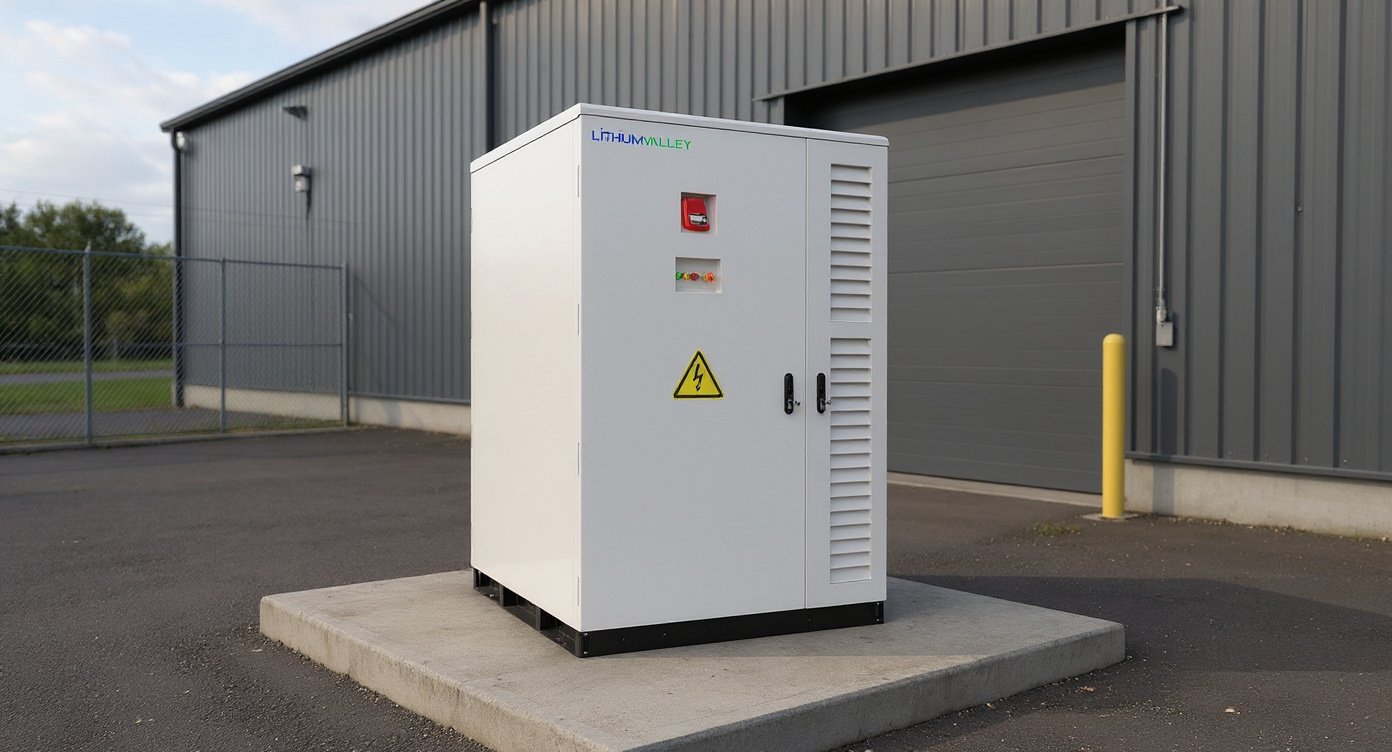
The FLEX16 is a quote-request, rack-style LiFePO4 ESS with 96kWh per cabinet, active cell balancing, forced-air cooling, IP54 indoor protection, CAN, RS485, and Ethernet communications, and operating modes for grid-tied, off-grid, peak-shaving, and emergency-backup use. That is a real industrial package. Not a toy.
If you’re comparing product families, the commercial and industrial energy storage system category is where the engineering questions begin. That’s also where a system like the commercial and industrial energy storage system would normally be evaluated, though the answer always starts with site load.
High-Voltage Stacked C&I ESS: what FLEX16 actually offers
Here’s the core spec set, stripped down.
| Spec | Listed value | Buyer note |
|---|---|---|
| Chemistry | LiFePO4 | Common choice for stationary storage |
| Nominal capacity | 96kWh per cabinet | Useful for modular site planning |
| Cycle life | 6,000 cycles at 80% DOD | Relevant for daily peak shaving |
| Operating range | -20°C to +55°C | Room conditions still matter |
| Cooling | Forced-air cooling | Needs clean airflow and maintenance |
| Protection | IP54 indoor protection | Indoor use, controlled space |
| Comms | CAN, RS485, Ethernet | Good sign for EMS integration |
One line deserves extra care. The product page states both a maximum of 12 cabinets and a total energy figure of up to 3.08MWh. That does not reconcile cleanly with 96kWh per cabinet.
Do the math. 12 cabinets at 96kWh each equals 1,152kWh, not 3.08MWh.
So one of these is probably true: the cabinet count refers to a different topology, the 96kWh is not the total system figure, or the published page has a spec inconsistency. I would not size a project from that number until the manufacturer sends the single-line diagram, cabinet stacking limit, usable energy, and voltage window in writing. No guessing. None.
That kind of mismatch shows up more often than buyers want to admit. I’ve seen a hospital project stall for six weeks because the sales sheet and the wiring diagram lived in different universes.
Why high voltage matters in a stacked cabinet system
High voltage is not a slogan. It reduces current for the same power level, which helps with conductor size, voltage drop, and system organization at larger scale.
That matters in factories, warehouses, data rooms, cold storage, and mining sites where cable runs get long and the load does not sit still. It also matters when you’re trying to expand the system without turning the battery room into a patchwork of small boxes.
A high voltage LiFePO4 ESS usually fits this kind of project better than a small low-voltage unit because the integration path is cleaner at site scale. Cleaner does not mean simple. It means less ugly.
Comparison table: where FLEX16 sits against common C&I options
| Product type | Typical use | Typical price band | Trade-off |
|---|---|---|---|
| FLEX16 style high-voltage cabinet ESS | Peak shaving, backup, microgrid | Quote-request | Better scaling, needs real integration |
| Small rack battery (48V class) | Light backup, telecom, small loads | $1,200 to $8,000 | Cheaper, but poor fit for large site power |
| Commercial UPS battery string | Short ride-through | $6,000 to $40,000 | Good for transfer support, weak for daily cycling |
| Containerized BESS | Large campuses, utility support | $250,000 to $1.5M+ | Higher scale, longer permitting and lead time |
| NMC-based stationary ESS | Space-constrained sites | Varies by integrator | Higher energy density, tougher thermal risk profile |
Honest take. If your site is humid, dusty, and half-baked on ventilation, skip the “we’ll figure it out later” attitude entirely. A cabinet with IP54 still needs a building that behaves like an electrical room, not a storage closet with a fan.
What to check before you buy a High-Voltage Stacked C&I ESS
Start with the load profile. Always.
1. Peak demand: what kW spike are you trying to cut, and for how long?
2. Backup loads: which circuits must stay up, and which can drop?
3. Duty cycle: is this daily cycling or emergency-only use?
4. Site room: can the building handle cabinet count, airflow, and access?
5. Controls: what does the EMS talk to now, and what protocol is required later?
6. Source mix: grid, solar, generator, or all three?
7. Compliance: what local fire, electrical, and inspection rules apply?
A AI EMS battery system can help coordination, but the real question is whether the dispatch logic matches the site. Software never saves a bad electrical room. I wish it did.
Peak shaving, backup, and microgrids are not the same job
This is where product pages get slippery.
| Use case | What matters most | Common mistake |
|---|---|---|
| Peak shaving | Discharge window and cycle life | Buying too little energy |
| Emergency backup | Transfer behavior and load priority | Assuming every load is critical |
| Microgrid support | Communications and coordination | Ignoring EMS integration |
| Off-grid use | Inverter match and load discipline | Overstating autonomy |
For daily demand reduction, 6,000 cycles at 80% DOD is a solid number. Not perfect. Solid. It gives you a real basis for modeling if the site cycles in a sane range.
For backup, I care more about transfer logic than headline kWh. A battery can look oversized and still fail the project if the controls don’t match the switchgear sequence. That’s why people end up comparing a commercial peak shaving battery against backup requirements at the same time.
LiFePO4, thermal range, and why indoor protection matters
LiFePO4 is the chemistry I’d rather see in most stationary C&I projects. It has a calmer thermal profile than NMC in this use case, and long-cycle duty tends to suit it better. That said, chemistry does not rescue bad installation.
The FLEX16’s published operating range is -20°C to +55°C, with forced-air cooling and IP54 indoor protection. That tells me the system expects a managed room and routine maintenance. Good. Honest, even.
If the room runs hot, dusty, or cramped, the battery will not care about your deadline. The cabinet will still need airflow, clearance, and service access. This won’t work if the building is the weak point.
I’ve had one site in Texas where the battery spec looked fine on paper, but the electrical room hit 41°C in late summer and the HVAC was sized for IT equipment, not power electronics. The battery wasn’t the problem. The room was.
For buyers comparing cabinet formats, an IP54 indoor energy storage cabinet is a sensible category to compare against, provided the site is truly indoor and code-compliant.
Who this product fits, and who should skip it
Fits:
– Sites with real peak demand charges.
– Facilities needing cabinet-level expansion.
– Projects where EMS and BMS integration matter.
– Indoor rooms with controlled access and ventilation.
– Owners who will actually commission the system properly.
Skip it:
– Small homes.
– Wet outdoor installs without a real enclosure plan.
– Projects that only need short UPS ride-through.
– Sites with no confirmed single-line diagram.
– Buyers who want a battery and no controls.
That last one comes up more than people admit. They want storage. What they really want is certainty. Different thing.
Common buyer questions on a High-Voltage Stacked C&I ESS
What is a high-voltage stacked C&I ESS?
It is a modular commercial or industrial battery system built around higher system voltage and cabinet expansion, usually for peak shaving, backup, or microgrid operation.
Why do site storage systems use high voltage?
Higher voltage reduces current for the same power. That helps with cable sizing, losses, and larger site integration.
How many cabinets does FLEX16 support?
The page says up to 12 cabinets, but the published 3.08MWh figure does not match 96kWh per cabinet. Confirm the actual topology before sizing.
Is LiFePO4 a good choice for C&I storage?
Usually yes, especially for stationary cycling and conservative thermal behavior. It is common in commercial battery cabinet systems.
Can FLEX16 run off-grid?
The product page lists off-grid mode. You still need inverter compatibility, load limits, and a real autonomy target.
What does the BMS do?
It monitors battery health, balances cells, enforces operating limits, and helps prevent unsafe conditions.
What does the EMS do?
It decides when the battery charges or discharges, based on site logic, tariffs, generator rules, or solar output.
Is 6,000 cycles enough for peak shaving?
For many daily cycling jobs, yes, if the depth of discharge and dispatch pattern are modeled correctly.
Does IP54 mean outdoor installation is fine?
No. IP54 helps with dust and splash resistance, but the product is still listed as indoor protection. Do not treat that like an outdoor enclosure rating.
What standards should buyers ask about?
Ask for the applicable electrical, fire, and commissioning documentation, plus the BMS/EMS integration spec. If the vendor cannot provide those, keep moving.
What is the main risk with modular cabinet systems?
Mismatch between the published spec, the real single-line design, and the building conditions. That mismatch causes most expensive delays.
What I would verify before signing
– The exact cabinet count limit and usable energy ceiling.
– Whether the 3.08MWh figure is a system total, a different configuration, or a brochure error.
– The full one-line diagram and voltage window.
– Protocol support for CAN, RS485, and Ethernet.
– Cooling requirements for the actual room.
– Fire and electrical compliance for the jurisdiction.
– Commissioning scope. Who owns it. Who answers when it faults.
I’d also want the integrator involved before the purchase order. Every time. The battery cabinet is only one piece. Switchgear, protection, and commissioning make or break the project. Not glamorous. True.
If you want a deeper look at adjacent categories, see commercial and industrial energy storage system, high voltage LiFePO4 ESS, and scalable C&I battery energy storage system.
Bottom line
A high-voltage stacked C&I ESS like FLEX16 is a sensible fit for real commercial and industrial storage jobs, especially when the site needs cabinet-scale expansion, LiFePO4 chemistry, and integration with BMS and EMS controls. It is weaker for small backup use and any site where the building, ventilation, or topology is still vague.
My verdict is simple. If the project is serious, this category deserves attention. If the room is uncertain, wait.
That spec inconsistency matters, though. Fix that before anybody talks price.