The best battery backup systems for data centers are usually layered setups: a UPS or fast battery layer for seconds-to-minutes ride-through, generators for long outages, and in some facilities a large high-voltage LiFePO4 ESS for peak shaving, generator bridging, and selected backup loads. That answer is less sexy than a single-box promise. It’s also what works.
I’ve watched more than one project go sideways because someone tried to make one battery do five jobs without sorting out control hierarchy first. One was a light-industrial site with a server room and a 750 kVA generator. The battery itself was fine. The handoff logic wasn’t. Every transfer test turned into an alarm parade until the integrator cleaned up the sequencing between the UPS, generator controller, and battery management system. Two days of commissioning became nine. Expensive lesson.
And here’s the blunt part most articles won’t say: if your data center only needs clean ride-through for 30 to 90 seconds and your generator plant is already solid, a large cabinet ESS can be overkill. Buy the right layer. Not the biggest one.
What actually works in a data center backup setup
For most facilities, the battery should handle fast, high-value events and leave long-duration resilience to generators or a broader microgrid design. The U.S. Department of Energy makes the same basic point in its DOE energy storage resources: battery storage is a fast-response asset, but it has to be sized to the job.
That job usually falls into a few buckets.
Ride-through during utility blips. Bridging time while standby generation starts. Peak shaving when demand charges are ugly enough to justify cycling. Support for selected loads during outages. Clean coordination with switchgear, UPS gear, generators, and site controls.
Miss one of those. Trouble.
The chemistry question comes up right away. For large commercial and industrial high-voltage systems, LiFePO4 has become the default choice in a lot of projects because it offers a stronger thermal stability profile than nickel-manganese-cobalt chemistries and tends to tolerate heavy stationary cycling better. NREL covers the broader trade-offs in its battery storage research. But chemistry alone doesn’t save a bad design. Controls, cooling, enclosure design, and module serviceability matter just as much.
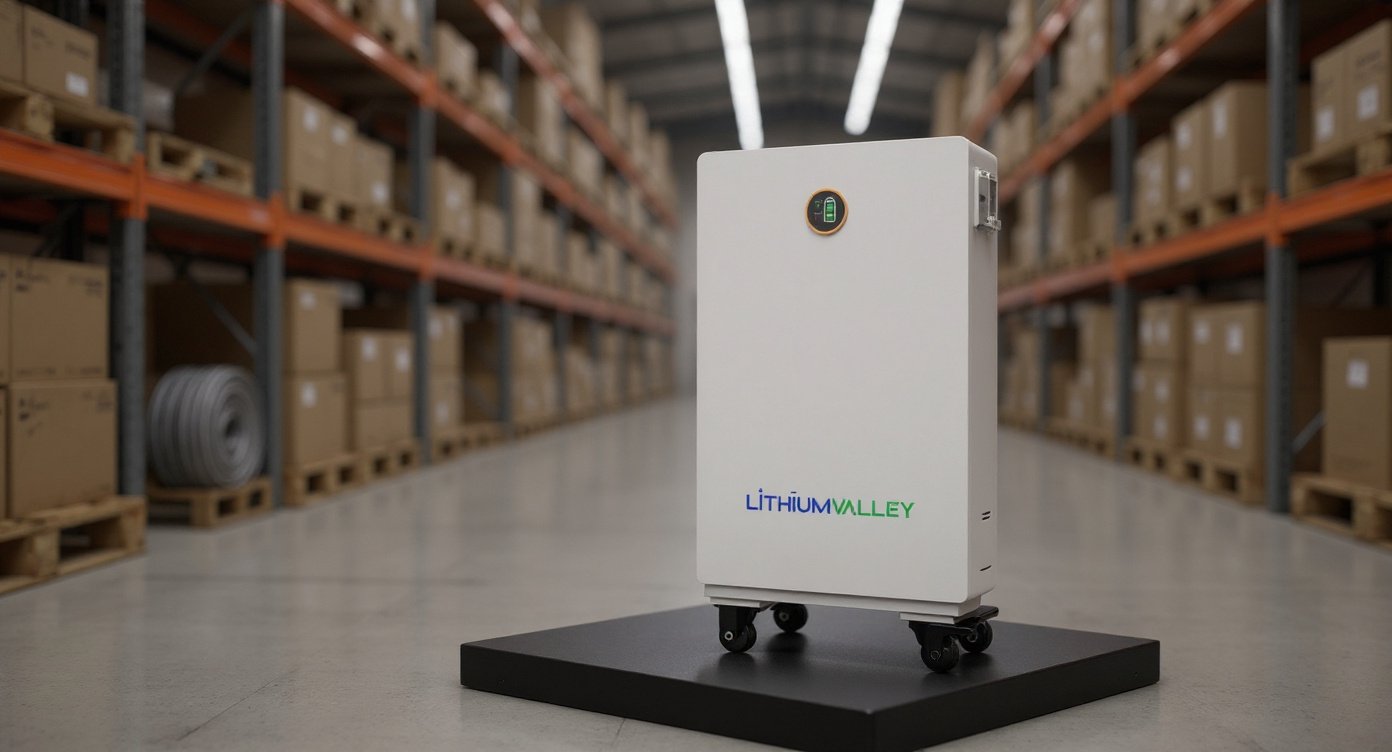
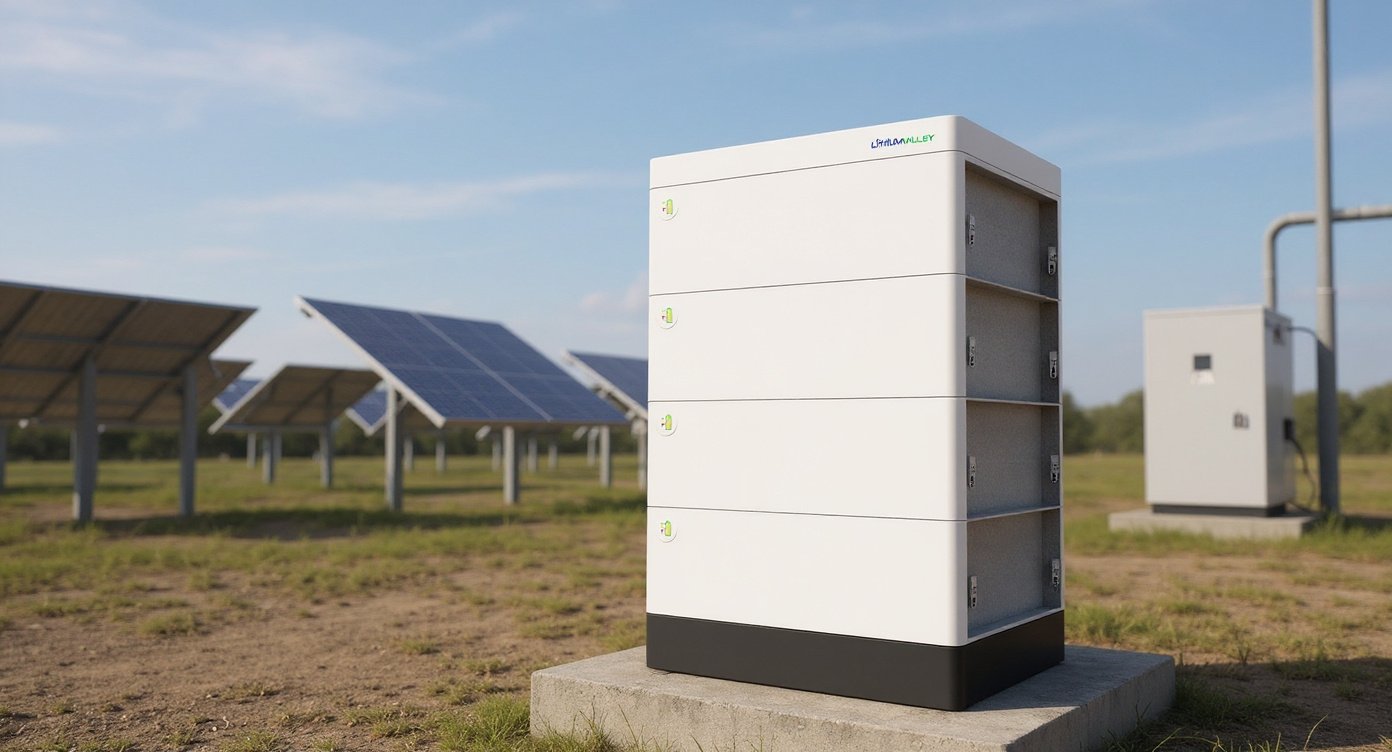
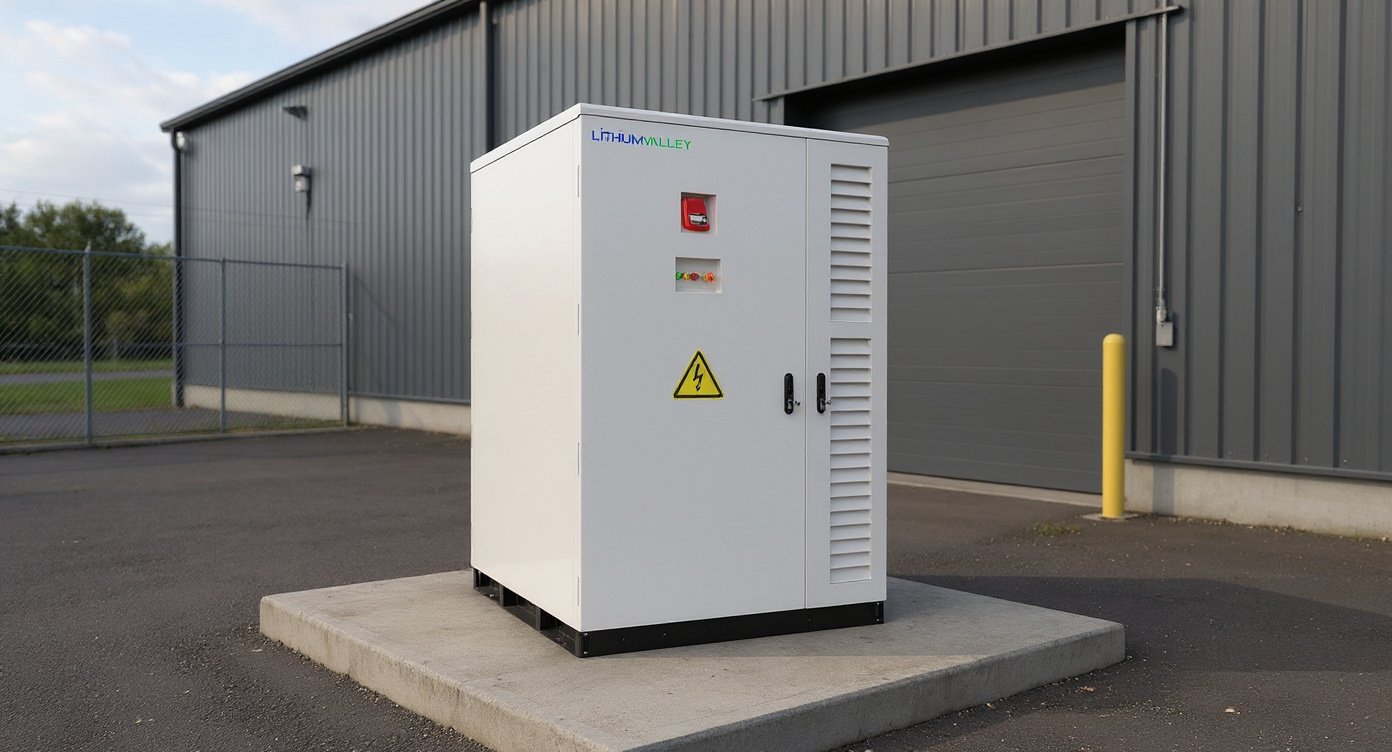
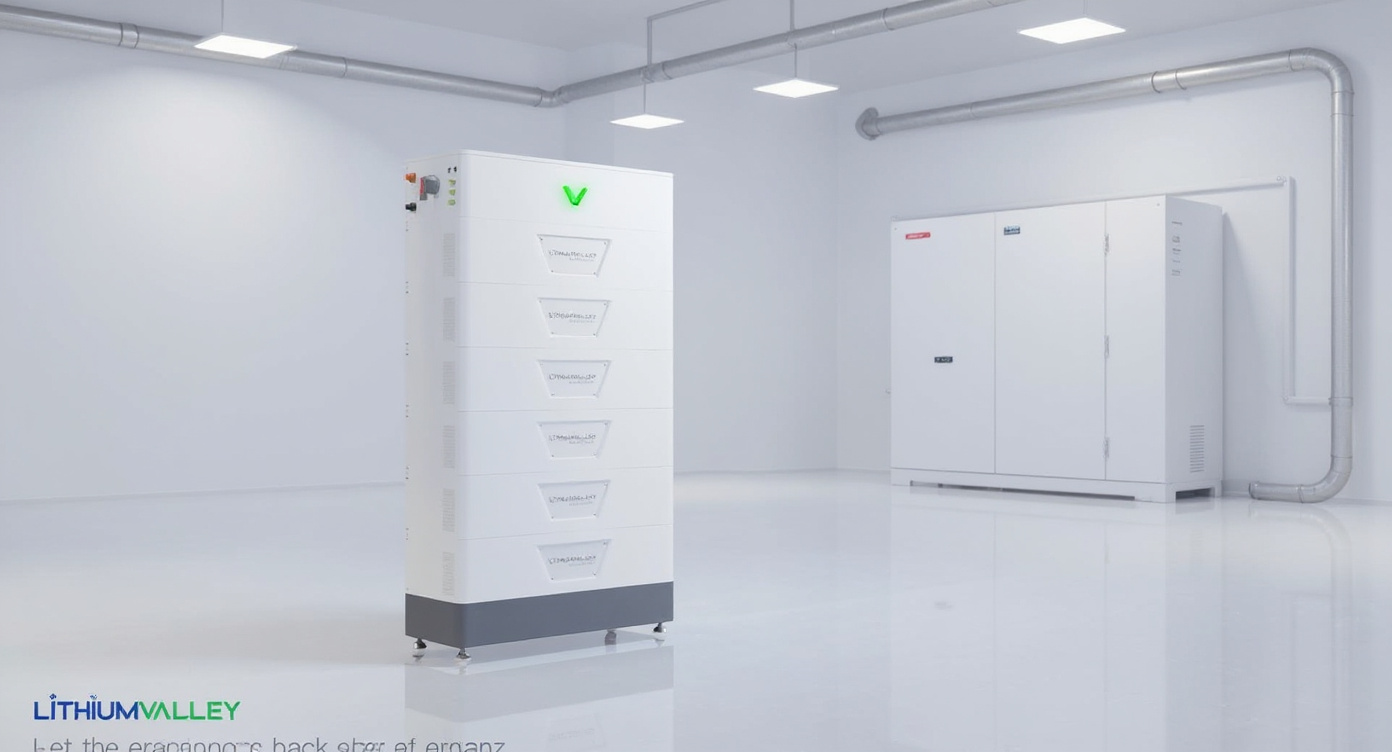
That matters here because the product category in question is not a little rack UPS battery. It’s a large-scale commercial and industrial high-voltage LiFePO4 ESS, built as modular metal battery cabinets and technical battery-module assemblies, with blue cells inside silver or white enclosures, navy engineering typography, and blue-green energy accents. Think plant-room equipment. Not server-room accessories.
The battery cabinet is only half the story
A battery cabinet with weak controls is a maintenance problem wearing a clean paint job.
In serious facilities, the ESS has to report state of charge, faults, temperatures, string status, and protection events without guesswork. It also has to behave during transfer events. No weird hunting. No communication dropouts. No mystery lockouts after a brownout.
That is why I care more about active balancing, BMS behavior, remote monitoring, and communication protocols than brochure claims about “smart” operation. Forced-air cooling matters too. Temperature is battery life. Full stop. ASHRAE’s thermal guidance for data processing environments is written for data environments, but the larger lesson holds here as well: if room conditions drift, battery performance and service life drift with them.
One system built in this exact commercial and industrial mold is the LITHIUMVALLEY FLEX16 high-voltage ESS. Published specs on the product page include LiFePO4 chemistry, modular metal battery cabinets, active cell balancing, BMS plus EMS control, forced-air cooling, IP54 indoor protection, and CAN, RS485, and Ethernet communications. The page also lists grid-tied, off-grid, peak-shaving, and emergency-backup modes.
Those are the right kinds of features. The reason is simple. This class of ESS has to integrate into a power system that already has opinions.
What buyers compare in the real world
They do not compare batteries in a vacuum. They compare operating roles.
A classic VRLA UPS string from Vertiv or Schneider can still make sense when the requirement is short discharge duration, existing UPS compatibility, and a maintenance team that already knows the routine. Lithium UPS systems from Eaton, Vertiv, and Schneider cost more upfront but can win on footprint and replacement intervals. Flywheels from brands like Active Power are still in the conversation for very short ride-through. Then you have large LFP cabinet ESS products from Tesla, Sungrow, CATL, Fluence, BYD, and commercial integrators selling configured cabinets for site-specific jobs.
Different tools. Different headaches.
Here is the comparison I would actually hand a client during early screening.
| Option | Typical role in a data-heavy facility | Typical runtime | Price signal | Where it fits | Where it goes wrong |
|---|---|---|---|---|---|
| VRLA UPS batteries, Schneider or Vertiv | Traditional UPS ride-through | 5 to 15 minutes | Lower upfront, higher replacement burden | Existing UPS plants, conservative sites | Heat kills them, room footprint grows fast |
| Lithium UPS batteries, Eaton or Vertiv | UPS ride-through with smaller footprint | 5 to 15 minutes | Higher upfront than VRLA | Retrofit where battery rooms are tight | Buyers overpay if runtime needs are tiny |
| Flywheel systems, Active Power style | Seconds of ride-through | 15 to 120 seconds | Site-specific | Clean bridge to generator start | Not a long backup solution |
| Large LiFePO4 cabinet ESS, LITHIUMVALLEY FLEX16 class | Generator bridging, peak shaving, selected backup loads | 5 minutes to 2+ hours depending on design | Quote-only, project-based | C&I sites needing controls plus modular expansion | Bad commissioning turns this into a permanent nuisance |
| Tesla Megapack or Fluence Gridstack class | Utility-scale or very large campus storage | 1 to 4 hours | Usually beyond small site budgets | Large campuses, utility-facing projects | Too large for many single-building jobs |
| BYD or Sungrow C&I cabinets | Peak shaving, solar pairing, backup support | 30 minutes to 4 hours | Competitive in global tenders | Solar-plus-storage projects | Integration quality varies by installer |
A few honest numbers help. A replacement VRLA string for a mid-size UPS can look cheap until year 5 or 6 shows up. Lithium UPS retrofits often land at a premium that can be 30 percent to 70 percent higher at purchase, depending on brand and monitoring scope. Tesla Megapack is in a different class entirely, often measured in megawatt-hours and seven-figure project totals once PCS, installation, and fire compliance are counted. A modular C&I cabinet ESS sits between those worlds.
Where a high-voltage LiFePO4 ESS actually earns its keep
Best fit? When the facility wants more than standby.
A modular cabinet ESS starts to make sense when the site has expensive demand charges, frequent short disturbances, a generator fleet that you don’t want starting for every brief utility event, or a microgrid plan that includes solar and site-level controls. EPA’s microgrid and distributed energy guidance gets into the bigger picture.
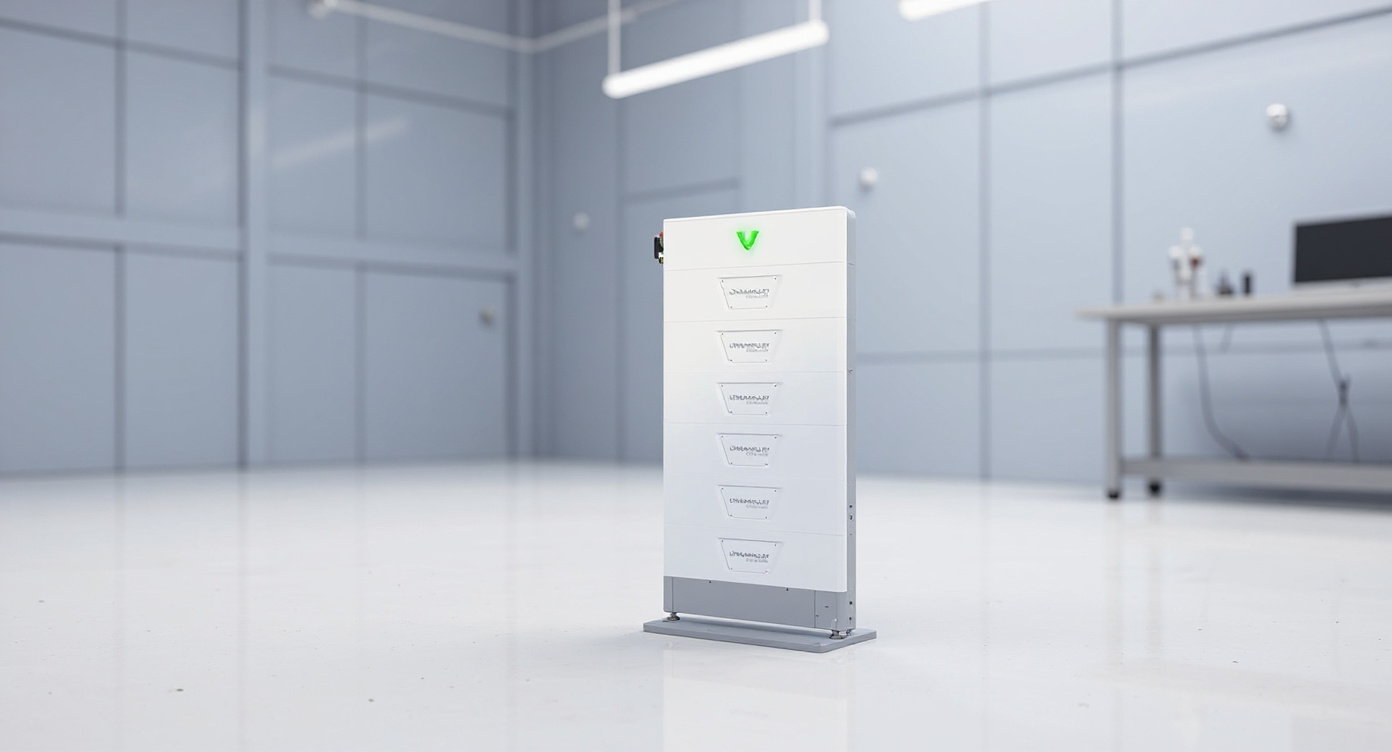
In that role, a system like the LITHIUMVALLEY FLEX16 high-voltage ESS is being compared less to a little battery tray and more to other modular C&I ESS platforms. What matters then is cabinet architecture, module replacement approach, communications, indoor protection rating, cooling path, and whether the battery module assemblies are built for service access rather than just shipping density.
I have a soft spot for modular metal cabinets in this category because field service is real life. A sealed black box looks neat on day one. Year four is what counts. Can a tech isolate a module, swap a harness, verify cell group behavior, and get the cabinet back online without tearing apart half the room? That’s not glamorous. It’s what operators remember.
Runtime, controls, and code decide the shortlist
Most buying decisions narrow down fast once the team answers a few plain questions.
How many minutes of support are required, and for which loads?
Will the battery cycle every weekday for demand reduction, or sit charged for rare outages?
Who is master during an outage, the UPS, the generator controls, the power management system, or the ESS EMS?
What communications are mandatory, CAN, RS485, Ethernet, Modbus mapping, all of it?
What temperature range will the room actually see in August and January?
What capacity is still acceptable at year 8?
Can the project handle quote-stage engineering, or does it need a fixed packaged SKU?
That last one matters. A lot.
Quote-only is normal in larger C&I storage because the PCS pairing, switchgear, fire suppression approach, usable depth of discharge, and dispatch logic all change the answer. If someone gives you a one-click price for a high-voltage industrial ESS without asking those questions, be careful.
Safety and standards can kill a project early too. NFPA’s NFPA 855 standard overview is one of the key references teams use for spacing, protection, and installation practice. Local fire authority review matters just as much as the equipment list. Sometimes more.
Why batteries still are not everywhere in data centers
Because they solve specific problems well, not all problems cheaply.
A data center power chain is conservative because downtime invoices are brutal. Operators want predictable failure behavior. They do not care that a battery can do six things on paper if the seventh thing is nuisance tripping during a utility transfer.
There are economics, too. If the tariff does not punish short demand peaks, peak shaving may not pay back. If outages are rare and the generator system is already strong, a large ESS can be hard to justify on resilience alone. If the site has no in-house electrical depth, the project may live or die on the quality of one integrator. That’s uncomfortable. Also true.
And solar does not magically fix the equation. Roof area, interconnection limits, export rules, and control complexity all get a vote. EPRI’s energy storage program work covers the use-case side well, but in the field you still need a project that pencils out.
Honestly, if your operation cannot support proper commissioning and annual controls testing, skip a multi-mode ESS entirely and keep the battery role narrow. A simpler system that gets tested will outperform a fancy one that nobody really owns.
What role batteries can play beyond UPS duty
Quite a lot. If the design is honest.
A large LiFePO4 ESS can shave monthly peaks, reduce nuisance generator starts, support selected non-critical or semi-critical loads during transfers, coordinate with on-site solar, and provide black-start support in some architectures. It can also cover generator warm-up windows that are awkward for traditional UPS plants.
But this won’t work if the project treats the ESS as plug-and-play. It isn’t.
Protection coordination. Control sequencing. Room conditions. Fire review. Commissioning scripts. Network integration. All of it matters.
I saw one food-processing campus pair battery storage with a data-heavy operations center and CHP plant. The battery looked brilliant during sales meetings. In commissioning, a single incorrect timeout in the generator permissive logic caused two false starts in one afternoon. One timer. That was it. We found it, fixed it, and the system ran clean after that. But that’s the difference between a useful asset and a permanent exception report.
FAQ
What are the best battery backup systems for data centers?
The best setups are usually layered. Use a UPS or fast battery layer for immediate ride-through, generators for long outages, and a large high-voltage LiFePO4 ESS only when you also need peak shaving, generator bridging, or selected-load backup. If your runtime need is 30 seconds to 5 minutes, a traditional UPS architecture may be enough. If you want 10 to 120 minutes plus daily cycling, a modular cabinet ESS becomes more attractive.
Do data centers need battery backup?
Yes. Utility disturbances happen faster than generators can start and stabilize. Even a solid standby plant still needs a fast bridge. In many facilities that bridge is measured in seconds or minutes, not hours.
What is a battery backup system called in a data center?
It depends on the job. Inside the classic critical power chain, it is usually part of a UPS, meaning uninterruptible power supply. In larger commercial and industrial energy projects, it is more often called a battery energy storage system, BESS, or just ESS.
How do data centers decide between UPS batteries and a cabinet ESS?
Start with runtime and duty cycle. If the battery mostly sits idle and only covers transfers, UPS batteries are still common. If it cycles every week for demand reduction or works with on-site generation, a cabinet ESS has a better case. Also compare room space, fire review requirements, communications, and maintenance skill on site.
Is LiFePO4 the best chemistry for a commercial high-voltage ESS?
For many stationary C&I projects, yes. LiFePO4 offers a strong balance of cycle life, thermal stability, and practical safety for cabinet-based systems. That said, chemistry alone is not enough. A badly integrated LiFePO4 system is still a bad project.
How many minutes of backup should a data center battery provide?
There is no single answer. Many facilities only need enough battery to ride through utility disturbances and bridge generator start, often 30 seconds to 10 minutes. Sites using the battery for peak shaving or selected-load backup may design for 15 minutes, 30 minutes, or longer. More runtime is not always better if it adds cost without adding value.
If solar and batteries are getting cheaper, why not use them everywhere?
Because installed projects are not just battery invoices. Interconnection, switchgear changes, fire protection, controls, labor, testing, and utility rules all affect cost. In some places the economics are excellent. In others, they are mediocre.
What should buyers verify on a modular battery cabinet before requesting pricing?
Verify usable capacity, cabinet count, DC voltage range, communication protocols, cooling method, IP rating, module replacement process, warranty terms, and compatible PCS options. Also ask who owns the control sequence during outages. If nobody can answer that in one sentence, stop there.
Can a large ESS replace generators for data center backup?
Sometimes for selected loads and short durations. Not often for full long-duration backup. Generators still make more sense for many multi-hour outage scenarios because fuel storage is easier to scale than battery capacity at that duration.
What features matter most in a high-voltage commercial LiFePO4 ESS?
Modular metal cabinets, serviceable battery modules, strong BMS behavior, active balancing, clear EMS logic, forced-air or equivalent thermal control, standard communications, and installation support that respects code and commissioning reality.
Where I’d put the money
If the real problem is seconds to a few minutes of continuity, buy for integration quality first and runtime second. If the real problem is broader site energy management, then a modular high-voltage LiFePO4 ESS can earn its place.
What I would not buy is a giant battery on vague promises of resilience with no dispatch plan, no control owner, and no tested sequence of operations. That’s how projects end up expensive and underused.
For commercial and industrial sites that need modular metal battery cabinets, technical battery-module assemblies, LiFePO4 chemistry, and multi-mode operation in one platform, the LITHIUMVALLEY FLEX16 high-voltage ESS fits the shape of the problem. It belongs in the same conversation as other C&I cabinet systems, not as a replacement for every UPS battery room. If you’re screening options, review the published high-voltage battery storage system details and confirm final capacity, configuration, and integration scope directly before design work begins.