


A C&I energy storage system pays off when it cuts a specific bill line or prevents a specific outage cost, and for most sites the honest payback window is 4 to 9 years, not the 18-month fantasy you see in sales decks.
That’s the short answer.
I’ve looked at enough load profiles to say this with a straight face: if you can’t point to demand charges, time-of-use spread, solar curtailment, or downtime cost in dollars, stop. Don’t buy storage yet.
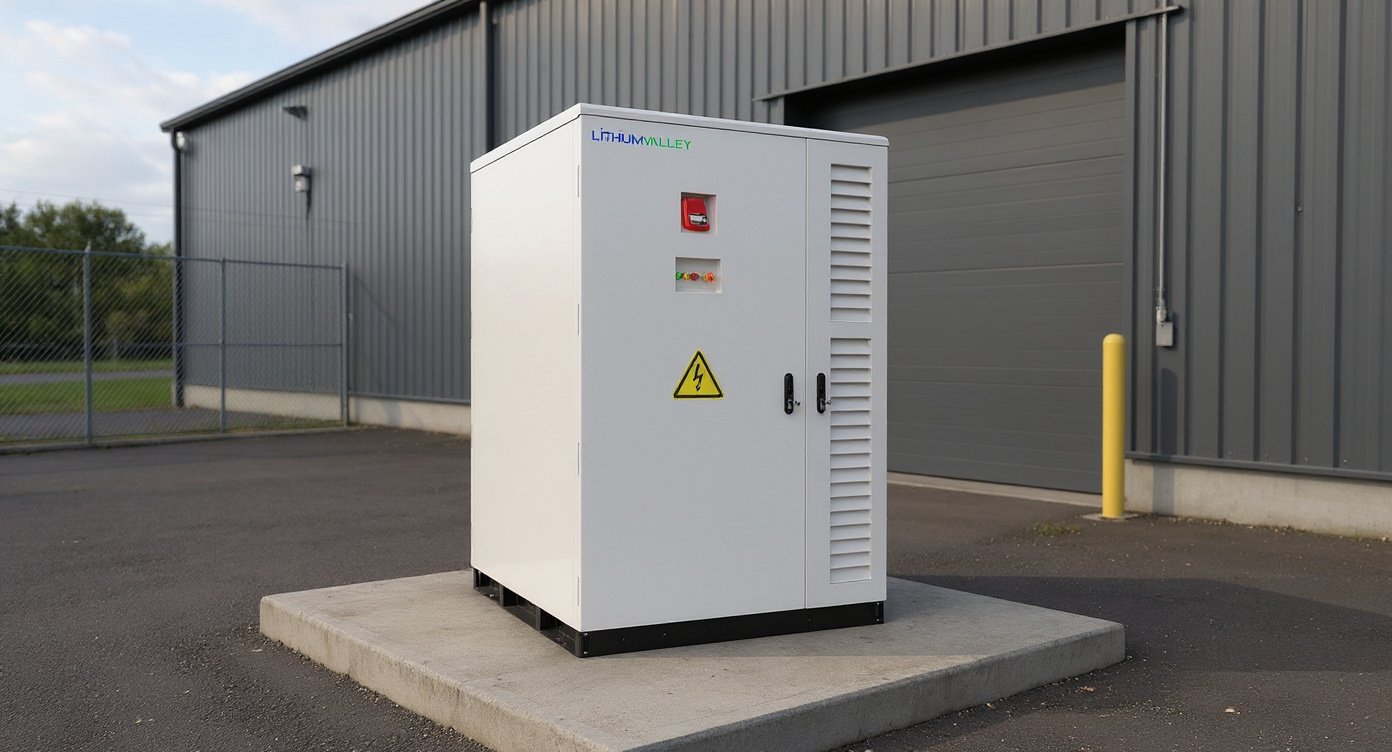
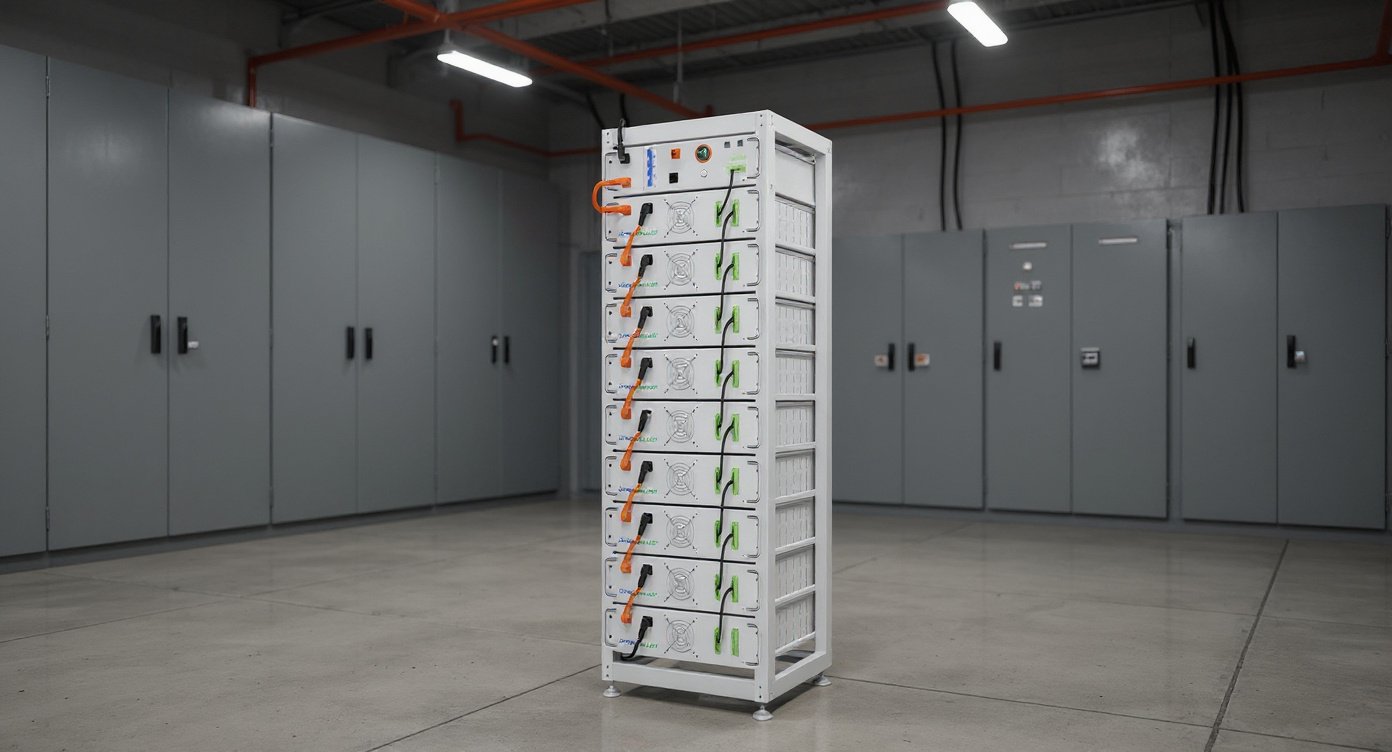
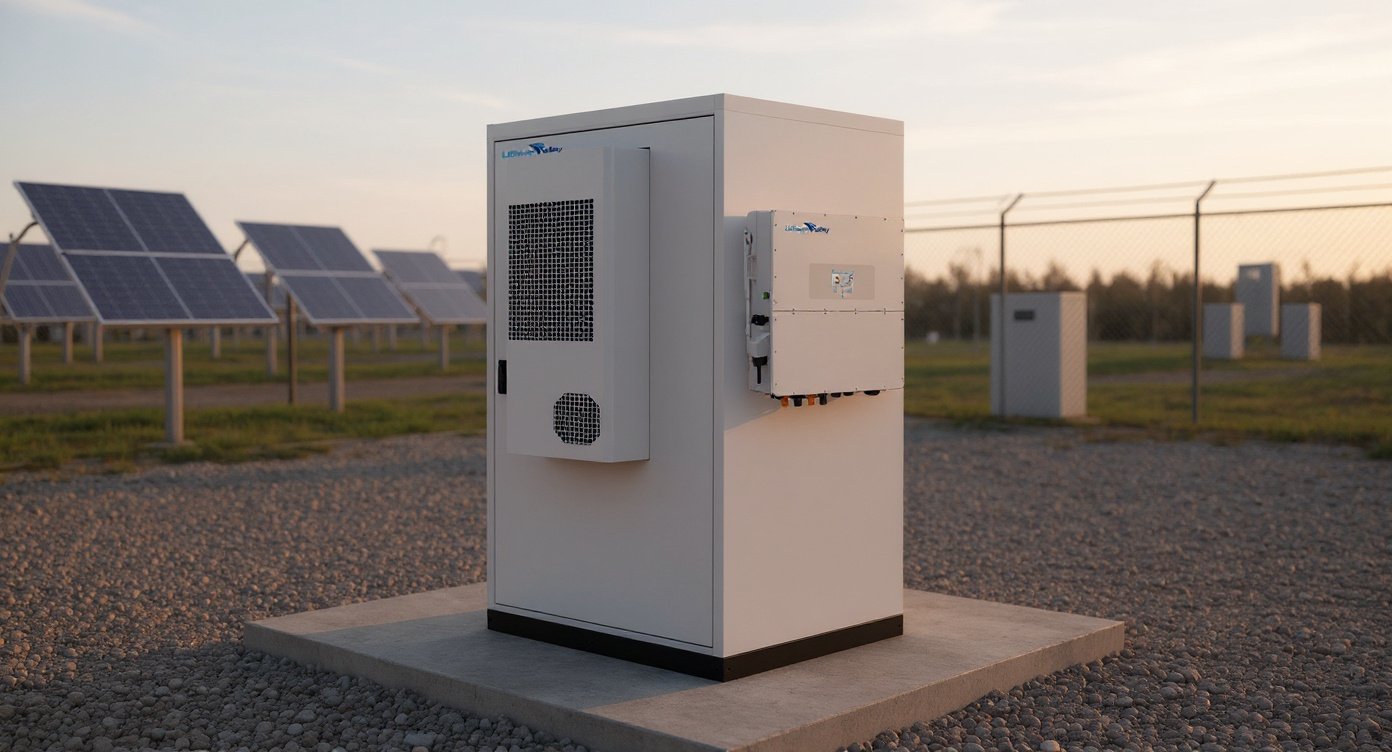
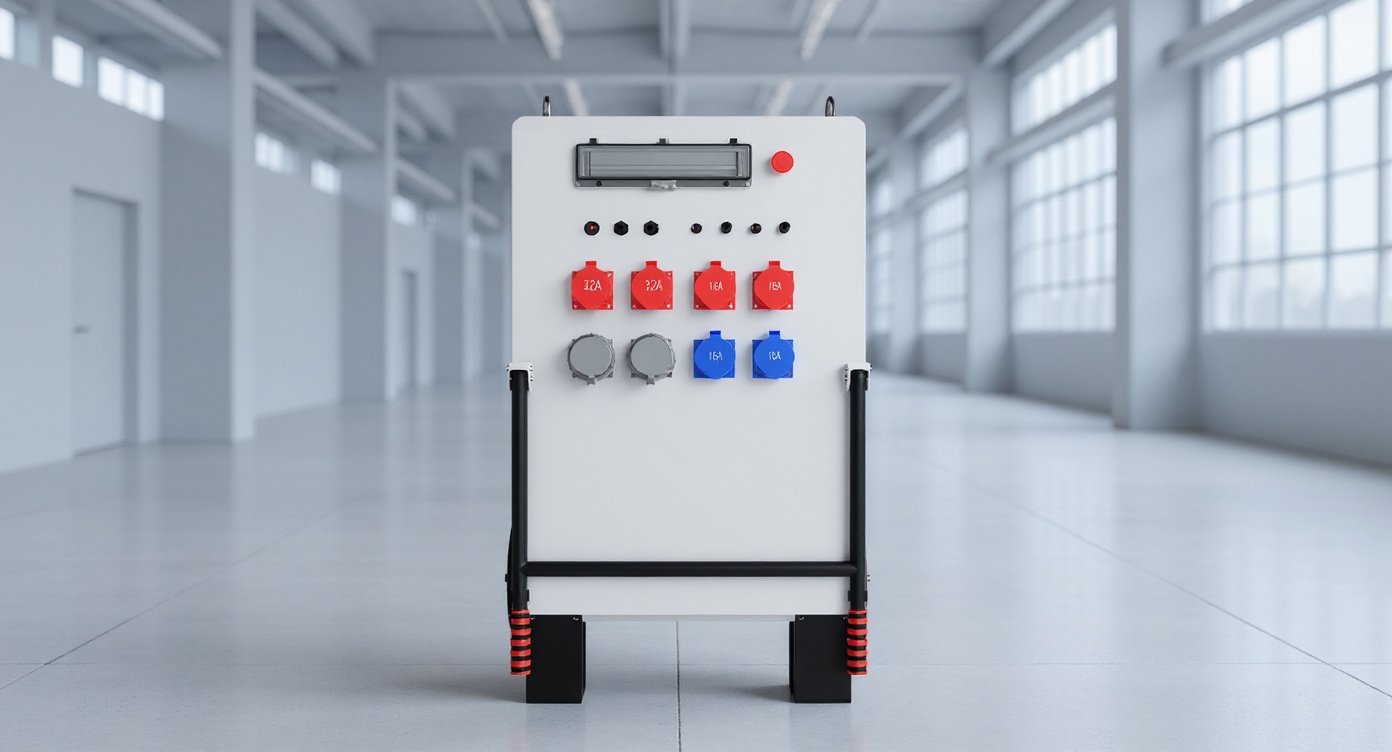
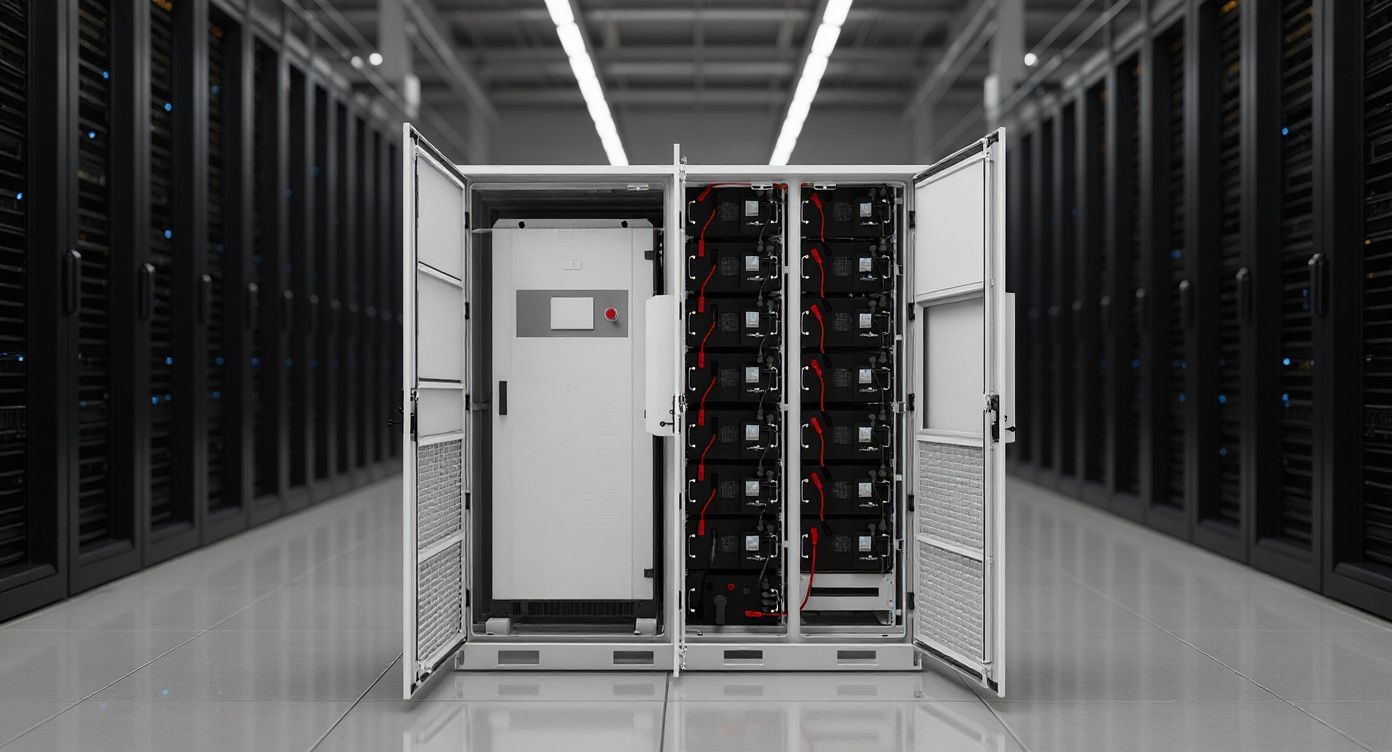
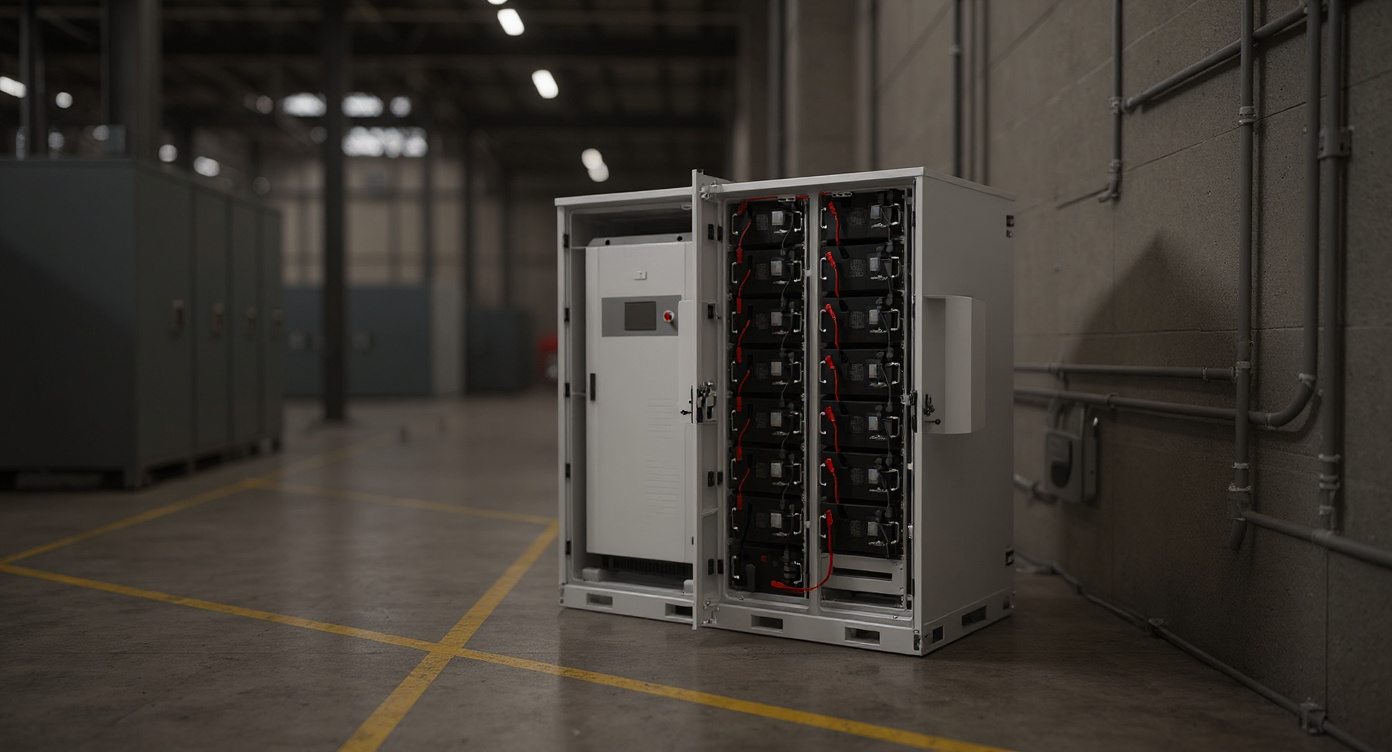
And one more thing before we get into economics. This article is about the exact Integrated Energy Storage Cabinet hardware shown in the official source images, preserving its enclosure, proportions, controls, connectors, colors, labels and component count. Not a generic wall battery. Not a utility container. That matters because buyers get burned when they compare unlike products.
The plain-English ROI answer
For commercial projects, battery storage ROI should be calculated from five numbers: annual demand charge savings, energy arbitrage savings, avoided outage cost, solar self-consumption gain, and total operating loss from degradation plus charging losses plus service costs.
That’s it.
If a project only works because every one of those goes right at the same time, it’s fragile. I wouldn’t touch it.
A decent first-pass formula looks like this:
Annual ROI value = demand charge savings + TOU arbitrage + avoided outage cost + solar capture value – charging losses – software/service – maintenance – degradation allowance
Then compare that annual value against total installed cost, not cabinet price alone.
A lot of people miss that last part. The cabinet is only part of the check you write. You still have switchgear work, commissioning, controls integration, utility coordination, stamped drawings, fire review, and sometimes a transformer upgrade. Ugly costs. Real costs.
A real example with numbers
Here’s a simple demand-charge case. Nothing exotic.
A light industrial site in Texas had a monthly peak near 412 kW, with 15-minute spikes that triggered a $19.40 per kW demand charge. Their interval data showed that shaving 110 kW on the worst peaks would cut demand costs by about:
110 kW x $19.40 x 12 months = $25,608 per year
Now add time-of-use savings. The same site had a usable spread of $0.11 per kWh between low-cost charging periods and expensive afternoon periods. If the system shifted 180 kWh per workday for 260 days, gross arbitrage value was:
180 x $0.11 x 260 = $5,148 per year
Gross total: $30,756.
Now subtract losses and operating drag.
If round-trip efficiency lands near 90%, if software monitoring is $1,200 a year, if extra maintenance and inspection average $850, and if degradation reserve is budgeted at $2,300 a year, the net value drops to roughly $25,900.
That’s the kind of number I trust. Boring. Defensible.
If installed project cost is $136,000 after incentives, simple payback sits near 5.2 years. If installed cost is $189,000, it moves to 7.3 years. Big difference. Same battery behavior.
Another example, this time backup power
Backup value is where people fool themselves.
A small cold-storage operator once told me they needed four hours of battery backup. We walked the loads. Turns out the actual financial pain was product loss during 18 to 25 minutes of transfer and restart disruption, not a four-hour outage. Their critical circuits were narrower than they thought. Compressors, control panels, dock doors, some lighting.
That changed the whole design basis.
Their estimated outage cost was $7,800 per event between spoiled product risk, labor idle time, and restart waste. They had about 3 meaningful outages per year, so avoided outage value penciled at $23,400 annually. But only if the system could island correctly and support those exact critical loads. Not the whole building. This won’t work if your utility interconnection or site one-line won’t support that operating mode.
Where the cash actually comes from
The value stack is narrower than most brochures suggest. For the exact Integrated Energy Storage Cabinet type, I’d usually expect revenue or savings from four practical buckets.
| Value source | What has to be true | Typical annual value range for a small-to-mid C&I site | Where projects go wrong |
|---|---|---|---|
| Demand charge reduction | High kW charges, repeatable spikes, interval data | $12,000 to $48,000 | Peak lasts too long, battery undersized on power |
| Time-of-use arbitrage | At least $0.08 per kWh spread, frequent cycling window | $3,000 to $18,000 | Tariff spread too small after losses |
| Solar self-consumption | Excess midday PV, export penalty or low export credit | $4,500 to $22,000 | Solar surplus is seasonal, not daily |
| Outage mitigation | Downtime cost is measurable and frequent enough | $6,000 to $60,000 | People value “peace of mind” but can’t price downtime |
| Deferred electrical upgrades | Service capacity constraint, expansion pressure | $20,000 one-time to $140,000 one-time | Utility upgrade was needed anyway |
For a lot of sites, demand charge management does the heavy lifting. Time-of-use arbitrage by itself rarely carries the whole project unless power prices are ugly. California can do it. Much of the Midwest, not so much.
The cabinet matters, but controls matter more
The Integrated Energy Storage Cabinet is useful because the battery modules, supervisory controls, safety systems, enclosure, and commercial packaging are specified together. That’s better than cobbling together a battery rack, inverter, random enclosure, and a control layer that barely talks to any of it.
Still, integrated hardware doesn’t rescue bad sizing.
Or bad dispatch rules.
Or a cheap installer.
For this exact cabinet class, I’d confirm these details before signing anything:
| Checkpoint | What to ask for, in writing | Why it matters |
|---|---|---|
| Usable energy | Usable kWh at the stated operating window, not just nameplate | Runtime and savings depend on usable energy |
| Continuous power | Continuous kW and overload duration | Peak shaving is often power-limited, not energy-limited |
| PCS scope | Whether PCS is included, external, AC-coupled, DC-coupled, and compatible with site gear | Integration cost changes fast here |
| EMS functions | Demand limit control, TOU scheduling, generator coordination, remote alarms | Weak controls can kill ROI |
| Thermal management | Ambient operating range and derating behavior | Hot sites lose performance when this is ignored |
| Fire and fault response | Detection, suppression, shutdown logic, fault logs, emergency access | Permitting and insurance hinge on it |
I learned this the expensive way years ago, not with storage but with refrigerated display cases in my shop. The hardware was solid. The controller logic was awful. The thing short-cycled itself into nuisance alarms for months. Same lesson here. A battery can be healthy and the project can still underperform because the controls are blunt.
Honest comparison: integrated cabinet vs familiar competitors
People ask for brand names, so here are some.
Tesla Powerwall is not the right comparison. That’s residential hardware. If someone is pitching it against a commercial integrated cabinet for a factory or warehouse, they’re either confused or hoping you are.
Better comparisons sit in the small C&I and light industrial lane.
| Brand / product type | Typical market positioning | Street pricing or public reference point | My honest take |
|---|---|---|---|
| EG4 PowerPro / similar stackable systems | Small commercial, prosumer crossover | Often under $10,000 per unit before BOS, install, controls | Cheap entry point, but not the same commercial package or control depth |
| FranklinWH aPower | Residential/light backup | About $15,000 to $19,000 installed for many homes | Good home product, wrong fit for most C&I duty cycles |
| Tesla Powerwall 3 | Residential solar + backup | Often $13,000 to $16,500 installed per unit equivalent package | Strong brand, but again, wrong lane here |
| Generac PWRcell | Residential/light commercial edge cases | Often $12,000 to $18,000 before larger-site complexity | Service network helps, still not a clean substitute |
| Fluence / Tesla Megapack / Wärtsilä utility platforms | Utility scale | Project-scale pricing, not cabinet retail | Massive systems, different permitting and economics |
| Integrated Energy Storage Cabinet | Commercial cabinet for on-grid or off-grid use | Project pricing depends on capacity, PCS, EMS, installation scope | The right shape for buyers who need cabinetized C&I hardware, not home batteries or utility containers |
That table is blunt because it should be.
Not every battery belongs in every conversation.
The contrarian thing most articles won’t say
Honestly, if your demand charge is under $9 per kW, your time-of-use spread is under $0.06 per kWh, and you don’t have measurable outage cost, skip battery storage entirely for now.
Put the money into controls, HVAC sequencing, VFD tuning, or basic meter work first.
I’ve seen a $14,000 controls retrofit save more in year one than a six-figure storage proposal would have saved in year three. Not sexy. True.
Safety and compliance are not side issues
People get nervous about BESS because they’ve seen scary headlines. Some of that fear is vague. Some of it is earned.
For commercial storage, I want documentation, not reassurance.
The Department of Energy has a useful battery energy storage procurement checklist because it forces the boring questions before purchase. Good. Those are the questions that save money.
UL’s guidance on energy storage system testing and certification matters because certification is not a decorative logo. It affects AHJ review, insurer comfort, and what your installer can actually permit.
And if you’re dealing with siting and fire review, read UL’s overview of UL 9540A and NFPA 855. UL 9540A is the test method used to evaluate thermal runaway fire propagation in battery energy storage systems. NFPA 855 is the installation standard many jurisdictions reference for spacing, fire protection, and siting decisions. Those two come up over and over in real projects.
A few practical facts worth quoting:
– UL 9540 covers the safety of the full energy storage system, not just individual cells.
– UL 9540A is a fire test method used to characterize thermal runaway behavior.
– NFPA 855 governs installation considerations such as separation distances, ventilation, fire detection, and occupancy issues, depending on system size and location.
– Local AHJs can add requirements beyond national standards. They often do.
– Insurance carriers may ask for more than code minimums, especially for indoor installation or mixed-use property.
If a vendor can’t explain the protection chain, from cell to module to rack or cabinet to controls to emergency shutdown, I’d walk.
Sizing: power first, then energy
Commercial buyers often ask, “How many kWh do I need?”
Wrong first question.
Start with kW.
If your tariff punishes a 15-minute spike, power rating may matter more than total stored energy. I’ve seen sites chase giant kWh numbers when they really needed a fast, repeatable 80 kW to 140 kW shave for a short window. Buying extra energy that sits idle most days is a poor trade.
Use this sequence instead:
1. Pull 12 months of interval data, 15-minute if possible, 5-minute if available.
2. Identify the top 20 peak events and how long they actually lasted.
3. Calculate the dollar value per kW reduced.
4. Separate critical loads from nice-to-have loads for backup operation.
5. Check whether the system is solving a power problem, an energy problem, or both.
6. Confirm expansion limits for electrical service, thermal performance, and EMS control.
That process sounds dull.
It works.
Typical payback ranges by use case
These are rough but grounded numbers for small-to-mid commercial sites in the U.S. right now. Before incentives. Assuming competent controls and a realistic operating profile.
| Primary use case | Common installed project size | Typical simple payback | Notes |
|---|---|---|---|
| Demand charge management only | 80 kWh to 300 kWh | 4.5 to 8 years | Best where demand charges exceed $15 per kW |
| TOU arbitrage only | 100 kWh to 400 kWh | 7 to 12 years | Often weak unless tariff spread is large |
| Solar self-consumption + TOU | 100 kWh to 500 kWh | 5 to 9 years | Good fit where export credit is poor |
| Backup power only | 50 kWh to 250 kWh | Hard to model, often 6 to 12 years | Depends on outage frequency and true downtime cost |
| Stacked use case, demand + solar + resilience | 150 kWh to 500 kWh | 4 to 7 years | This is where many solid C&I projects live |
That middle row matters. Arbitrage alone is often overrated.
What breaks projects
Usually not the cells.
More often it’s one of these:
– The site has noisy load swings that the control system can’t predict.
– Interconnection takes 8 months, and financing assumptions assumed 90 days.
– The battery was sized for a two-hour peak that really lasts four hours in August.
– The facility team wanted whole-building backup but funded only critical-load hardware.
– Temperature derating in a hot yard cuts usable output on the exact days you need it most.
– The software license looked small at $99 a month, until three required services turned it into $3,200 a year.
I’ve seen buyers focus on cabinet price and ignore operating friction. Then they wonder why ROI slipped by 30%.
That’s why a cabinet like the Integrated Energy Storage Cabinet should be purchased as part of a full operating plan, not as a shiny object in search of a use case.
Sharp answers to the questions buyers actually ask
What does C&I energy stand for?
Commercial and industrial energy. In storage discussions, it usually means systems serving businesses, plants, warehouses, schools, farms, or mixed-use facilities rather than single-family homes.
What is commercial and industrial energy storage?
Battery storage deployed at business or facility scale to reduce demand charges, shift energy use, increase solar self-consumption, support resilience, or defer electrical infrastructure upgrades.
For commercial projects, how should battery storage ROI be calculated?
Use interval load data, tariff terms, expected cycle count, round-trip efficiency, degradation reserve, software fees, maintenance, and total installed cost. If the model ignores any of those, it’s not finished.
What cycle count should I assume in a real ROI model?
For a demand-charge or solar-shift C&I project, 220 to 320 cycles per year is a fair planning range for many sites. If a sales model assumes 365 full-value cycles and your facility doesn’t operate that way, the economics are inflated.
What round-trip efficiency should I use?
For planning, I’d model 88% to 92% unless the exact configuration, operating temperature, and PCS topology justify something tighter. Don’t use best-case lab numbers for a field ROI model.
What’s a realistic degradation allowance?
A lot depends on chemistry, depth of discharge, and temperature, but I usually reserve 1.5% to 3% annual capacity fade in a plain-vanilla financial model unless warranty and duty cycle data support a different assumption.
What is the catch buyers miss most often?
Interconnection delays and controls limitations. Degradation gets talked about. Utility process delays and mediocre dispatch logic often get ignored, and both can wreck year-one savings.
What is a C&I solar project?
A solar installation built to serve a commercial or industrial load. Add storage when export credits are poor, demand charges are high, or the site values backup power.
Solar battery brands and recommendations?
For homes, people compare Tesla Powerwall, FranklinWH, Enphase, and Generac. For C&I, those are often the wrong benchmark. Compare commercial cabinet systems on serviceability, warranty terms, safety documentation, EMS features, and whether the hardware matches the duty cycle.
Why are people against BESS?
Mostly fire risk concerns, permitting friction, noise complaints, ugly projects sited too close to occupied areas, and distrust created by poorly explained installations. Some objections are emotional. Some are rooted in bad past projects.
What is the largest BESS in the US?
That title changes often as utility-scale projects come online. It isn’t useful for choosing a cabinet-scale commercial system anyway. Utility-scale platforms like Megapack or Fluence are a different category from an integrated commercial cabinet.
One cabinet or several smaller units?
Depends on your load shape, redundancy needs, service access, and expansion plan. One larger cabinet can simplify footprint and controls. Multiple units can help phasing and resilience if one unit is offline for service.
Indoor or outdoor installation?
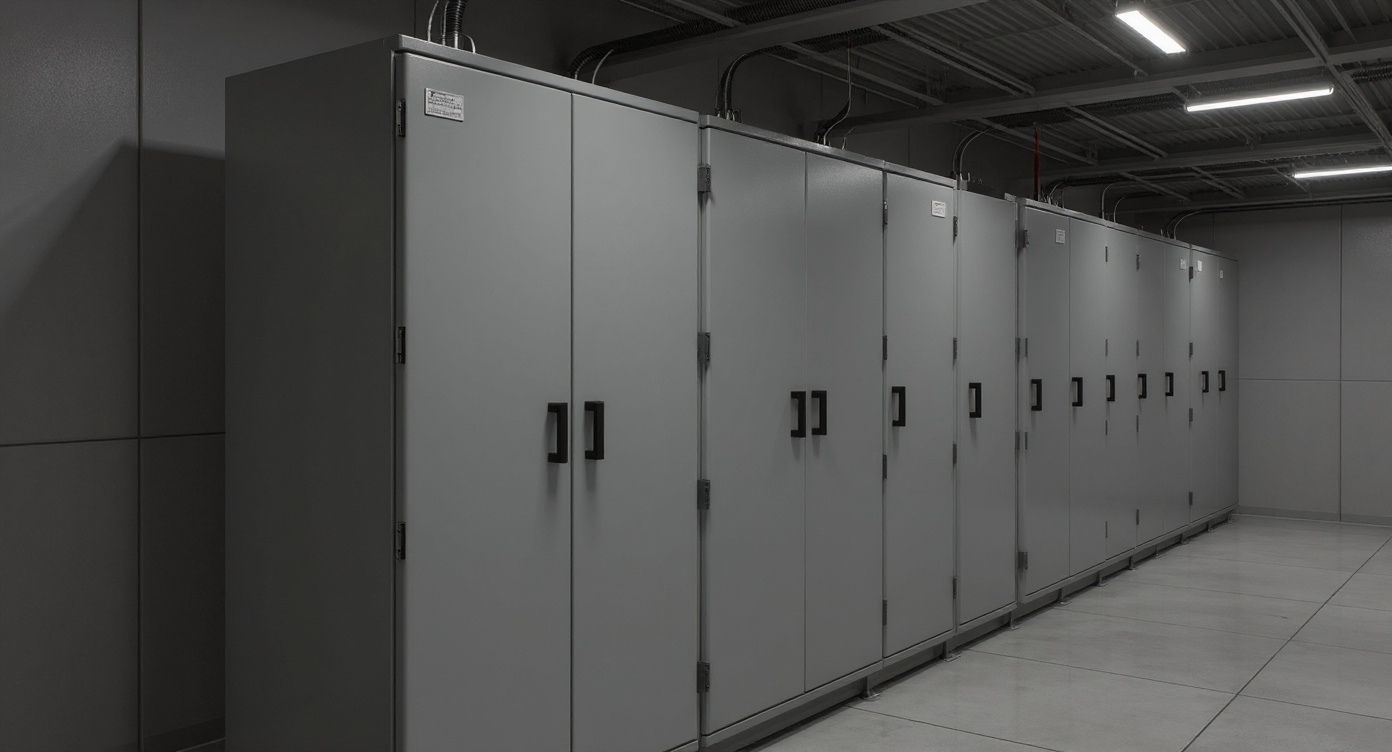
That depends on the selected configuration, local code, spacing requirements, ventilation, and fire review. Don’t assume you can tuck a cabinet anywhere with spare square footage. You probably can’t.
What I’d actually do before signing
First, I’d pull a full year of interval data.
Second, I’d model only the savings categories I can prove from that data and tariff. No wishful value stack. No “future market participation” hand-waving unless there’s a signed program path.
Third, I’d verify that the exact Integrated Energy Storage Cabinet configuration matches the real job, including enclosure, controls, protection, connectors, and operating mode.
Then I’d ask for these documents before sending a deposit:
– Single-line diagram
– Commissioning scope
– EMS control description
– Fault and alarm list
– Warranty terms with throughput or cycle limits
– Code and certification package
– Estimated annual service cost
No paperwork, no deal.
Bottom line
A C&I energy storage system is worth it when it attacks a known cost with measured data. Peak shaving. Solar capture. Outage prevention. Feeder constraint relief.
Not vibes.
For the exact Integrated Energy Storage Cabinet product type, the appeal is that it packages the battery, controls, safety systems, and enclosure into a commercial cabinet format instead of asking you to assemble a Frankenstein system from unrelated parts. That can save headaches. But it still won’t rescue a weak tariff, a bad load profile, or a site that doesn’t need storage.
That’s the honest answer.