


Active balancing is worth paying for in high-cycle C&I ESS because it preserves usable capacity and reduces cell-voltage spread. That’s the short answer.
The longer answer is where people get tripped up.
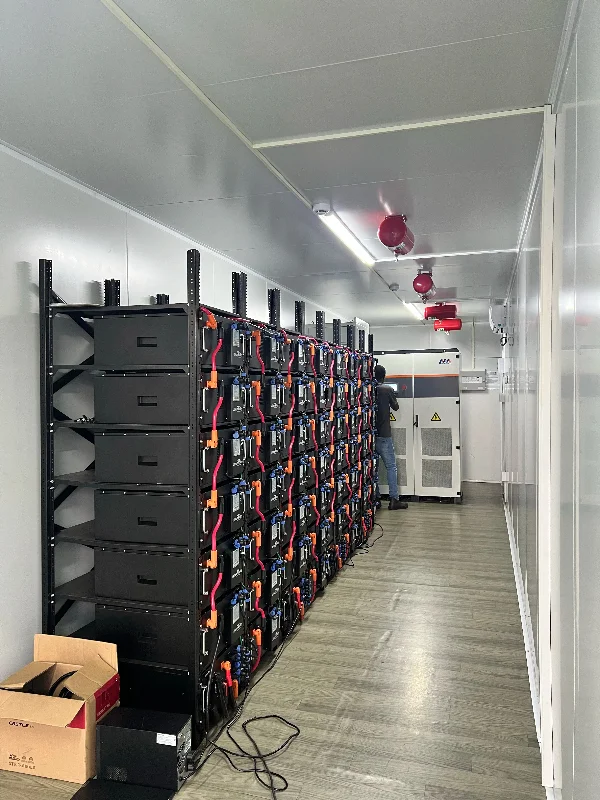
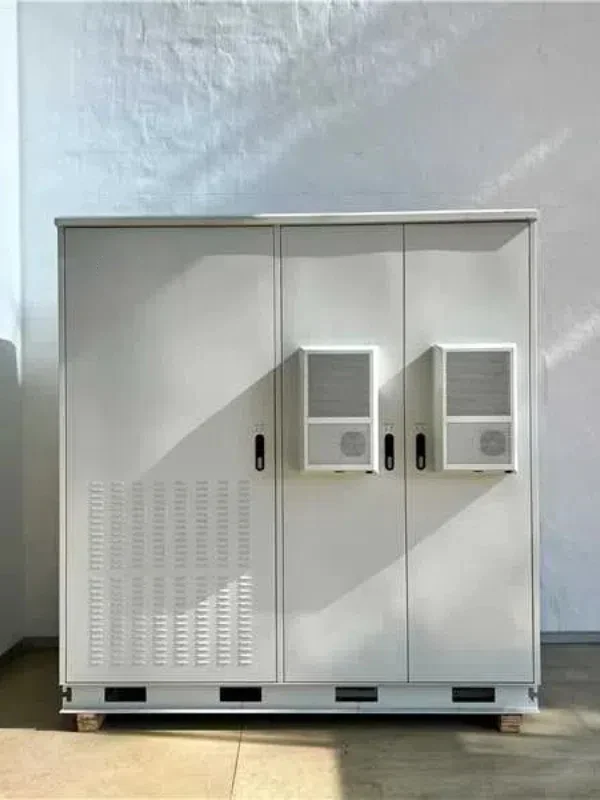
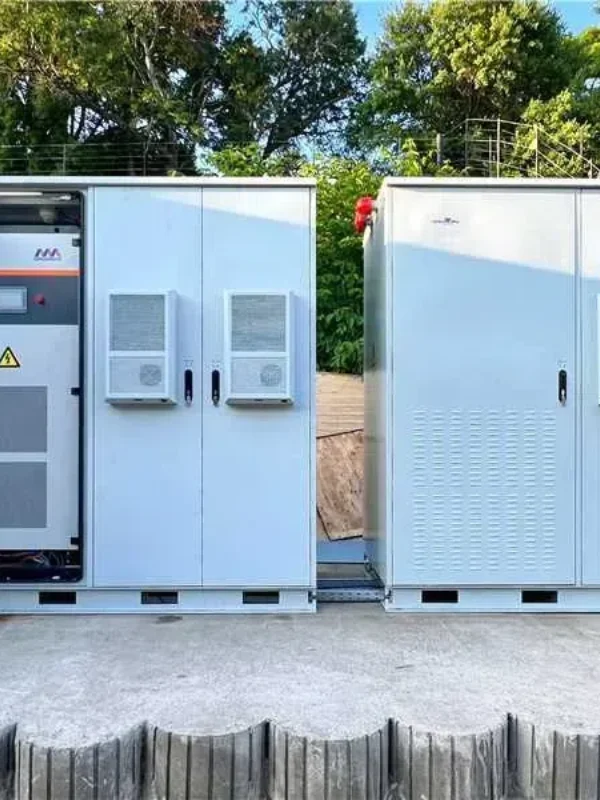
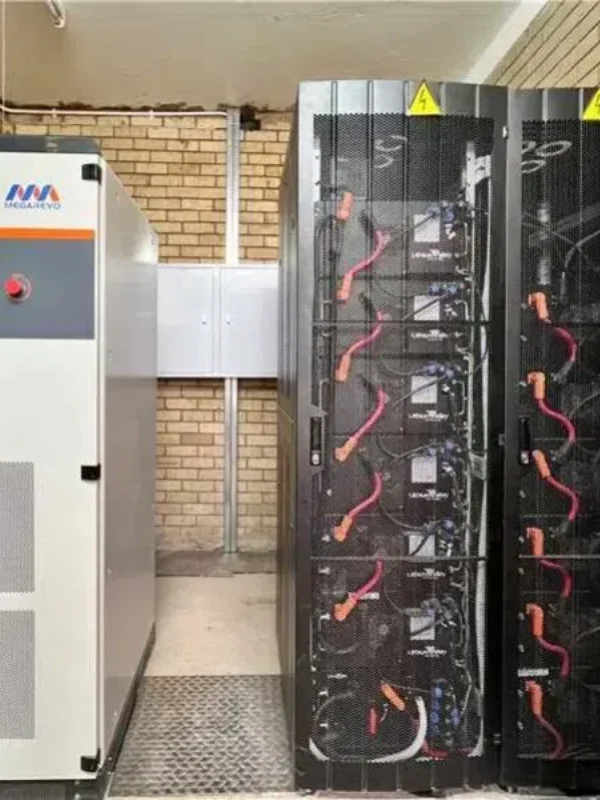
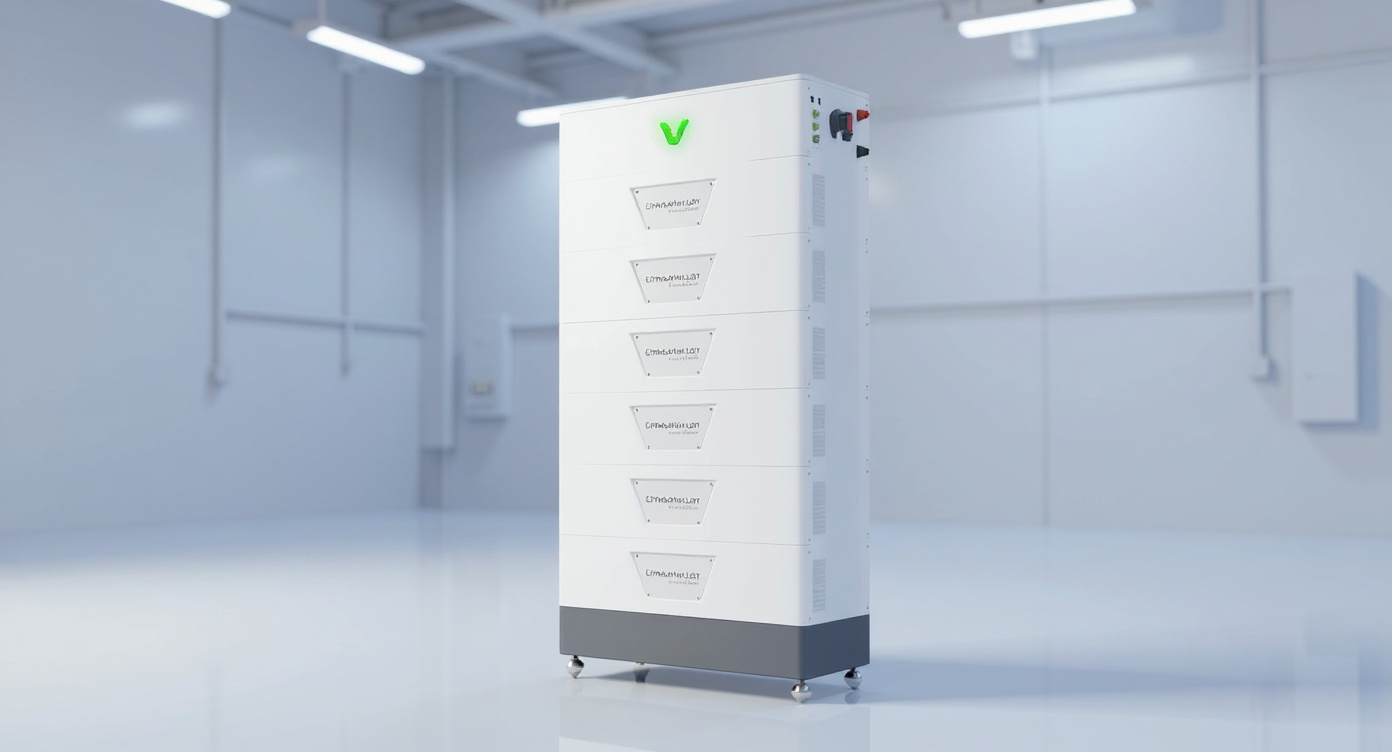
In a large-scale commercial and industrial high-voltage LiFePO4 energy storage system, the product is not a hobby battery, not a wall pack, and not a generic inverter battery. It’s a modular bank of metal battery cabinets, technical battery-module assemblies, blue prismatic cells inside silver or white enclosures, navy engineering typography on the interfaces, and those blue-green energy accents every serious ESS catalog seems to use now. That physical format matters because balancing in a 48V shed battery and balancing in a high-voltage cabinet line-up are not the same problem.
I’ve watched operators obsess over rated kWh while ignoring cell spread. Then six months later they call because one cabinet hits limits before the rest and peak shaving starts missing the window. Same site. Same hardware. Different outcome, just because commissioning and balancing behavior got treated as a footnote.
And one honest thing most articles won’t say: if your system barely cycles, active balancing can be overpriced insurance. Nice to have. Not magic.
Title tag
Active Cell Balancing Energy Storage for C&I ESS

What active cell balancing energy storage actually means
In plain English, active cell balancing energy storage means the system moves energy from stronger cell groups to weaker ones instead of burning the difference off as heat.
That sounds minor. It isn’t.
In a high-voltage LiFePO4 ESS cabinet, one high cell or one low cell group can force the whole string to stop charging or discharging early. So you end up with energy stranded inside the cabinet, unavailable when the EMS wants it. On paper you bought 96kWh. In operation you may not get that window if cell spread grows.
Passive balancing still has a place. It’s simpler, cheaper, and common. But passive balancing works by bleeding excess energy through resistors, which creates heat and throws energy away. In a big cabinet system with repeated cycling, that trade-off starts to look less attractive.
Not fatal. Just inefficient.
The U.S. Department of Energy has published broad guidance on battery management and state-of-charge behavior in larger systems, and NREL has done the same for grid storage control stacks. Those papers don’t exist to sell cabinets, which is why they’re worth reading. Useful references:
– U.S. DOE Energy Storage Program: https://www.energy.gov/oe/energy-storage
– NREL grid energy storage resources: https://www.nrel.gov/grid/energy-storage.html
– UL 1973 standard overview for stationary batteries: https://standardscatalog.ul.com/standards/en/standard_1973
– IEC 62619 overview for industrial lithium cells and batteries: https://webstore.iec.ch/publication/22900
Why active cell balancing energy storage matters more in modular metal battery cabinets
Small packs can hide mismatch for a while. Big ESS cabinets can’t.
Once you’re dealing with modular metal battery cabinets in a commercial room, stacked or lined up in rows, each cabinet carrying its own BMS layer and operating as part of a higher-voltage string, little voltage differences stop being trivia. They become dispatch problems. Backup-runtime problems. Demand-charge problems.
A site running daily peak shaving might cycle 250 to 320 days a year. At that rate, weak cell groups show themselves fast. A standby-only site may take much longer to notice. This won’t work the same way if the battery spends most of its life sitting at mid-state of charge and only discharges during a few utility outages a year.
I learned that the hard way on a food-processing project in 2022. The customer wanted the cheapest possible control package because the quote was already stretching them. We pushed back on thermal monitoring and balancing visibility, they pushed back on budget, and we all compromised in the wrong place. By month eight, one cabinet string kept reaching cutoff early during the afternoon peak period. The cells were fine. The balancing behavior during commissioning wasn’t.
Expensive lesson. For them and for us.
How active balancing works inside a high-voltage LiFePO4 ESS
The balancing circuit monitors cell or module voltage differences, then transfers charge from higher-voltage groups to lower-voltage groups.
That’s the mechanism.
But in practice, active cell balancing energy storage only earns its keep when it is tied to the rest of the cabinet architecture:
– the BMS that measures voltage, current, temperature, insulation, and fault states
– the EMS that decides when to charge, discharge, hold reserve, or chase tariff windows
– the thermal design, often forced-air in commercial indoor cabinets
– the communication layer, usually CAN, RS485, and sometimes Ethernet for site supervision
This is why “has active balancing” on a spec sheet tells you almost nothing by itself.
A proper C&I ESS should show you how balancing fits into the whole stack. For one example, the LITHIUMVALLEY FLEX16 High Voltage C&I Energy Storage System presents active balancing together with BMS control, EMS integration, remote monitoring, forced-air cooling, and cabinet-level expansion. That’s the correct frame. System first, feature second.
Active vs passive balancing, with the trade-offs people actually care about
Here’s the comparison buyers ask for after we strip away the buzzwords.
| Balancing method | What happens to excess energy | Heat impact | Parts complexity | Better fit | Real-world note |
|---|---|---|---|---|---|
| Passive balancing | Burned through resistors | Higher | Lower | Small packs, light-duty systems | Cheap and common, but waste adds up in daily cycling |
| Active balancing, switched capacitor | Moved between cells in steps | Lower | Medium | Mid-size ESS modules | Good when integration is done well |
| Active balancing, inductive/transformer based | Redirected with power transfer hardware | Lower | Higher | Large cabinet ESS | Better for bigger packs, but not cheap |
| No meaningful balancing | Little to none beyond basic protection | Varies | Low | Rarely a good idea in C&I | Fine until it isn’t |
| Mixed-bank retrofit with balancing add-on | Tries to correct mismatch after the fact | Medium | Medium to high | Last-resort retrofit jobs | Usually more compromise than solution |
The honest trade-off is simple. Active balancing saves more usable energy over time, but the electronics, controls, and validation work cost more.
And honestly, if a vendor can’t explain its balancing current, trigger logic, temperature interaction, and BMS coordination, I don’t care how pretty the cabinet render is. Skip it.
Where active cell balancing energy storage helps, and where it won’t save you
Active balancing helps when the cells are healthy but drifting within normal tolerance.
It can improve:
1) Usable capacity retention
One early-reaching cell group limits the whole cabinet. Keep the spread tighter and more of the nameplate stays usable.
2) Voltage consistency near top and bottom of charge
This is where state-of-charge estimates can look messy. Especially near full.
3) Cabinet-to-cabinet consistency in modular ESS lines
If one cabinet lags, the operator feels it at the system level.
4) Repeated peak-shaving and load-shifting duty
Frequent cycling exposes imbalance much sooner than standby service.
5) Thermal stress from unnecessary bleed-off
Passive balancing dumps excess as heat. In a dense indoor battery room, every watt matters.
But active balancing will not fix:
– a damaged cell
– poor crimping or loose bus connections
– bad airflow paths inside the enclosure
– mixed old and new modules pretending to be one matched bank
– inverter controls that call for charge/discharge behavior outside sane battery limits
That last one gets overlooked.
I’ve seen operators blame the battery for dispatch misses that were caused by site control logic hammering the system into awkward charge windows. The cabinet was doing what it was told. Badly told, but still.
Specs that matter more than brochure language
If you’re comparing active cell balancing energy storage cabinets, ask for hard numbers. Not adjectives.
Here’s the short list I’d want before I take any quote seriously:
| Spec item | Why it matters | Good question to ask vendor |
|---|---|---|
| Cabinet nominal energy, for example 96kWh | Sets module count and site economics | Is this nominal, usable, or tested under a specific C-rate? |
| Cycle life, for example 6,000 cycles at 80% DoD | Indicates expected wear window | At what temperature, C-rate, and end-of-life capacity? |
| Balancing strategy | Tells you if drift is managed by moving or burning energy | What balancing current and activation window do you use? |
| Operating temperature, for example -20°C to +55°C | Affects warranty reality and HVAC planning | What derating applies at 45°C or below 0°C? |
| Communications, such as CAN, RS485, Ethernet | Determines integration pain | Which protocols are standard and which cost extra? |
| Enclosure and ingress rating, for example IP54 indoor | Defines installation fit | Is the rating for the full cabinet or only subassemblies? |
Those are not glamorous questions. They’re the ones that save money.
A fact block on the example system
Published features on the product page include:
– nominal 96kWh per cabinet
– active cell balancing
– LiFePO4 chemistry
– forced-air cooling
– CAN, RS485, and Ethernet communications
– grid-tied, off-grid, peak-shaving, and emergency-backup modes
– IP54 indoor protection
– 6,000 cycles at 80% DoD
One caution, because trust matters more than pretending every spec page is perfect: if a vendor page lists 96kWh per cabinet, 12 cabinets maximum, and 3.08MWh total, the arithmetic needs confirmation before design signoff. Twelve times 96kWh equals 1,152kWh, not 3.08MWh. That could be a cabinet/string definition issue, a revision issue, or a simple page error. Either way, verify it in writing.
That kind of check is boring. Do it anyway.
Competitor reality check, because buyers compare these systems anyway
People always ask who else is in the conversation. Fair enough.
For large-scale commercial and industrial high-voltage LiFePO4 ESS cabinets, buyers often compare against brands like Sungrow, CATL, BYD, Narada, Pylontech, Hithium, and Tesla Megapack on bigger utility-adjacent work. Not all are apples to apples. Cabinet format, DC coupling, inverter pairing, fire strategy, thermal method, and project size vary a lot.
A few broad market observations from recent quoting:
– Pylontech commercial HV racks can land near $105 to $138 per kWh at battery-only level in some export markets, before PCS, HVAC, fire suppression, and integration.
– BYD Battery-Box Commercial style solutions often end up higher once full integration is included, commonly $128 to $167 per kWh battery-side depending on region and order size.
– CATL EnerC / larger containerized platforms are usually quoted as project packages, not neat cabinet prices. Effective installed figures can move from $186 to $274 per kWh depending on scale and grid scope.
– Tesla Megapack is in a different class, but public project chatter often implies installed pricing well above cabinet-only systems once power conversion and EPC are counted.
Those numbers move. A lot. Freight, tariffs, UL listing scope, and PCS brand can swing them by double-digit percentages.
So no, there is no honest universal price.
Internal system architecture matters more than the balancing checkbox
A high-voltage ESS cabinet is a stack of dependencies.
Cells inside modules. Modules inside metal cabinets. Cabinets inside a DC architecture. That battery architecture tied to BMS, then EMS, then PCS, then site controller, then utility or load profile. If one layer is sloppy, active cell balancing energy storage won’t rescue the whole project.
That is why I’d rather buy a coherent cabinet platform than a pile of “best in class” parts bolted together by whoever won the cheapest subcontract.
If you want to understand the adjacent issues, a good follow-on read would be a BMS design explainer, a thermal management article, and a C&I commissioning checklist. The original draft only provided one internal link, so I’m keeping it here as required, but in a real content library those supporting pages should exist.
For the product example, the internal reference remains the same: LITHIUMVALLEY FLEX16 High Voltage C&I Energy Storage System.
And again where system integration is being discussed in cabinet context: LITHIUMVALLEY FLEX16 High Voltage C&I Energy Storage System.
And where buyers need the source product page for direct verification: LITHIUMVALLEY FLEX16 High Voltage C&I Energy Storage System.
When active cell balancing energy storage is worth paying for
Here’s my rule.
Pay for active balancing when the ESS will do real work.
That means:
– daily or near-daily cycling
– peak shaving tied to utility tariff windows
– backup support where runtime confidence matters
– microgrid operation with repeated partial cycling
– sites with multiple cabinets where one weak string can pull down the rest
It matters less when the battery mostly sits charged and waits for rare outages.
Not never. Just less.
If your duty cycle is light, I’d spend first on service access, logging quality, temperature control, and competent commissioning. A passive-balanced system with good controls can outperform an active-balanced system that was installed carelessly. That’s the part spec sheets never mention.
FAQ: real questions buyers and operators ask
What is active cell balancing energy storage?
It is a battery-system design approach where energy is transferred from higher-voltage cells or modules to lower-voltage ones, instead of being wasted as heat. In a high-voltage LiFePO4 ESS cabinet, this helps keep the full string usable for longer and reduces early charge or discharge cutoffs caused by cell spread.
Is active balancing better than passive balancing in LiFePO4 ESS?
For high-cycle commercial and industrial systems, usually yes. Active balancing keeps more energy inside the pack and adds less heat. Passive balancing costs less and is simpler, so it can still make sense in small or lightly used systems.
Does active balancing increase cycle life?
It can help preserve usable capacity and reduce stress from imbalance, but it does not turn a weak cell into a healthy one. Cycle life still depends on temperature, charge/discharge rate, depth of discharge, and cell quality.
Can active balancing fix a bad battery module?
No. If a module has real degradation, internal resistance rise, swelling, connection damage, or sensor faults, balancing won’t repair it. It only manages normal mismatch across healthy cells or groups.
How much balancing current should a commercial ESS have?
There is no single correct number. The right balancing current depends on cell capacity, module architecture, drift rate, and the operating window. In procurement, ask the vendor for balancing current, activation thresholds, and whether balancing works during charge, discharge, rest, or all three.
Does balancing work during charging and discharging?
Depends on design. Some systems balance during charge only. Others balance during rest states or while charging and discharging. Don’t assume. Read the manufacturer data or ask the engineer responsible for the BMS design.
Why does my ESS show jumpy state of charge near full charge?
Often it’s because cell-voltage differences widen near the top of charge, where voltage-based SOC estimation gets touchy. It can also be caused by BMS calibration, temperature spread, or current-sensor drift. Balancing may help, but it is not the only cause.
Should I mix old and new LiFePO4 battery modules in one cabinet line?
I wouldn’t unless the manufacturer has a defined method and signs off on it. Mixed age and mixed resistance create uneven behavior fast. Stronger modules push, weaker ones limit, and the whole system gets harder to manage.
Is active cell balancing energy storage worth it for backup-only systems?
Sometimes, but not always. If the battery sees very few cycles each year, the economics are weaker. For backup-only duty, I’d put more weight on monitoring quality, temperature control, serviceability, and proven fault handling.
What should I verify before buying a modular battery cabinet ESS?
Verify cabinet energy, usable energy, balancing method, BMS protections, thermal design, communication protocols, installation rating, fire strategy, warranty terms, and all arithmetic on expansion claims. Especially the arithmetic.
Final take
Active cell balancing energy storage is not a buzzword feature in a high-voltage LiFePO4 ESS. In a modular commercial cabinet system, it directly affects usable capacity, voltage spread, thermal behavior, and how predictable the system feels after months of cycling.
But it has limits.
If the cells are unhealthy, the controls are poor, or the installation is sloppy, active balancing won’t save the project. It helps healthy systems stay healthy. That’s the real value.
For buyers looking at modular metal battery cabinets with silver or white enclosures, blue-cell module assemblies, navy engineering labeling, and blue-green energy accents, the right question is not just whether the product includes active balancing. The right question is whether that balancing is integrated with the BMS, thermal design, communications, and operating modes in a way that holds up in actual commercial service.
That’s where the money is won or lost.