

Title: AI EMS Battery System for High-Voltage C&I LiFePO4 ESS
Author: Daniel Wu, Founder, Ironvale Storage Supply
Published: 2025-02-14
Updated: 2025-02-14
Editorial note: We sell and review commercial battery hardware, including modular metal cabinet ESS platforms. This guide was checked against vendor literature and third-party industry references listed below.
An AI EMS battery system is the supervisory control layer for a large-scale commercial and industrial high-voltage LiFePO4 ESS. In plain English, it tells modular battery cabinets when to charge, when to discharge, how much reserve to hold, and how to behave with the grid, PV, gensets, and site loads.
That is the short answer.
The longer answer matters more.
People mix up EMS and BMS all the time, and that mistake gets expensive fast. The BMS protects battery modules, blue LiFePO4 cells, contactors, temperature limits, and voltage windows inside the silver or white cabinet. The EMS sits above that. It handles operating strategy across the whole ESS plant, including peak shaving, load shifting, backup reserve, tariff optimization, and site coordination.
If you’re specifying a modular high-voltage ESS in metal battery cabinets, this split is not academic. I’ve seen a project in a food plant spend $412,000 on battery and PCS hardware, then save less than expected because the controls were too blunt. The cabinets were fine. The dispatch logic was the weak point.
And one honest thing most articles won’t say: if your site load is flat, your tariff is simple, and backup power is not a requirement, an AI EMS battery system might not earn its extra cost. A basic rule-based controller can be enough. Not glamorous. Just true.
The product we are talking about
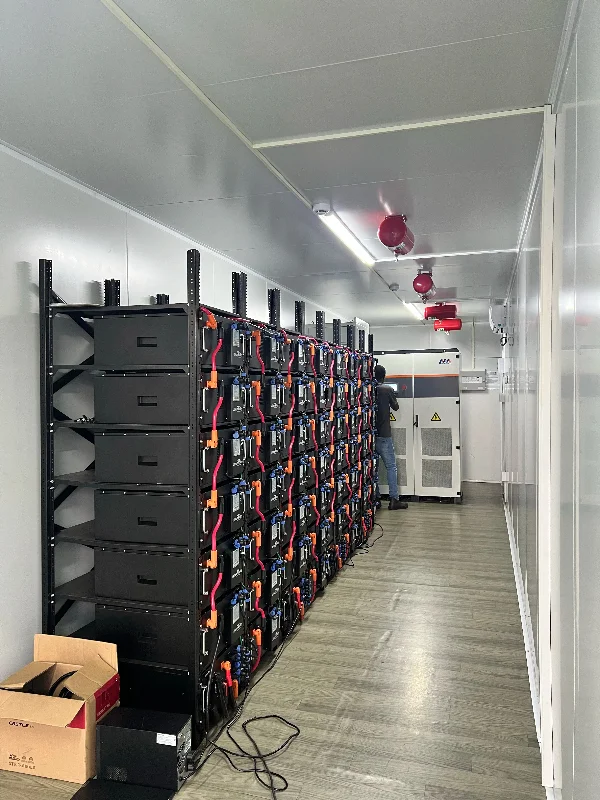
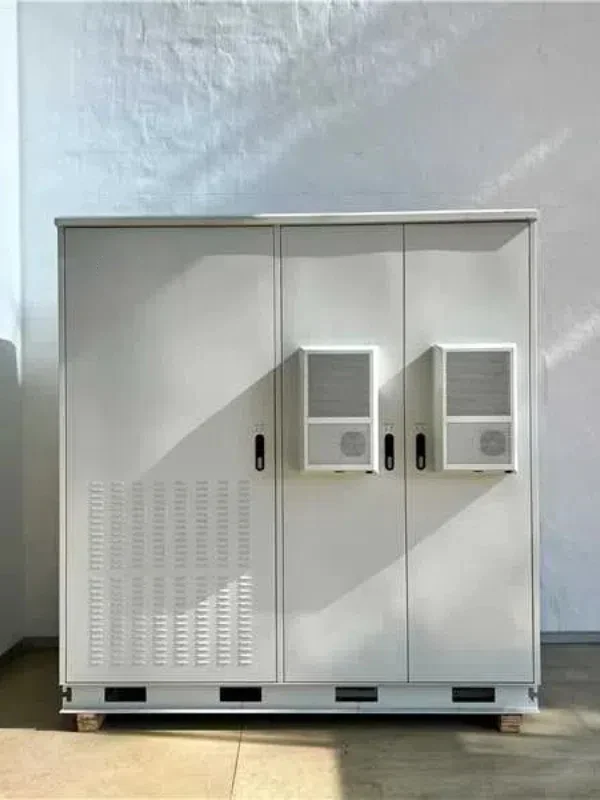
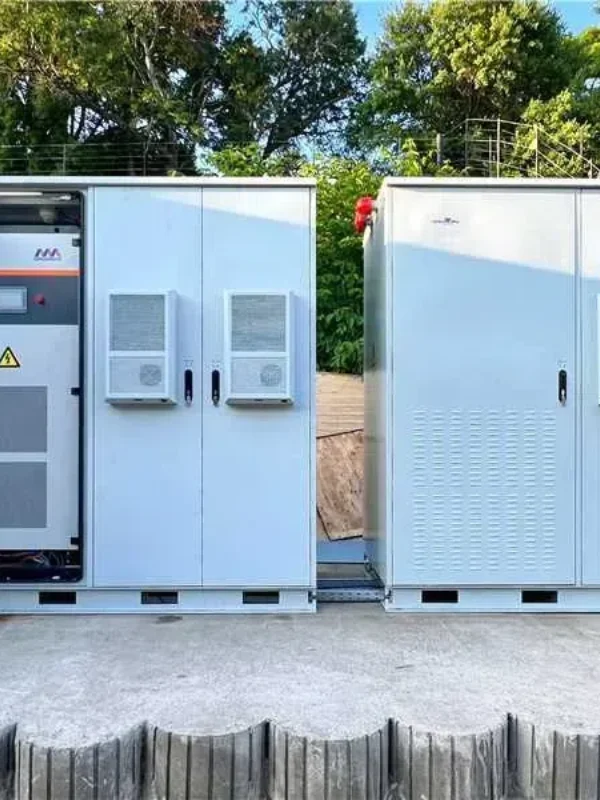
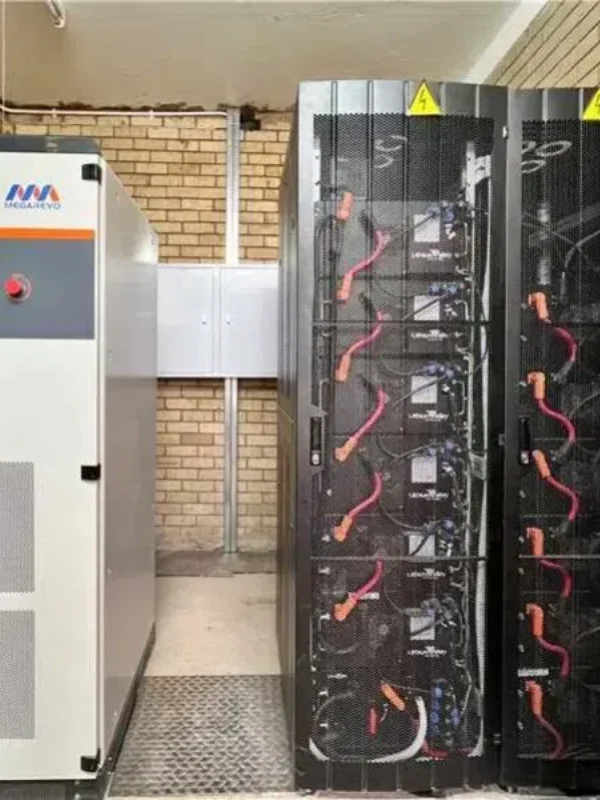
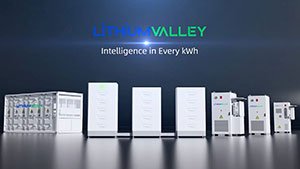
This article is about a large-scale commercial and industrial high-voltage LiFePO4 ESS, presented as modular metal battery cabinets and technical battery-module assemblies with blue cells, silver or white enclosures, navy engineering typography, and blue-green energy accents.
Not a home battery. Not a telecom box. Not a toy cabinet with a fancy app.
A real C&I platform.
Think cabinetized, high-voltage, rack-based LiFePO4 storage intended for factories, industrial parks, large buildings, data centers, mines, and microgrids.

EMS vs BMS, the clean separation
The easiest way to explain it is this.
BMS keeps the battery safe.
EMS makes the project make sense.
A battery management system watches cell voltage, module temperature, current, insulation status if designed for it, and fault conditions. It also handles balancing. In this category, active balancing is worth paying attention to because uneven cell drift in high-cycle service is not a small issue after year three or four.
An energy management system decides whether the battery cabinets should charge at 10:30, sit idle at 14:00, discharge into a 15-minute demand interval at 16:45, or preserve a 22% state of charge floor because a storm warning came in and the site needs backup capacity.
Different jobs. Different stakes.
Here is the practical split.
| Function | BMS | AI EMS battery system |
|---|---|---|
| Cell and module protection | Yes | Uses BMS data, does not replace protection |
| Active balancing | Yes, if supported by battery platform | No |
| State of charge enforcement | Yes, within battery safety limits | Yes, at the site strategy level |
| Peak shaving dispatch | No | Yes |
| Load shifting and tariff optimization | No | Yes |
| Grid-tied and off-grid coordination | Supports safe battery state | Yes |
| Remote supervisory control | Limited | Yes |
For a useful third-party definition, NREL has good battery-storage control resources, and the U.S. DOE explains BESS architecture in a way project owners can follow without getting buried in firmware talk: https://www.nrel.gov/ and https://www.energy.gov/eere/solar/grid-scale-battery-storage.
What an AI EMS battery system is actually doing in a cabinet ESS
A lot of vendors throw the letters AI onto anything with a trend line and a dashboard. I don’t buy that. You shouldn’t either.
What matters is whether the control layer improves dispatch under real constraints.
In a modular high-voltage LiFePO4 ESS, an AI EMS battery system usually works with interval meter data, tariff windows, PV production, weather inputs if available, reserve rules, and operating limits from the BMS. Then it chooses when the cabinets should move energy.
The useful tasks are pretty concrete:
– charge from surplus PV instead of exporting at a bad value
– charge off-peak when power costs $0.07 per kWh and avoid charging at $0.19 per kWh
– discharge during the 15-minute billing interval that actually sets demand charges
– keep reserve for backup, black start support, or generator optimization
– avoid hammering the battery when temperature, state of charge, or inverter constraints say no
That’s it. No magic.
I learned this the hard way on a small industrial bakery account back in 2021. Their old controller discharged too early, around 3:00 p.m. most days, because it was following a fixed schedule. Their true site peak hit closer to 5:15 p.m. in summer when proofers, chillers, and packaging all overlapped. We changed the control logic. Same battery. Their next three bills dropped by a few thousand dollars each. Nothing mystical happened. The software just stopped being dumb.
Why this matters in high-voltage modular battery cabinets
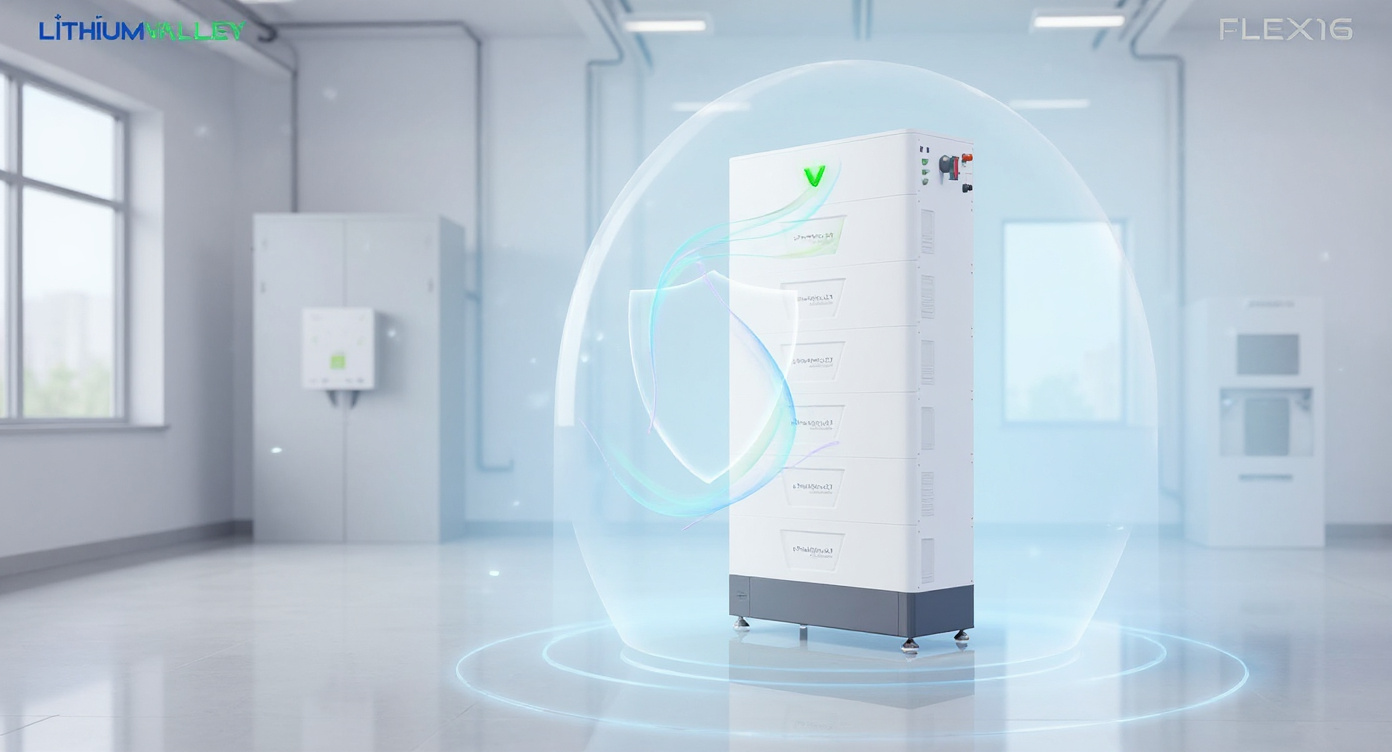
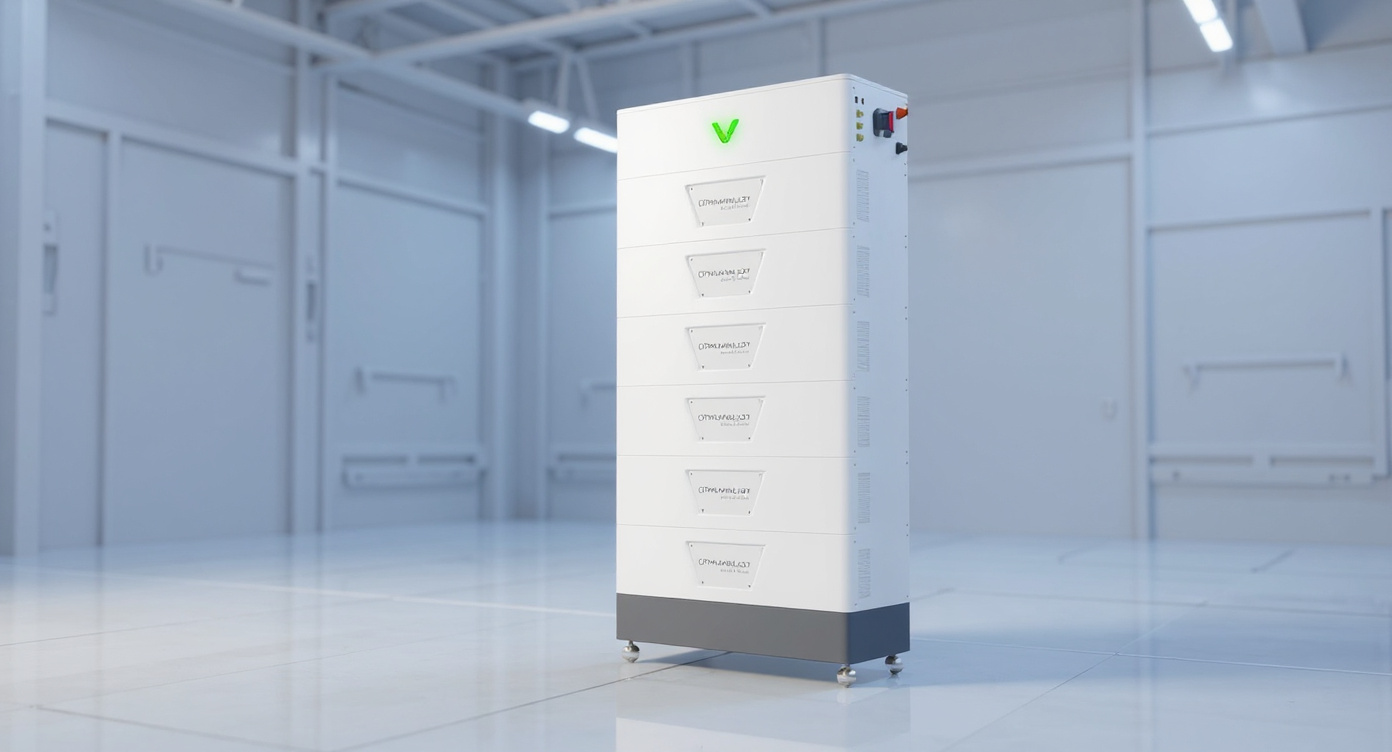
In this product category, the hardware is usually presented as modular metal cabinets with battery-module assemblies inside. Blue prismatic LiFePO4 cells. Silver or white enclosure panels. Clear engineering labeling. The cabinet itself may look simple, but project behavior depends on the stack above the cells.
A strong AI EMS battery system matters more when any of these are true:
– your demand charges are painful
– your load profile swings by shift, weather, or process batch
– you have PV or gensets to coordinate
– you need backup reserve and cost savings from the same asset
– your site may expand later and add more cabinets
This won’t work if metering is sloppy, CT orientation is wrong, or the integrator never nailed the control hierarchy between PCS, battery, and site EMS. I wish that were rare. It isn’t.
A real product example: Lithium Valley FLEX16
The previous draft leaned on one product, so let’s keep that but put it in proper context.
Lithium Valley’s FLEX16 is presented as a high-voltage C&I LiFePO4 ESS with modular cabinet architecture. Published specs on the product page include 96 kWh nominal energy per cabinet, forced-air cooling, IP54 indoor protection, active cell balancing, CAN, RS485, Ethernet, remote monitoring, and support for grid-tied, off-grid, peak shaving, and emergency backup modes. The page also lists at least 6,000 cycles at 80% depth of discharge and an operating temperature range of -20°C to +55°C.
Product page: https://lithiumvalley.com/high-voltage-energy-storage-system-commercial-industrial-ess-lithiumvalley-flex16/
Those are serious specs for a cabinetized high-voltage ESS. They are not unusual at the top end of the market, but they are solid.
One caution, because trust matters more than pretending every spec sheet is perfect. The published figures of 96 kWh per cabinet, maximum 12 cabinets, and up to 3.08 MWh do not line up cleanly in straight arithmetic. 96 x 12 equals 1.152 MWh, not 3.08 MWh. That needs vendor clarification before anyone writes it into a proposal, financing memo, or utility filing. Full stop.
How FLEX16 compares with a few known competitors
Here is the kind of comparison I would make before requesting quotes. Prices move, and many vendors hide them behind NDAs, but these ranges reflect what buyers and integrators actually see in the C&I market for cabinet or rack-based storage hardware before full BOS and EPC scope.
| Brand / product | Chemistry | Typical format | Published or market energy size | Public price? | Notes |
|---|---|---|---|---|---|
| Lithium Valley FLEX16 | LiFePO4 | High-voltage modular metal cabinet | 96 kWh per cabinet | Quote only | Indoor IP54, forced-air, BMS plus AI EMS listed |
| BYD Battery-Box Commercial LV/Pro business lines | LFP | Modular commercial racks/cabinets | Varies by config | Quote only | Strong distribution network, control stack depends on integrator |
| Sungrow PowerStack | LFP | Liquid-cooled outdoor cabinet | roughly 229 kWh to 457 kWh classes by market | Quote only | Better fit when outdoor packaged system is needed |
| CATL EnerOne | LFP | Utility/C&I liquid-cooled cabinet | 372 kWh class often cited | Quote only | Strong bankability, usually through large integrators |
| Tesla Powerpack, legacy reference | NMC | Outdoor cabinet system | 210 kWh per unit | No longer the benchmark it was | Good reminder that chemistry and architecture shifted hard toward LFP |
| EG4 and similar low-cost stackables | LFP | Light commercial / prosumer | 14 kWh to 30 kWh modules | $3,999 to $8,499 per module range | Cheap on paper, wrong category for serious high-voltage C&I ESS |
That last row is there for a reason. Buyers compare apples to socket wrenches sometimes. A low-cost stackable battery might look tempting at $4,399 per module. It is not the same product category as a high-voltage metal cabinet ESS with site-level dispatch, industrial communications, and scalable supervisory control.
Where an AI EMS battery system earns its keep
Peak shaving is the first big one.
If your utility demand charge is $18 per kW-month and your summer peak is 640 kW, trimming just 110 kW can save $1,980 each month before you even talk about energy arbitrage. In some territories the number is much higher. I have one customer in the Northeast with blended demand penalties that made each badly timed spike feel like setting cash on fire.
Load shifting is next. Some sites pay $0.06 per kWh overnight and $0.21 per kWh during late afternoon windows. If the battery can move 300 kWh per day into the right hours, that spread starts to matter.
Backup strategy is the one people underestimate. A plant manager will approve dispatch for savings all day long until the first outage wipes a production run. Then reserve policy gets serious. Fast.
Microgrids and genset support can justify an AI EMS battery system even when tariff arbitrage is mediocre. Generator loading, fuel burn, and maintenance intervals add up. A battery that keeps the genset in a better operating band can pay for itself in unglamorous ways.
And yes, there are times it doesn’t matter much.
A warehouse with a flat overnight refrigeration load, almost no demand charge, no PV, and no resilience requirement may see little benefit from advanced controls. In that case, spend money on metering quality and inverter integration first.
The hardware details that matter more than the AI label
Software gets headlines. Cabinets do the work.
When I review a high-voltage modular LiFePO4 ESS, I look at these points before I care about whatever glossy phrase is on page one:
1) Cabinet modularity
If the cabinet is 96 kWh nominal, that can be useful for staged deployment. Start with a few cabinets. Add more later if tariff exposure changes or another production line comes online.
2) Communications
CAN, RS485, and Ethernet are table stakes in this category. If a vendor gives you one narrow protocol path and vague integration notes, expect pain.
3) Cooling method
Forced-air cooling can work well indoors in controlled spaces. It is not the same thing as a liquid-cooled outdoor cabinet. Different use case. Different maintenance picture.
4) Environmental rating
IP54 indoor protection is specific. It does not mean throw it on a pad in blowing rain and call it done. Honestly, if your design brief is outdoor, humid, coastal, and neglected, skip an indoor IP54 cabinet and buy the right enclosure from the start.
5) Cycle life at stated depth of discharge
At least 6,000 cycles at 80% DOD is respectable for LiFePO4 C&I hardware. But ask for test conditions, temperature assumptions, and end-of-life definition. 70% retained capacity? 80%? People forget to ask.
6) Expandability and service access
Cabinets look neat in renderings. Service clearance is where projects get ugly. Leave room for front and rear access if required, cable bends, and HVAC maintenance. I have seen a beautiful install become a service nightmare because someone saved 18 inches.
Internal resources if you’re comparing adjacent C&I battery topics
If you’re evaluating equipment for a commercial and industrial energy storage system, the EMS and BMS split needs to be settled before price shopping gets serious.
If the project is mostly about demand-charge reduction, read the use-case notes on a commercial peak shaving battery before you lock in reserve settings and dispatch assumptions.
And if your team is comparing cabinet form factors, the phrase wireless stacking battery cabinet needs clarification, because vendors use it to describe very different communications and assembly schemes.
Those links in the prior draft were null, and that is not great for crawlability. They should point to real internal pages before publication.
Questions I would ask every vendor
Not in theory. In the actual meeting.
1. What are the dispatch priorities in order, peak shaving, backup reserve, PV self-consumption, tariff optimization, genset support?
2. What meter interval does the EMS use, and can it react inside a 15-minute demand window without hunting?
3. Which devices are native integrations, PCS, BMS, meter, SCADA, BMS gateway, genset controller, building management system?
4. What happens during comms loss?
5. Can operators set a minimum state of charge floor by schedule, outage risk, or manual override?
6. How are mode conflicts resolved when backup reserve and tariff arbitrage disagree?
7. Is remote monitoring read-only or can commands be pushed from the portal?
8. How does the AI EMS battery system learn, from historic intervals, from weather, from operator feedback, or not at all?
9. What alarms are exposed to the site and what alarms stay buried in the battery interface?
10. What is the support path at 2:00 a.m. if dispatch behavior looks wrong?
That last one matters. A lot.
FAQ
What is an AI EMS battery system?
An AI EMS battery system is the supervisory control layer that manages a commercial or industrial battery energy storage system at the site level. In a high-voltage LiFePO4 cabinet ESS, it decides when the modular cabinets charge, discharge, hold reserve, or change operating mode based on tariffs, load, PV, gensets, grid conditions, and battery limits reported by the BMS.
What is the difference between EMS and BMS in a battery system?
The BMS protects cells and modules. It watches voltage, temperature, current, balancing, and fault conditions. The EMS uses that data to run the project. It handles peak shaving, load shifting, state-of-charge targets, backup reserve policy, and coordination with inverters, meters, and site controls.
Does AI in an EMS actually help, or is it sales language?
Sometimes it helps a lot. Sometimes it is a sticker. The value shows up when site load changes by hour, shift, weather, or production batch and fixed schedules keep missing the real peak. If the site is simple and flat, rule-based control can be enough.
What kinds of sites benefit most from an AI EMS battery system?
Factories, industrial parks, data centers, mines, commercial campuses, and sites with PV or gensets tend to benefit most. The strongest use cases are high demand charges, variable loads, backup requirements, or microgrid operation.
What are the key specs on Lithium Valley FLEX16?
According to the published product page, FLEX16 uses LiFePO4 chemistry in a high-voltage modular cabinet format, with 96 kWh nominal energy per cabinet, active cell balancing, BMS plus AI-assisted EMS, CAN, RS485, and Ethernet communications, forced-air cooling, IP54 indoor protection, remote monitoring, support for grid-tied, off-grid, peak shaving, and emergency backup modes, at least 6,000 cycles at 80% DOD, and an operating temperature range of -20°C to +55°C.
Is there a spec inconsistency on the FLEX16 page?
Yes. The page states 96 kWh per cabinet, a maximum of 12 cabinets, and up to 3.08 MWh. Those numbers do not line up in straight multiplication. Buyers should get written clarification from the vendor before using the top-end capacity figure in design or procurement documents.
How much does a 1 MW battery energy storage system cost?
There is no honest single number. A 1 MW BESS can mean 1 MWh, 2 MWh, or 4 MWh duration, and project cost changes with PCS, transformer, switchgear, enclosure, fire suppression, EMS, labor, permitting, and interconnection. In current C&I and small utility work, total installed costs often land in a very wide band from a few hundred thousand dollars to several million dollars depending on duration and scope. Anyone giving one neat number without duration is guessing.
What should I check if the EMS is not discharging the battery?
Start with the boring causes first: time-of-use schedule, minimum state-of-charge reserve, discharge enable, meter direction, CT polarity, communications status, PCS permissions, fault logs, and export limits. In many cases the system is following a reserve rule or reading the site load backward.
Can I self-host an EMS for a commercial battery project?
Sometimes. It depends on whether the battery and PCS expose command permissions, what the warranty allows, and who takes responsibility for fault handling. Self-hosting gives flexibility and also gives you the support burden when things go sideways.
Is forced-air cooling a drawback for a commercial ESS?
Not always. Indoors, in clean electrical rooms with decent temperature control, forced-air can be a sensible choice. It becomes less attractive in dirty, neglected, hot, or corrosive environments where filters clog, fans wear out, and maintenance gets skipped.
Is an indoor IP54 cabinet enough for outdoor projects?
No. IP54 indoor protection is a fit for indoor utility rooms, dedicated electrical spaces, and protected industrial areas. It should not be treated as an outdoor all-weather solution unless the vendor provides a separate enclosure strategy.
What external references are worth reading on battery controls?
Good starting points are NREL for storage controls research, the U.S. DOE for BESS architecture, and IEC or UL documentation relevant to safety and system integration. For example: https://www.nrel.gov/, https://www.energy.gov/eere/solar/grid-scale-battery-storage, and UL 9540 overview pages from testing organizations.
My bottom line
For a large-scale commercial and industrial high-voltage LiFePO4 ESS in modular metal battery cabinets, an AI EMS battery system can be the difference between a battery that looks good in a submittal and one that does useful work on the meter.
But it won’t rescue bad hardware. It won’t fix sloppy CT installs. It won’t make an indoor IP54 cabinet into an outdoor system. And it won’t turn a flat, simple tariff into a gold mine.
What I like in this category is boring competence. Good cells. Clear communications. Honest specs. Serviceable cabinets. Dispatch logic that respects site reality.
That stuff lasts.
For the specific FLEX16 platform, the published feature set is promising. The arithmetic inconsistency needs clearing up first. No way around that. Once that is answered, it belongs on a serious C&I shortlist for indoor high-voltage modular LiFePO4 cabinet storage.
References
1. Lithium Valley FLEX16 product page: https://lithiumvalley.com/high-voltage-energy-storage-system-commercial-industrial-ess-lithiumvalley-flex16/
2. U.S. Department of Energy, grid-scale battery storage overview: https://www.energy.gov/eere/solar/grid-scale-battery-storage
3. National Renewable Energy Laboratory, energy storage resources: https://www.nrel.gov/
4. UL Solutions, UL 9540 and ESS safety overview: https://www.ul.com/services/energy-storage-systems-and-equipment-certification